• About
  • Buy Bankruptcy Adversary Package
  • Buy Foreclosure Defense Package
  • Contact Us
  • Donation
  • FAQ
  • Services

FightForeclosure.net

~ Your "Pro Se" Foreclosure Fight Solution!

FightForeclosure.net

Category Archives: Banks and Lenders

What Homeowners Must Know About the Residential Mortgage Lending Market

11 Wednesday Apr 2018

Posted by BNG in Affirmative Defenses, Banks and Lenders, Foreclosure Crisis, Foreclosure Defense, Judicial States, Mortgage fraud, Mortgage Laws, Non-Judicial States, Pro Se Litigation, RESPA, State Court, Your Legal Rights

≈ Leave a comment

Tags

Areas of Liability, CFPB’s Response, Consumer Actions, Content, Contractual Liability, Forms, Governmental Liability, Lenders and Vendors, MBA Letter, Regulatory (CFPB), Residential Mortgage Lending Market, RESPA, Scope, Secondary Mortgage Market, The Dodd Frank Act and CFPB, The TRID Rule, Timing, Tolerance and Redisclosure

Introduction and Background

Residential mortgage lenders have long been required to disclose to their borrowers (i) the cost of credit to the consumer and (ii) the cost to the consumer of closing the loan transaction. These regulatory disclosure requirements arise from two statutes – the Real Estate Settlement Procedures Act of 1974 (RESPA) and the Truth In Lending Act (TILA). The regulations were designed to protect consumers by disclosing to them the costs of a mortgage loan (TILA) and the cost of closing a loan transaction (RESPA). These disclosures have in the past been enforced by multiple federal agencies (the Federal Reserve Board, Housing and Urban Development, the Office of Thrift Supervision, the Federal Trade Commission, the Federal Deposit Insurance Corporation, the Office of the Comptroller of the Currency, and the National Credit Union Administration) and provided to consumers on multiple forms with sometimes overlapping information (the Truth in Lending disclosures, the Good Faith Estimate, and the HUD-1 Settlement Statement).

The Dodd Frank Act and CFPB

In 2010, the Dodd Frank Wall Street Reform and Consumer Protection Act (the Dodd Frank Act) created the Consumer Financial Protection Bureau (CFPB), consolidated the consumer protection functions of the above-federal agencies in the CFPB, transferred rulemaking authority under the statutes to the CFPB, and amended section 4(a) of RESPA and section 105(b) of TILA requiring CFPB to issue an integrated disclosure rule, including the disclosure requirements under TILA and sections 4 and 5 of RESPA. The purpose of the integration was to streamline the process and ensure that the disclosures are easy to read and comprehend so that consumers can “understand the costs, benefits, and risks” associated with mortgage loan transactions, in light of the “facts and circumstances.” 12 U.S.C. 5532(a).

The TRID Rule

The CFPB issued a propose rule in July, 2012. The final TILA-RESPA integrated disclosure (TRID) rule was published in late 2013, amended in February, 2015, and went into effect on October 3, 2015. More than simply streamlining the existing process, the TRID rule replaced the entire disclosure structure, changing the form, timing, and content of the disclosures.

Scope – The TRID rule applies to most closed-end consumer mortgages, but not to home equity loans, reverse mortgages, or mortgages secured by anything other than real property (dwellings, mobile homes, etc). It does not apply to lenders who make five or less mortgage loans a year. It does, however, apply to most construction loans that are closed-end consumer credit transactions secured by real property, but not to those that are open-end or commercial loans.

Forms – The TRID rule replaced the forms that had been used for closing mortgage loans with two new, mandatory forms. The Loan Estimate or H-24 form (attached as Exhibit 1) replaces the former Good Faith Estimate and the early TILA disclosure form. The Closing Disclosure or H-25 form (attached as Exhibit 2) replaces the HUD-1 Settlement Statement and the final TILA disclosure form.

Content – Among other information, the three page Loan Estimate must contain (i) the loan terms, (ii) the projected payments, (iii) the itemized loan costs, (iv) any adjustable payments or interest rates, (v) the closing costs, and (vi) the amount of cash to close. If actual amounts are not available, lenders must estimate. Among other information, the Closing Disclosure must contain (i) loan terms, (ii) projected payments, (iii) loan costs, (iv) closing costs, (v) cash to close, and (vi) adjustable payments and adjustable rates as applicable. The required forms are rigid and require the disclosure of this information in a detailed and precise format.

Timing – The TRID rule requires a creditor (or mortgage broker) to deliver (in person, mail or email) a Loan Estimate (together with a copy of the CFPB’s Home Loan Toolkit booklet) within three business days of receipt of a consumer’s loan application and no later than seven business days before consummation of the transaction. A loan application consists of six pieces of information from the consumer: (i) name, (ii) income, (iii) social security number, (iv) property address, (v) estimated value of property, and (vi) amount of mortgage loan sought. 12 C.F.R. §1026.2 (a) (3)(ii). After receiving an application, a creditor may not ask for any additional information or impose any fees (other than a reasonable fee needed to obtain the consumer’s credit score) until it has delivered the Loan Estimate.

The TRID rule also requires a creditor (or settlement agent) to deliver (in person, mail or email) a Closing Disclosure to the consumer no later than three business days before the consummation of the loan transaction. The Closing Disclosure must contain the actual terms of the loan and actual cost of the transaction. Creditors are required to act in good faith and use due diligence in obtaining this information. Although creditors may rely on third-parties such as settlement agents for the information disclosed on the Loan Estimate and Closing Disclosure, the TRID rule makes creditors ultimately responsible for the accuracy of that information.

Tolerance and Redisclosure – If a charge ultimately imposed on the consumer is equal to or less than the amount disclosed on the Loan Estimate, it is generally deemed to be in good faith. If a charge ultimately imposed on the consumer is greater than the amount disclosed on the Loan Estimate, the disclosure is generally deemed not in good faith, subject to certain tolerance limitations. For example, there is zero tolerance for (i) any fee paid to the creditor, broker, or affiliate, and (ii) any fee paid to a third-party if the creditor did not allow the consumer to shop for the service. Creditors may charge more than the amount disclosed on the Loan Estimate for third-party service fees as long as the charge is not paid to an affiliate of the creditor, the consumer had is permitted to shop for the service, and the increase does not exceed 10 percent of the sum of all such third-party fees. Finally, creditors may charge an amount in excess of the amount disclosed on the Loan Estimate, without any limitation, for amounts relating to (i) prepaid interest, (ii) property insurance premiums, (iii) escrow amounts, (iv) third-party service providers selected by the consumer and not on the creditor’s list of providers or services not required by the creditor, (iv) and transfer taxes.1 If the fees and charges imposed on the consumer at closing exceed the fees and charges disclosed on the Loan Estimate, subject to the tolerance levels, the creditor is required to refund the consumer within 60 days of consummation of the loan.

If the information disclosed on the Closing Disclosure changes prior to closing, the creditor is required to provide a corrected Closing Disclosure. An additional three-day waiting period is required with a corrected Closing Disclosure if there is an increase in the interest rate of more than 1/8 of a percent for fixed rate loans or 1/4 of a percent for adjustable rate loans, a change in loan product, or a prepayment penalty is added to the loan. For all other changes, the corrected Closing Disclosure must be provided prior to consummation. If a change to a fee occurs after consummation, then a corrected Closing Disclosure must be delivered to the consumer within 30 calendar days of receiving information of the change. If a clerical error is identified, then a corrected Closing Disclosure must be delivered to the consumer within 60 calendar days of consummation.

Impact on Relationships Between Lenders and Vendors

The TRID rule is detailed and highly technical and the CFPB has published very little official guidance as to the interpretation of the rule. As a result, the various members of the industry are interpreting the rule widely differently and applying it with the according lack of uniformity. An example of the kinds of disagreement arising is the issue of whether the final numbers can be massaged in order to avoid re-disclosure and delivery of a new Closing Disclosure at closing or after. This has led to significant conflicts between creditors and settlement agents as to what the TRID rule requires. Some have described it as a “battle field” with settlement agent’s following creditor’s varying instructions but documenting “everything.”

Impact on Secondary Mortgage Market

The implementation of the TRID rule has also apparently begun to cause delays in closing consumer mortgage loan transactions, with closing times up month over month and year over year since October. Loan originators are also reporting decreases in earnings and attributing some of that decrease to implementation of the TRID rule. Moreover, Moody’s has reported that, because some third-party due diligence companies have been strictly applying their own interpretations of the TRID rule in reviewing loan transactions for “technical” violations (i.e., inconsistent spelling conventions and failure to include a hyphen), these firms have found that up to 90% of reviewed loan transactions did not fully comply with the TRID rule requirements. The fact that most of these compliance issues appear to be technical and non- material has not dampened concerns.

MBA Letter

Indeed, these concerns were set forth by President and CEO of the Mortgage Bankers Association David Stevens in a letter to CFPB Director Richard Codray on December 21, 2015 (letter attached as Exhibit 3). In the letter, Stevens identified the problem, proposed a possible interim solution, and asked for ongoing guidance. The problem, according to Stevens, is that certain due diligence companies have adopted an “extremely conservative interpretation” of the TRID rule, resulting in up to a 90% non-compliance rate. This could put loan originators in the position of being unable to move loans to the secondary market or having to sell them at substantial discounts, and could ultimately lead to significant liquidity problems. It is also unknown how the government sponsored entities (GSEs) will interpret the TRID rule, and whether they too will adopt such conservative interpretations and ultimately demand loans be repurchased and seek indemnification for the lack of technical compliance. Stevens proposed written clarification on a lender’s ability to correct a variety of these technical errors, but also noted a significant need for ongoing guidance and additional written clarifications.

CFPB’s Response

On December 29, 2015, Director Cordray responded to Stevens’s letter, reassuring him that the “first few months” of examinations would be corrective, not punitive, and focused on whether creditors have made “good faith efforts to come into compliance with the rule.” Cordray also noted the GSEs have indicated that they do not intend to exercise repurchase or indemnification remedies where good faith efforts to comply are present.2Cordray also addressed the ability to issue a corrected closing disclosure in order to correct “certain non- numerical clerical errors” or “as a component of curing any violations of the monetary tolerance limits, if they exist.” Interestingly, in this context Cordray raised the issue of liability for statutory and class action damages, noting that “consistent with existing . . . TILA principles, liability for statutory and class action damages would be assessed with reference to the final closing disclosure issued, not to the loan estimate, meaning that a corrected closing disclosure could, in many cases, forestall any such private liability.”

Cordray went on to say that, despite the fact that TRID integrates the disclosures in TILA and RESPA, it did not change the “prior, fundamental principles of liability” under either statute and as a result that:

(i) there is no general assignee liability unless the violation is apparent on the face of the disclosure documents and the assignment is voluntary. 15 U.S.C. §1641(e).

(ii) By statute, TILA limits statutory damages for mortgage disclosures, in both individual and class actions to failure to provide a closed-set of disclosures. 15 U.S.C. §1640(a).

(iii) Formatting errors and the like are unlikely to give rise to private liability unless the formatting interferes with the clear and conspicuous disclosure of one of the TILA disclosures listed as giving rise to statutory and class action damages in 15 U.S.C. §1640(a).

(iv) The listed disclosures in 15 U.S.C. §1640(a) that give rise to statutory and class action damages do not include either the RESPA disclosures or the new Dodd-Frank Act disclosures, including the Total Cash to Close and Total Interest Percentage.

Cordray concluded his letter by noting that “the risk of private liability to investors is negligible for good-faith formatting errors and the like” and that “if investors were to reject loans on the basis of formatting and other minor errors . . . they would be rejecting loans for reasons unrelated to potential liability” associated with the disclosures required by the TRID rule.

While the promise of a good faith implementation period and the assurance that TRID does not expand TILA liability to RESPA disclosures offers some comfort to creditors, Cordray’s letter is not a compliance bulletin or supervisory memo, was not published in the Federal Register, and does not appear to be an official interpretation of the TRID rule that would bind the CFPB or any court. Moreover, his comments focus primarily on statutory damages and do not take into consideration potential liability for actual damages and, importantly, attorney’s fees.

Potential Areas of Liability

Despite these assurances, creditors still must concern themselves with potential liability for TRID violations. The following is list of the main sources of potential liability for TRID violations.

Regulatory (CFPB) – The CFPB has the ability investigate potential violations via its authority to issue civil investigative demands, a form of administrative subpoena. 12 U.C.C. §5562(c). Upon a determination of a violation, the CFPB can issues cease-and-desist orders, require creditors to adopt compliance and governance procedures, and order restitution and civil penalty damages. CFPB may impose penalties ranging from $5,000 per day to $1 million per day for knowing
violations.

(A) First tier – For any violation of a law, rule, or final order or condition imposed in writing by the Bureau, a civil penalty may not exceed $5,000 for each day during which such violation or failure to pay continues.

(B) Second tier – Notwithstanding paragraph (A), for any person that recklessly engages in a violation of a Federal consumer financial law, a civil penalty may not exceed $25,000 for each day during which such violation continues.

(C) Third tier – Notwithstanding subparagraphs (A) and (B), for any person that knowingly violates a Federal consumer financial law, a civil penalty may not exceed $1,000,000 for each day during which such violation continues.

12 U.S.C. § 5565(c)(2).

Other Governmental Liability – Creditors could also face potential additional claims pursuant to the False Claims Act and the Financial Institutions Reform, Recovery, and Enforcement Act (FIRREA).

Consumer Actions – While statutory damages may be limited under TILA to $4,000 in individual suits and the lesser of 1% of company value or $1 million in class actions, that does not account for potential liability for actual damages and attorney’s fees.

Contractual Liability – Absent a specific contractual carve out for technical violations of TRID, originating lenders and creditors may also face potential liability for violation of contractual representations that the loans they are selling were originated “in compliance with law.”

Conclusion

The problem with the TRID rule is that, like the legendary metal bed of the Attic bandit Procrustes, it is a one size fits all regulation and industry participants are going to get stretched or lopped in the process of attempting to fit every transaction into the regulation’s apparently inflexible requirements. Time may well bring additional CFPB guidance, either in the form of the CFPB’s formal, binding interpretations of the rule or in the form of regulatory decisions. Such guidance may then give industry participants a better understanding of how to make and close mortgage loans and avoid liability in process. In the meantime, we can expect further delays, disagreements, and, ultimately, enforcement and litigation.

1 There had been disagreement on whether transfer taxes (property taxes, HOA dues, condominium or cooperative fees) were subject to tolerances or not. On February 10, 2016, in a rare instance, the CFPB issued an amendment to the supplementary information to the TRID rule to correct a “typographical error” and clarify this issue, amending a sentence that had read that these charges “are subject to tolerances” to read that such charges “are not subject to tolerances” (emphasis added).

2 In fact, Fannie Mae and Freddie Mac both issued similar letters on October 6, 2015 advising that “until further notice” they would “not conduct routine post-purchase loan file reviews for technical compliance with TRID,” as long as creditors are using the correct forms and exercising good faith efforts to comply with the rule. In these letters, the GSEs further agreed not to “exercise contractual remedies, including repurchase” for non-compliance except where the required form is not used or if a practice impairs enforcement of the loan or creates assignee liability and a court, regulator, or other body determines that the practice violates TRID. Similarly, the Federal Housing Administration issued a letter that “expires” April 16, 2016, agreeing “not to include technical TRID compliance as an element of its routine quality control reviews,” but noting that it does expect creditors to use the required forms and use good faith efforts to comply with TRID.

When Homeowner’s good faith attempts to amicably work with the Bank in order to resolve the issue fails;

Home owners should wake up TODAY! before it’s too late by mustering enough courage for “Pro Se” Litigation (Self Representation – Do it Yourself) against the Lender – for Mortgage Fraud and other State and Federal law violations using foreclosure defense package found at https://fightforeclosure.net/foreclosure-defense-package/ “Pro Se” litigation will allow Homeowners to preserved their home equity, saves Attorneys fees by doing it “Pro Se” and pursuing a litigation for Mortgage Fraud, Unjust Enrichment, Quiet Title and Slander of Title; among other causes of action. This option allow the homeowner to stay in their home for 3-5 years for FREE without making a red cent in mortgage payment, until the “Pretender Lender” loses a fortune in litigation costs to high priced Attorneys which will force the “Pretender Lender” to early settlement in order to modify the loan; reducing principal and interest in order to arrive at a decent figure of the monthly amount the struggling homeowner could afford to pay.

If you find yourself in an unfortunate situation of losing or about to lose your home to wrongful fraudulent foreclosure, and need a complete package that will show you step-by-step litigation solutions helping you challenge these fraudsters and ultimately saving your home from foreclosure either through loan modification or “Pro Se” litigation visit: https://fightforeclosure.net/foreclosure-defense-package/


Share this:

  • Click to share on X (Opens in new window) X
  • Click to share on Facebook (Opens in new window) Facebook
Like Loading...

What Homeowners Must Know About Mortgage Fraud & Restitution

10 Tuesday Apr 2018

Posted by BNG in Banks and Lenders, Case Laws, Case Study, Foreclosure Crisis, Foreclosure Defense, Fraud, Judicial States, Legal Research, Litigation Strategies, Mortgage fraud, Mortgage Laws, Non-Judicial States, Pro Se Litigation, Restitution, State Court, Your Legal Rights

≈ Leave a comment

Tags

Foreclosure, homeowners, Law, Lawsuit, Loan, Monetary Restitution, Mortgage fraud, Nevada, Ninth Circuit, Pro se legal representation in the United States, Restitution

During the peak of the housing boom in Las Vegas, Russell, a mortgage loan processor for a large bank, reviewed a mortgage application. Everything appeared to be in order: this particular type of mortgage loan required no income verification because the buyer had excellent credit and the home would be an owner-occupied property. Russell approved the loan for the bank.

Unbeknownst to Russell and the bank, the applicant was actually a “straw buyer,” using his name and credit to buy the house at the insistence of his business partner, but not actually intending to live in the house. All the applicant had to do was sign a few documents and both the applicant and his business partner would profit from exploding housing prices. The applicant’s credit would allow the pair to purchase a single-family residence for $295,000, and then, before the first mortgage payment came due, they would flip the property, that is, immediately sell the home, and profit from the home’s extraordinary short-term appreciation. The applicant never planned on living in the house nor making any mortgage payments, despite his execution of loan documents to the contrary.

Unfortunately, housing prices did not continue their fantastic escalation and the pair were unable to sell the home. Not surprisingly, neither the applicant nor his business partner made any mortgage payments and the home went into foreclosure. At the time of the home’s foreclosure, the house had a fair market value of $265,000. However, the bank that relied on the applicant’s information had too many similarly situated properties at the time of the foreclosure and decided to keep the home in inventory until it could sell the home at a later date.

Meanwhile, the financial institution became suspicious of the applicant and realized he never even moved into the house, despite claiming on his Uniform Residential Loan Application that this would be an “owner-occupied” property.

Concerned with an increase in mortgage fraud, the lender tipped off authorities, who subsequently investigated and arrested the straw buyer and his business partner. Almost a year later, the partners pled guilty and were sentenced, inter alia, to pay restitution to the financial institution. At the time of sentencing, the home had a fair market value of $145,000.

The court ordered restitution based on the Mandatory Victims Restitution Act (MVRA) concerning fraud and property. The victim, in this case the bank, argued its amount of loss equaled $295,000 (the amount originally borrowed) less the current fair market value of the property returned, $145,000; thus, the court should order the defendants to pay restitution of $150,000. On the other hand, the defendants argued that at the time the property was returned to the financial institution, the value of the home was $265,000. And because the bank had control over the property since that point in time, and had the ability to sell it any time, the defendants should not be liable for the further declining
market conditions. Thus, the defendants argued they only owed restitution of $30,000. Alternatively, the judge could consider a third possibility: recent  recommendations from US Sentencing Guidelines. Under these new guidelines,
the court determines the fair market value of the home on the defendants’ sentencing
date.

But, if the bank had not sold the home by that date, that fair market value would be based on the county’s assessed value of the property. In Clark County, where Las Vegas is situated, the Assessor’s Office updates property values annually and, depending on the specific time frame in this hypothetical, the assessment value can range from a lagging property assessment valuing the home at $280,000 to a more current assessment valuing the home at $125,000.

Which measure of restitution and subsequent calculation is best? That is, which value most adequately compensates the injured victim without unfairly burdening the defendants? The Ninth Circuit would side with the defendants in this case, having previously held that the value of the home on the date the bank gains control is the proper measure of restitution. Accordingly, the defendants in this case would be ordered to pay only $30,000 in restitution. On the other hand, the Seventh Circuit would hold that the “property” stolen was the money used to finance the home purchase, and not the actual home.

Subsequently, the “property” is not returned to the victim until the bank sells the
house and gets the entire amount it loaned to the defendants back. For that reason, if the bank sold the home by the sentencing date for $145,000, the defendants would be ordered to pay $150,000 in restitution. And if a judge considered the US Sentencing Guidelines, she would look to the local assessor’s office to determine the correct value. Thus, the amount of restitution a defendant pays depends on where the mortgage fraud takes place and whether the presiding judge considers the US Sentencing Guidelines. Accordingly, mortgage fraud restitution is not uniform throughout the United States.

This note discusses the circuit split in applying the Mandatory Victims Restitution Act of 1996 to mortgage fraud crimes—specifically, the difference in the mortgage fraud restitution formula. In Part I, I provide an introduction to mortgage fraud. In Part II, I provide background on the Mandatory Victims Restitution Act of 1996, which established a directive to courts to order restitution to identifiable victims. Further, the Act indicated, albeit imprecisely, that the restitution amount is based on the property’s value on the sentencing date, less the property’s “value” on the date the property is returned. Regrettably, the Act does not provide a definition of the word property,” which has resulted in a circuit split. Three circuit courts calculate the mandatory restitution as the property’s “value” based on the date the property is returned—that is, the property’s fair market value on that date. On the other hand, four circuits insist that the “value” of the property can only be determined when the bank actually sells that property. In Part III, I will discuss the circuit split where courts disagree on the “appropriate” restitution calculation.

In an effort to provide a uniform calculation, last year the US Sentencing Commission proposed changes to the US Sentencing Guidelines. While the Guidelines are only advisory and not mandatory, these recent amendments result in a third possible calculation that I discuss in Part IV.

Finally, in Part V, I critique each of the three imperfect approaches. In addition, I provide comparisons to various state foreclosure deficiency statutes as an illustration of alternative calculations. I conclude by proposing an amendment to the Mandatory Victim Restitution Act that, in the cases of collateralized loans obtained by fraud, defines “property” as the actual property fraudulently obtained: cash. In addition, I propose an additional “good faith” clause to the amendment to prevent banks from holding onto a foreclosed property longer than necessary. The sooner a property is sold, the sooner the bank recuperates some of its lost funds and the sooner a defendant knows the restitution
amount he must pay.

A. What is Mortgage Fraud?

In the hypothetical above, the partners executed mortgage fraud by using the applicant’s name and credit as a “straw buyer.” That is, a person who allows his name to be used in the loan process but has no intention of actually making any mortgage loan payments. Mortgage fraud comes in a variety of forms. For example, a person commits loan origination fraud when he misrepresents or omits information on a loan application upon which an underwriter ultimately relies to write a loan. Mortgage fraud can also occur with illicit programs aimed at current homeowners who are having trouble with their payments. Lately, this type of foreclosure rescue fraud is increasing. These types of scams focus on homeowners on the verge of foreclosure. Criminals promise to “stop or delay the foreclosure process,” and, in return, homeowners sign over their property to the criminals.

Mortgage fraud can also include “flopping.” Flopping occurs when a bank agrees to a short sale with the homeowner who then attempts to get the lowest price possible by purposefully damaging the soon-to-be-sold house. The house is then bought by an accomplice, cleaned up, and immediately flipped for a profit of upwards of 30 percent. In 2011, Nevada ranked second to Florida in the Mortgage Fraud Index (MFI), a ranking of states based on reported fraud and misrepresentation investigations. The FBI investigates mortgage fraud through Suspicious Activity Reports (SARs) filed by financial institutions.

The number of mortgage fraud SARs filed in 2011 was 93,508. To put this in perspective, in 2003 the number of reports filed was less than 7,000. However, mortgage fraud may be decreasing: 2012 SARs are down 25 percent compared to the previous year.

B. Why Does Mortgage Fraud Matter?

Mortgage fraud is a “significant contributor” to our economic crisis. Mortgage fraud has contributed to an increasing number of home foreclosures, decreasing home prices, and tightening of credit because of investor losses attributable to mortgage-backed securities. Further, “[t]he discovery of mortgage fraud via the mortgage industry loan review processes, quality control measures, regulatory and industry referrals, and consumer complaints lags behind economic indicators—often up to two years or more, with the impacts [of the fraud] felt far beyond these years.” Undeniably, reports of mortgage fraud persist and are continually emphasized in the news.

Lenient underwriting standards and a booming housing market have shaped a perfect backdrop for fraud to thrive. However, “[b]y 2007, real estate values began to fall and mortgage lenders began experiencing large losses due to fraud, reducing their ability to fund new mortgage loans.” The economic implications of mortgage fraud are staggering. The actual dollar amount attributed to mortgage fraud is unknown, however in 2010 alone “more than $10 billion in loans originated with fraudulent application data.”

Moreover, in fiscal year 2012, 70,291 SARs were filed with losses of $2.69 billion. And while the number of mortgage fraud instances has decreased, the dollar amounts involved in instances of fraud has increased.

C. Why Restitution?

Until the early 1980s, courts did not habitually consider restitution as part of sentencing guidelines. In fact, if a court ordered restitution, it was usually based on the defendant’s ability to pay. The passage of the Victim and Witness Protection Act (VWPA) in 1982, its subsequent revision in 1986, and later the Mandatory Victims Restitution Act (MVRA) in 1996 empowered federal judges to order restitution to victims of certain crimes without consideration of the defendant’s ability to pay. Unfortunately, victims receive only a fraction of the costs from crimes through restitution, as not all defendants have the resources to pay the restitution and their income potential diminishes significantly once they are in jail. However, as courts consider both the MVRA and the frequently cited public policy argument for restitution (making the victim whole), courts consequently order restitution awards to mortgage fraud victims. Indeed, “[v]ictims in mortgage fraud cases are statutorily entitled to restitution.

D. The Split

When a court convicts a defendant of mortgage fraud, and the defendant’s return of the property alone is not enough to fully restore the identified victim, the court will try to offset this deficiency in one of two ways. The Second, Fifth, and Ninth Circuits determine restitution based on the property’s fair market value the day the victim receives title to the property. The Third, Eighth, Tenth, and, most recently, Seventh Circuits hold the shortage is calculated based on the actual sale of the collateral real estate. Thus, the value of the property is unknown until the property has been sold and the lender receives the net proceeds. Consequently, this split “sets up a potential case for the U.S.
Supreme Court to decide whether the MVRA requires a court to determine restitution based on the fair market value of collateral real estate on the date it is returned to a victim . . . or the cash value upon foreclosure sale.”

II. THE MANDATORY VICTIMS RESTITUTION ACT OF 1996

Congress first enacted legislation in support of victims’ rights with the Victim and Witness Protection Act of 1982 (VWPA). The act included a broad provision for victim restitution. In considering the bill, the Committee on the Judiciary indicated that [t]he principle of restitution is an integral part of virtually every formal system of criminal justice, of every culture and every time. It holds that, whatever else the sanctioning power of society does to punish its wrongdoers, it should also insure that the wrongdoer is required to the degree possible to restore the victim to his or her prior state of well-being.

However, while this report indicated the importance of requiring restitution,
the Act only provided that a Court may order the defendant to pay restitution. Congress expanded and amended legislation for victims in future legislation, most notably in the Mandatory Victims Restitution Act of 1996. Congress identified one of the primary purposes of the Act as “requiring Federal criminal defendants to pay full restitution to the identifiable victims of their crimes.” In addition, Congress specifically made mandatory restitution applicable to fraudulent crimes against property. Moreover, Congress explicitly identified the legislation’s purpose:

This legislation is needed to ensure that the loss to crime victims is recognized, and
that they receive the restitution that they are due. It is also necessary to ensure that
the offender realizes the damage caused by the offense and pays the debt owed to the
victim as well as to society. Finally, this legislation is needed to replace an existing
patchwork of different rules governing orders of restitution under various Federal
criminal statutes with one consistent procedure.

If restitution is appropriate, a court may only award it to identifiable victims. A
federal crime victim is defined as “a person directly and proximately harmed as
a result of the commission of a Federal offense or an offense in the District of Columbia.” Further, restitution is only applicable to crime victims when the
defendant is actually convicted. In addition, “[a] ‘victim’s’ participation in a
fraudulent mortgage scheme . . . will generally exclude the victim from
restitution.”

It should also be remembered that restitution, “like all criminal sanctions . . . is a sanction of limited application.” Restitution is only complete, then, when payment of the obligation is complete. In jurisdictions that allow “extended or nominal payment mechanisms,” which can prolong the repayment, the variable time value of money may cause any restitution to be technically incomplete, even once the balance is repaid in full. Unfortunately, only 17.4 percent of measured property offenses resulted in criminal charges. Where convictions of mortgage fraud do result, however, courts consider the language of the MVRA in awarding restitution:

The court may also order restitution . . . . The order may require that such defendant
. . . return the property to the owner of the property . . . or . . . if return of the property . . . is impossible, impractical, or inadequate, pay an amount equal to the greater of . . . the value of the property on the date of the damage, loss, or destruction, or . . . the value of the property on the date of sentencing, less the value (as of the date the property is returned) of any part of the property that is returned . . . .

Accordingly, when the return of the property is inadequate restitution, the MVRA states that the offset value must be determined as of the date the property is returned. However, the statute is silent as exactly how to measure the value of the property on that date. Consequently, in the absence of clear guidelines, three possible formulas have arisen.

III. THE CIRCUIT SPLIT

With a lack of clarity in defining “property” in the MVRA, the circuit courts have split in their interpretations of restitution. Two circuits have followed the Ninth Circuit in determining that the value of the property is the fair market value on the date of the property’s return, arguing that once the property is returned to the victim, the victim has control over the property and may dispose of the property whenever it chooses. Accordingly, these courts calculate the fair market value of the property based on the date the property is returned rather than waiting for a later sale. Conversely, four circuits hold that the “property” can only be valued when the house is eventually sold and the proceeds are provided to the victim because cash, not real estate, was the actual
property the defendants took from the victim.

A. The Ninth Circuit Method

A bank would say a restitution calculation can only be determined when the property is sold, but a defendant would argue that if a bank holds on to the property in a declining market, it is unfair for the defendant to pay more in restitution than what the property was worth when the victim regained control of it. The Ninth Circuit method considers the fairness of a bank refraining from selling a property immediately, and ultimately agrees with the defendant’s argument.

After the passage of the Victim and Witness Protection Act in 1982, the Ninth Circuit became the first circuit court to consider mortgage fraud restitution. The court turned to an earlier decision in a timber theft case for property valuation guidance. In United States v. Tyler, the defendant was ordered to pay restitution for his theft of timber from a national forest. However, the victim, the federal government, did not sell the timber upon its seizure and in fact purposefully held onto the timber, claiming it needed the timber for evidentiary purposes in its case against Tyler. During the period between the
arrest and sentencing, timber prices declined. The district court found that the
amount of restitution equaled the difference of the timber’s value from sentencing
date and the higher value when defendant actually stole the timber. The Ninth Circuit disagreed with the District Court and held that the defendant should not have an increased restitution when the victim decides to retain the property. The court reasoned that the defendant’s conduct did not cause the subsequent loss the government experienced and therefore restitution was properly calculated as the property’s value on the date the victim regained control of the timber.

The Ninth Circuit subsequently applied this logic to a mortgage fraud context in United States v. Smith, where the defendant obtained loans secured by speculative real estate. The court determined that the credit against restitution should be based on the value of the property on the date title is transferred to the victim. The court noted, “[a]s of that date, the new owner had the power to dispose of the property and receive compensation.” Because the victim has control over the property’s sale once the property is returned, “[v]alue should therefore be measured by what the financial institution would have received in a sale as of that date.”

The Smith decision served as the “keystone for all of the subsequent decisions.”
The Ninth Circuit reinforced this valuation method in later cases. Further, in United States v. Gossi, the court elaborated on its prior decisions that value should be based on the date the victim has control over the property. Specifically, the court noted that what comes with control of the property is the power to dispose, which allows the victim to sell the property anytime and provides no immediate calculation of restitution. Subsequently, the court cited Smith, stating the “[v]alue should therefore be measured by what the financial institution would have received in a sale as of that date.” Finally, this past year, the Ninth Circuit upheld its mortgage fraud restitution calculation in United States v. Yeung. In Yeung, the defendant enlisted five people in a scheme involving false information on straw buyers’ loan applications in order to purchase and refinance homes in Northern California during the booming housing market. The district court considered a sentencing memo indicating that Yeung should pay restitution in the amount of the “outstanding principal balance on the defaulted loans less any money recovered from a sale of the properties used as collateral for the loans.”

Applying the US Sentencing Guidelines, rather than the MVRA, the district court ordered a restitution award in excess of $1.3 million. The Court of Appeals, however,
indicated that a financial institution has control of the property either when the
property is sold or when, citing Smith, the lender “had the power to dispose of
the property and receive compensation,” and therefore restitution should be
based on the fair market value on the date the property is returned. One distinction in Yeung, however, involved a loan purchased on the secondary market. One of the loans had been sold from the originating lender to a loan purchaser at a discount. The court indicated that the “property” in such circumstances is the actual loan, and not the original real property. The court determined that the restitution calculation in this type of circumstance must consider how much the loan purchaser paid for the loan, “less the value of the real property collateral as of the date the victim took control of the collateral property.”

Further, the court disagreed with the district court’s calculation of one property’s value. The district court determined the value of one of the properties as $363,863—the amount the victim received from the property’s sale. However, this sale did not occur until sixteen months after the victim took control of the property. Accordingly, the court found the actual value should be determined from the date the victim took control of the property. Two circuits follow the Ninth Circuit’s restitution calculation. In both United States v. Reese and United States v. Holley, the Fifth Circuit maintained that a property’s value is determined based on the date the collateral property is returned to the lender. Further, in Holley, the Fifth Circuit specifically analogized the facts of Holley to the Smith case in subscribing to the Ninth Circuit calculation

Relatedly, in United States v. Boccagna, the Second Circuit performed an extensive analysis of how property value should be measured, ultimately agreeing with the Ninth and Fifth Circuits. The Boccagna court noted that the MVRA does not define how to determine the value of property. Instead, the court stated, the “law appears to contemplate the exercise of discretion by sentencing courts in determining the measure of value appropriate to restitution calculation in a given case.” The court found the property’s sale price was lower than the fair market value and remanded the case to determine this value as part of the restitution calculation.

B. The Seventh Circuit Method

In contrast, four circuit courts presume the fair market value is determined only by the actual sale of the property. I have referred to this calculation as the Seventh Circuit method because of that court’s recent decision in which it analyzed all circuit holdings to date. However, these decisions begin outside of that circuit. The Third Circuit, in United States v. Himler, observed that the return of the property would be inadequate to compensate the victim, and explicitly disagreed with the Ninth Circuit’s view that value of the property is “as of the date the victim took control of [it].” The court noted instead that real estate is an illiquid asset, and “is only worth what you can get for it.” Thus, the court held that restitution would equal the original loan amount, less the eventual amount recovered from a sale. Surprisingly in this case, waiting until the sale actually
occurred resulted in the defendant paying less restitution than he would have if the fair market value had been used. The condominium in Himler sold for significantly more than its presumed value when title was transferred, due to favorable market conditions.

The Tenth Circuit, in United States v. James, also concluded that value is based on the actual foreclosure sales price and not an appraised value when the property is returned to the mortgage holder. The court noted that the MVRA “generally uses the term ‘value,’ and does not limit calculation of ‘value’ only to the use of the ‘fair market value’ of the property at issue.” Further, because the statute does not specifically mention value as being fair market value, there are other examples of value that may be appropriate, such as foreclosure sales price and replacement price. The court subsequently noted that
value can be a flexible concept, and a court with discretionary powers should keep in mind the purpose of restitution—to make the victim whole. The court concluded, therefore, that the foreclosure sale price in that case reflected a more accurate measure of the victim’s loss. Similarly, the Eighth Circuit, in United States v. Statman, used the foreclosure sale price of a fraudulently purchased bakery business in calculating the restitution award to a state’s small business-funding agency. While the defendant wanted the court to consider the appraised value of the bakery, the court cited James and determined that a foreclosure sale price was a permissible calculation method. The court also agreed with the Tenth Circuit; its decision aligns with the public policy concerns, which justify the existence of restitution in the first place—the need to make victims whole for the actual loss. While this case involved financial fraud, and not mortgage fraud per se, the chosen calculation method aligns this circuit with the sale-price camp.

Most recently, in United States v. Robers, the Seventh Circuit joined the Third, Eighth, and Tenth Circuits concluding “it is proper to determine the offset value [of property that is returned] based on the eventual amount recouped by the victim following sale of the collateral real estate.” The court observed that because the victim loaned cash to the defendants to purchase the property, the cash was therefore the “property” taken, not a home. Basing its opinion on the plain language of the MVRA, the Seventh Circuit decided that “ ‘property’ must mean the property originally taken from the victim,” the value can only be determined by the amount of cash returned to the victim from a sale.

IV. YET ANOTHER PERSPECTIVE—US SENTENCING GUIDELINES

The US Sentencing Guidelines are advisory rules that set out uniform sentencing guidelines for various offenses. The Guidelines are not mandatory,
and while judges have discretion in sentencing, courts must consider the Guidelines
in determining a defendant’s sentence. Moreover, a court of appeals reviewing a sentence that follows the Guidelines will consider the sentencing reasonable per se. Under these Guidelines, the factors considered when imposing a sentence include restitution to the victim. Further, the Guidelines state that, “[i]n the case of an identifiable victim, the court shall . . . enter a restitution order for the full amount of the victim’s loss, if such order is authorized under 18 U.S.C. . . . § 3663.”

The US Sentencing Commission annually reviews the current Guidelines and proposes amendments to reflect inadequacies in recent sentences. Recent revisions to the Guidelines, however, are not consistent with the latest Seventh Circuit decision in Robers. In the Dodd-Frank Wall Street Reform and Consumer Protection Act, Congress issued a directive to the US Sentencing Guideline Commission to review and amend federal sentencing guidelines related to “persons convicted of fraud offenses relating to financial institutions or federally related mortgage loans and any other similar provisions of law.” The amendment subsequently attempts to address the inconsistencies with Application Note 3(E) and “credits against loss rule,” which offsets a victim’s
loss by any credit the victim has already received. In general, the rule deducts the fair market value of the property returned to the victim from the amount of restitution the defendant is required to pay. In other words, the restitution is offset by the collateral’s fair market value. The Commission specifically addressed the situation that the circuit courts have wrestled with—when the victim gets the collateral back but has not disposed of the property, resulting in a problematic value calculation. The Commission noted this and, in an attempt to provide uniform guidelines, it proposed two changes. The first change established a specific date of the fair. market value determination: “the date on which the guilt of the defendant has been established.” The second change “establishes a rebuttable presumption that the most recent tax assessment value of the collateral is a reasonable estimate of the fair market value.” The Commission suggests that a court may consider the accuracy of this measure by examining factors such as how current the assessment is and the jurisdiction’s calculation process. In sum, a court ordering restitution following these Guidelines would establish the value of the property based on the official date of the defendant’s guilt. In addition, if the property has been returned to the victim but remains unsold, a court will use the local tax assessor’s value of the property to determine the property’s value.

V. CRITIQUE OF THE THREE CALCULATIONS

The absence of a definition for the term “property” in the MVRA is the root of the different applications of the statute throughout the country. “When the court defines ‘property,’ the question is whether the statute refers to the property stolen or the property returned. They are not necessarily equivalent, particularly in the context of complex financial instruments . . . .” However, as stated previously, the Act’s purpose is to make the victim whole, and no matter which formula is used, each calculation has the potential to not achieve this goal.

A. The Ninth Circuit Method: Control as the Impetus

There are several advantages to the Ninth Circuit mortgage fraud restitution calculation method, which holds that the fair market value should be calculated based on the date the property is returned to the financial institution victim. First, the date reflects the date that control over the property has been returned to the victims. Accordingly, the bank then has the power to dispose of the property at its discretion without additionally penalizing the defendant if the victim refrains from selling the property on that date. For example, a victim may decide to hold on to the property, as in United States v. Tyler or United States v. Smith, coincidental with a declining market. A victim may have too
many properties in inventory to immediately put a particular property up for sale. Or a victim may be making a calculated business decision to retain the property for a certain period of time for accounting purposes. No matter the purpose behind the retention, it is unfair to place the additional penalty that coincides with declining real estate prices on the defendant who had no control or even influence over the property’s sale.

Second, this specific date requires no guesswork when attempting to calculate the amount of restitution, which results in better efficiency. On the date the bank gets the property back, an appraisal can determine the property’s fair market value. The court can immediately calculate the restitution amount with this figure. Waiting until the property actually sells could result in a delay of months or years to determine how much the actual proceeds from the sale are. As a result, the court has an almost immediate figure to apply to the calculation and can order the restitution award right away. On the other hand, the Ninth Circuit calculation method has some considerable weaknesses. First, real estate is an illiquid asset, and determining fair market value of an illiquid asset is difficult. An appraisal only suggests what the house could sell for, not what the house actually will sell for. In addition, appraisals are based on historical data of home sales, and during sharp market increases or decreases an appraisal will not reflect the most up-to-date real estate prices.

Second, the recent housing bubble created an economic environment where home prices decreased at a radical rate. Traditionally, such sharp declines are not a concern with real estate over the long run because, while real estate prices fluctuate, they eventually trend upward. However, in situations like the recent drops in home values, the victim-lender can be punished for the market decline, despite the fact the victim was actively trying to sell the property. In addition, amidst tightening credit conditions, fewer buyers may qualify to purchase a home. This results in too much supply, not enough demand, and
consequently puts further downward pressure on home prices. The victimlender
is therefore penalized for market conditions beyond its control and consequently
does not receive complete restitution. Further, a victim financial institution is not in the business of selling homes; it is in the business of making collateralized mortgage loans for qualified buyers. Not only will the lender have costs associated with selling the
home (for example, carrying costs or realtor commissions), the lender cannot make a sale magically happen, especially if the home is situated in a market flooded with other foreclosure sales. Thus, when the lender eventually sells the home, it can potentially face a greater loss, an inequity beyond its control.

B. The Seventh Circuit Method: Cash Proceeds are the “Property”

As discussed in Part II, the Seventh Circuit, along with three other circuits, requires a sale of the property in order to establish the net proceeds offsetting a restitution award. These circuits distinguish that the property fraudulently obtained was the cash proceeds to finance a real estate purchase, not the actual home. Thus, this method recognizes the illiquidity of real estate and instead requires cash proceeds from a property’s sale; therefore, no return of the property for restitution purposes occurs with just the transfer of title or “control” over the property.

In addition, this method provides a more exact amount to the restitution calculation. With an appraisal, a court only has an approximation of what the house is worth. With an actual sale, the court knows specifically what the home sold for, and also has information on the true net proceeds to the lender.

Finally, this method also provides a buffer of protection for a victim trying to sell a property in a declining housing market. If the victim is unable to sell the property immediately, and home prices continue to plummet, the victim will not be financially punished by an ensuing lower sales price of the property. Thus, by treating the property as cash proceeds and not calculating the restitution award until there is a sale of the property, this allows the victim to come closer to achieving full restitution because the funds returned are the original amount that was taken.

This calculation method, however, has some distinct disadvantages. First, calculating the amount of time a home will be on the market is a challenge. For example, in a downturn economy, is it appropriate for the defendants to wait for the home to sell for months or years? At what point should the restitution award sentence be official? Without an established time period for a requisite sale, there will be a decrease of both efficiency and certainty as the defendant will have to wait longer to find out what the value of the property is and therefore how much restitution is necessary. In addition, what if the lender purposely holds on to the property longer than necessary? Indeed, victim banks could make a “business decision” to hold onto a property for years before attempting to sell. This type of allowance does not encourage an efficient method of asset redistribution, which can delay economic recovery in a down economy. Further, what if the victim holds an improper foreclosure auction—for example, by failing to advertise the foreclosure sale—and subsequently purchases the home itself for an amount far lower than fair market value because of a (not surprising) lack of buyers? Should the
lender be rewarded for its misbehavior? On the other hand, some would argue
that between the two parties—a convicted criminal who attempted to defraud a
financial institution and a more innocent lender who trusted the criminal borrower—
the defendant should absorb the risk.

Further, it is possible in a booming housing market that a defendant will owe no restitution. For example, if the defendant fraudulently obtained a home loan for $200,000 and the victim lender subsequently sold the property for $205,000, the defendant will be absolved from restitution. However, if part of the goal of restitution is to make the victim whole, the victim is more than compensated in a booming housing market.

Moreover, this type of calculation can have an adverse effect on other types of property. Knowing that the value of the property is not calculated until the item is actually sold, a criminal has little incentive to actually return the property. This would not be a concern for real property, but the same legal framework could be applied to other forms of collateral that can be moved and hidden, like cars. Thus, a thief can choose to hold on to the property or never return the property because of a lack of incentive to return it immediately. Accordingly, “[t]he decision is focused on the statute’s goal of making victims whole but potentially interferes with the statute’s goal of returning property to
victims.” Consequently, “[i]f a defendant is going to be on the hook for the offset amount regardless of when the property is sold, then why return the property? Also, the decision may have the unintended consequence of interfering with the marketplace . . . .”

Finally, the loan in question in these circumstances is for a collateralized asset. The actual home provided security to the lender. As such, the lender bore the risk when it made the loan; however, the lender also understood it could foreclose on the home in case of default. Thus, this cost of doing business is already accounted for and a victim lender understands this type of risk when providing mortgage loans.

C. US Sentencing Guidelines: Local Property Assessment is the Real
“Value”

As discussed in Part IV, the US Sentencing Guidelines establish the date of valuation as the conviction date of the defendant. In addition, if the property has not sold by that date, the local property tax assessor’s value of the home is the value of the property for restitution calculation purposes. There are several advantages to this approach. First, if every circuit applied this approach, these guidelines would result in a uniform application throughout the country and would eliminate the conflicting restitution awards. In addition, this approach sets a number that can be calculated and independently verified. An individual could easily confirm the tax assessor’s value of the property and calculate the restitution.

Moreover, the Guidelines allow flexibility. For example, if a court determines that an assessed value is too divergent from a property’s fair market value, the court has discretion to address these differences and assign a fair market value.

The Guideline method, however, has potential disadvantages. First, as previously
noted, the assessed value may not be near the fair market value of the property, and a battle of experts may ensue as both the defendant and the victim claim otherwise. In addition, this discrepancy may afford too much discretion to judges when the goal of the Guidelines is to set a uniform policy.

In addition, this approach disregards the Seventh Circuit method recognizing that the property taken was the actual cash for the home loan. Instead, by relying on a tax assessor’s value if the home remains unsold, the Commission determined that the “property” is the tangible real estate, and not the cash that was lent. Again, if the victim were unable to sell the home in a declining housing market, the restitution award would fail to compensate the victim for its true loss.

D. Alternative Methods of Calculation – State Deficiency Statutes

The problematic issue of fair market assessment is not unique to restitution.
Every state and the District of Columbia have a deficiency statute, whereby a lender can obtain a deficiency judgment to recover the difference between a foreclosure sale price and the current outstanding balance owed on the mortgage loan. Not every jurisdiction, however, calculates this deficiency in the same way. For example, Nevada calculates the home value based on the actual sale price, not the fair market value when the property is returned to the lender. However, the court may also consider the home’s appraised
value in its determination.

Some states maintain that a foreclosure sale price determines the value of the home when calculating a deficiency judgment. In other words, these states determine that a property’s value is only determined at the time of the property’s sale. Therefore, this calculation is similar to the Seventh Circuit method whereby a property’s value can only be determined following a sale of the real estate.

Other states consider the fair market value of the property when considering a deficiency judgment. States that consider the fair market value at the time the property is returned coincide with the Ninth Circuit calculation method. Notably, some of these states are states that have had a high number of foreclosures and are within the Ninth Circuit: for example, Arizona and California. Other states provide that the courts have discretion to determine the appropriate value of the property. This discretion is analogous to the alternative offered by US Sentencing Guidelines. This alternative is available when a court deems the property’s assessed value is inappropriate and provides that a court has authority to consider other evidence in its determination of a property’s value.

Thus, just as there is a lack of uniformity in the restitution calculation depending on which state you live in, there is a corresponding lack of uniformity regarding deficiency judgments. While most states follow the foreclosure sale approach recognizing the property’s value can only be determined with an actual sale, this approach does not account for the amount of time a financial institution can choose to hold onto the property. It further fails to account for the lack of control a mortgagor has over the sale process. On the other hand, while the fair market approach recognizes the importance of the control aspect, this approach does not consider a mortgagee’s potential inability to sell in a down economy.

E. Analysis

Restitution is founded primarily on the idea that the victim should be made whole for his property loss. The actual property that was defrauded from a victim in mortgage fraud is the money lent as part of the real estate transaction.
Therefore, until the actual money is returned, equity has not been restored to the victim. However, equity also demands that a victim not take advantage of the criminal defendant and hold on to the returned real estate property longer than necessary to sell the real estate property. Therefore, there should be a limitation to ensure a victim does not unreasonably allow the property to languish. Accordingly, a “good faith” requirement should be included in any amendment to the MVRA, requiring a victim to sell the property to recoup funds with good faith. Thus, a defendant who believes a victim unfairly held onto a property for too long may petition the court to reduce the amount of restitution owed if the victim did not commence the sales process with good
faith.

If Congress were to amend MVRA, it should provide a definition of the term “property” to help distinguish between properties at the different phases of a financial transaction. Because of the diverse types of financial fraud—e.g. mortgage fraud compared with securities fraud—the term “property” may have more than one meaning within these contexts, and may also change throughout the transaction. For instance, consider a scheming debtor who fraudulently obtained a margin loan to purchase both mortgage backed securities and corporate bonds. The property “stolen” initially in this case is the fraudulently obtained cash used to purchase the assets. However, after the margin loan is received, the property now consists of two types of financial instruments within
the debtor’s portfolio. Indeed, the property in its current form (financial assets)
can be converted back to the form of the original property (cash). However, with the current definition of property, it is unclear if that conversion is even required.

The definition of property should state that “property” is defined as the specific or particular type of asset (such as cash) that the defendant secured from the victim. This way, the “property” returned to the victim (money) will be the same type of property stolen (money used to purchase the home). In addition, similar to many state statutes prohibiting insurance companies from operating in bad faith, the Act should prohibit victim-lenders from operating in bad faith.

VI. CONCLUSION

Defendants, like the partners in the fictional story in the introduction, could face varied restitution awards depending on which state they commit the mortgage fraud in. This lack of a uniform approach results in inadequate restitution to victims. If the goal of the MVRA is to make victims whole, a more standardized and consistent calculation of restitution is required. Providing a definition of property in the MVRA would provide this uniformity. Further, requiring victims to act in good faith as they attempt to convert property back to the type of asset they were deprived of will help ensure defendants aren’t unfairly punished.

When Homeowner’s good faith attempts to amicably work with the Bank in order to resolve the issue fails;

Home owners should wake up TODAY! before it’s too late by mustering enough courage for “Pro Se” Litigation (Self Representation – Do it Yourself) against the Lender – for Mortgage Fraud and other State and Federal law violations using foreclosure defense package found at https://fightforeclosure.net/foreclosure-defense-package/ “Pro Se” litigation will allow Homeowners to preserved their home equity, saves Attorneys fees by doing it “Pro Se” and pursuing a litigation for Mortgage Fraud, Unjust Enrichment, Quiet Title and Slander of Title; among other causes of action. This option allow the homeowner to stay in their home for 3-5 years for FREE without making a red cent in mortgage payment, until the “Pretender Lender” loses a fortune in litigation costs to high priced Attorneys which will force the “Pretender Lender” to early settlement in order to modify the loan; reducing principal and interest in order to arrive at a decent figure of the monthly amount the struggling homeowner could afford to pay.

If you find yourself in an unfortunate situation of losing or about to lose your home to wrongful fraudulent foreclosure, and need a complete package that will show you step-by-step litigation solutions helping you challenge these fraudsters and ultimately saving your home from foreclosure either through loan modification or “Pro Se” litigation visit: https://fightforeclosure.net/foreclosure-defense-package/

Share this:

  • Click to share on X (Opens in new window) X
  • Click to share on Facebook (Opens in new window) Facebook
Like Loading...

How Homeowners Can Use Ibanez Case to Fight a Wrongful Foreclosure

26 Monday Mar 2018

Posted by BNG in Bankruptcy, Banks and Lenders, Case Laws, Case Study, Federal Court, Foreclosure Crisis, Foreclosure Defense, Fraud, Judicial States, Legal Research, Litigation Strategies, Loan Modification, MERS, Mortgage Laws, Mortgage mediation, Mortgage Servicing, Non-Judicial States, Pro Se Litigation, Securitization, State Court, Your Legal Rights

≈ Leave a comment

Tags

bank forecloses, bankruptcy court, Foreclosure, homeowners, Ibanez Case, Loan, Massachusetts, MERS, Mortgage Electronic Registration System, Pro se legal representation in the United States, US Bank, wrongful foreclosure

Many homeowners who found themselves in wrongful foreclosure situation may have a valid defense, against the perpetrators of these crimes.

How much does it cost to get justice, when a bank forecloses on your house illegally? Thousands of ex-homeowners don’t pursue their rights to a financial settlement because they assume they couldn’t pay the legal fees.

In fact, it costs less than you fear. Consumer lawyers take a few cases at no charge. More likely, you’ll pay fees — upfront or on a monthly plan — tied to the lawyer’s estimate of the time it will take and your ability to pay. If they win your case, they’ll collect from the financial institution, too.

Before readers attack the “greedy lawyers” for defending “deadbeat” clients who couldn’t repay their mortgage loans, let me quote from a groundbreaking decision of 2011 by the Massachusetts Supreme Court. The court reversed two foreclosures because the banks — Wells Fargo and U.S. Bancorp, acting as trustees for investors — couldn’t prove that they actually owned the mortgages. Judge Robert J. Cordy excoriated them for their “utter carelessness.” The fact that the borrowers owed the money was “not the point,” he wrote. The right to deprive people of their property is a powerful one and banks have to prove they have the legal standing to do so.

American law cannot allow property seizures based on backdated, incomplete, or fraudulent documentation, no matter what the circumstances are. Otherwise, no one’s home is safe. Courts enforce private property rights through the cases brought before them. In other words, lawyers.

The Massachusetts case began not with consumers, but with the banks themselves. They asked the courts to affirm that the foreclosures were valid so they could get title insurance. That pulled the borrowers — Antonio Ibanez and Mark and Tammy LaRace — into the fray. When the horrified courts looked at how the foreclosures had gone down, they said, “no way,” and gave the former owners their property back.

Ibanez, a special ed teacher, bought the home for investment in 2005 and defaulted in 2007 on a $103,500 loan, according to the court papers. Even since, the house has been boarded up. Ibanez filed a Chapter 7 bankruptcy, so he now has title to the home and no obligation on the debt. The mortgage investors will take the loss.

The LaRaces borrowed $103,200 to buy their home in 2005 and also defaulted in 2007. They had an offer on their home, but the servicer foreclosed anyway. (During the trial, the foreclosing law firm admitted that servicers are graded on how quickly they can liquidate a mortgage.)

The LaRaces have moved back into their long-unattended home, but first they had to clean up mold, fix plumbing, and make other repairs. They would gladly resume payments on the mortgage, their lawyer Glenn Russell says. But the trustee bank doesn’t own the loan. The investors don’t own it because the mortgage was never transferred properly. The original lender, Option One, no longer exists. So whom do they pay?

This important case opens the door to thousands of foreclosure do-overs in Massachusetts at the time, and continuing and equally influenced courts in other states, as well. But there hasn’t been a rush by lawyers to get involved, probably because the field is complex and not especially remunerative. No class actions have been certified, as at that time or shortly thereafter, so the cases proceeded one by one. The financial trail can be hard to track (the Massachusetts documents were unwound by mortgage-fraud specialist Marie McDonnell).  The lawyer — often, a sole practitioner — is up against the awesome resources of major financial institutions.

Neither Ibanez nor the LaRaces were charged for their lawyer’s services. Collier had file a claim for wrongful foreclosure and was paid from any settlement. Russell did the same. At the time, Russell also thinks the LaRaces are owed something for the cost of repairing their home.

Very few cases start as pro bono, however. Lawyers who defend consumers have bills to pay, just as the banks’ corporate attorneys do. You may opt to fight it Pro Se using the package from our website, or if you want to fight an unfair foreclosure, you might be offered one of several arrangements:

An upfront fee. “Many of my clients were formerly very successful individuals,” Russell says. On average, the value of the homes of the people who contact him is “somewhat north of $500,000.” He suggests a fee based on their means.

Monthly payments. If you’re not making monthly mortgage payments, some portion of that money could be applied to legal expenses. Collier says he puts the payments into escrow and retains them if he gets the house back (he says he always does, in predatory lending cases).

Bankruptcy payment plans. The clients of North Carolina bankruptcy attorney Max Gardner are usually in a Chapter 13 monthly repayment plan. Each state sets the maximum attorney’s fee, payable as part of the plan.

Mostly, the attorneys get paid by suing the financial institutions, who settle claims or suffer court judgements due to their own illegal activity. People who beat up on consumer lawyers scream that they bring frivolous cases just for the fees. But consumer lawyers only get paid if their case is good, so they’re pretty rigorous about whom they choose to represent. “I was called crazy for practicing in this area of law, as in ‘I would be broke’ by not getting enough fees,” Russell says. “Three years later, I am still here and still living my motto of helping people first.”

Most homeowners are successful fighting there case Pro Se using the package we offer for fighting Foreclosure, as your interest is at stake, and you have the most to lose, not Attorneys. They gets paid whether you win or lose. However, homeowners equally have options when fighting wrongful foreclosure.

If you think you have a case, your toughest challenge isn’t fees, it’s finding a lawyer with the expertise to press your claim successfully, Gardner says. If you don’t have a personal reference for a qualified lawyer, the best place to look is the website of  the National Association of Consumer Advocates. Next best: the National Association of Consumer Bankruptcy Attorneys. In either case, ask if the lawyer has won other securitization, mortgage servicing, and foreclosure cases. “They have to know what documents to ask for,” Gardner says. That’s what wins.

When Homeowner’s good faith attempts to amicably work with the Bank in order to resolve the issue fails;

Home owners should wake up TODAY! before it’s too late by mustering enough courage for “Pro Se” Litigation (Self Representation – Do it Yourself) against the Lender – for Mortgage Fraud and other State and Federal law violations using foreclosure defense package found at https://fightforeclosure.net/foreclosure-defense-package/ “Pro Se” litigation will allow Homeowners to preserved their home equity, saves Attorneys fees by doing it “Pro Se” and pursuing a litigation for Mortgage Fraud, Unjust Enrichment, Quiet Title and Slander of Title; among other causes of action. This option allow the homeowner to stay in their home for 3-5 years for FREE without making a red cent in mortgage payment, until the “Pretender Lender” loses a fortune in litigation costs to high priced Attorneys which will force the “Pretender Lender” to early settlement in order to modify the loan; reducing principal and interest in order to arrive at a decent figure of the monthly amount the struggling homeowner could afford to pay.

If you find yourself in an unfortunate situation of losing or about to lose your home to wrongful fraudulent foreclosure, and need a complete package that will show you step-by-step litigation solutions helping you challenge these fraudsters and ultimately saving your home from foreclosure either through loan modification or “Pro Se” litigation visit: https://fightforeclosure.net/foreclosure-defense-package/


Share this:

  • Click to share on X (Opens in new window) X
  • Click to share on Facebook (Opens in new window) Facebook
Like Loading...

What Homeowners Must Know About Loan Modification and Refinance Fraud

19 Monday Mar 2018

Posted by BNG in Banks and Lenders, Foreclosure Crisis, Foreclosure Defense, Fraud, Judicial States, Loan Modification, Mortgage Laws, Mortgage Servicing, Non-Judicial States, Pro Se Litigation, Your Legal Rights

≈ Leave a comment

Tags

adjustable rate mortgage loan, Borrower, borrowers, credit reports, Financial reports, hardship, homeowners, Loan Modification, mortgage loan modifications, Mortgage note, refinance a loan, Refinance Fraud, Refinancing, servicer

Concerns with mortgage loan modifications do not always involve fraud. Each state has provisions and requirements for a senior lien holder to modify a loan and retain their lien position.

A typical fraudulent issue involving loan modifications is as follows:

Borrower submits false income information and/or false credit reports to persuade a financial institution to modify or refinance a loan on more favorable terms.

With respect to any mortgage loan, a loan modification is a revision to the contractual payment terms of the related mortgage note, agreed to by the servicer and borrower, including, without limitation, the following:

1. Capitalization of any amounts owed by adding such amount to the outstanding principal balance.
2. Extension of the maturity.
3. Change in amortization schedule.
4. Reduction or other revision to the mortgage note interest rate.
5. Extension of the fixed-rate payment period of any adjustable rate mortgage loan.
6. Reduction or other revision to the note interest rate index, gross margin, initial or periodic interest rate cap, or maximum or minimum rate of any adjustable rate mortgage loan.
7. Forgiveness of any amount of interest and/or principal owed by the related borrower.
8. Forgiveness of any principal and/or interest advances that are reimbursed to the servicer from the securitization trust.
9. Forgiveness of any escrow advances of taxes and insurance and/or any other servicing advances that are reimbursed to the servicer from the securitization trust.
10. Forbearance of principal whereby the servicer “moves” a certain interest free portion of the principal to the “back-end” of the loan, lowering the amortizing balance and the monthly payment.

Refinancing is the process of paying off an existing loan by taking a new loan and using the same property as security. A homeowner may refinance for the following legitimate reasons:
• In a declining interest rate environment a refinance generally will lower monthly payments.
• In a rising interest rate environment a refinance to a fixed rate loan from an adjustable rate loan will generally allow the borrower to lock in the lower rate for the life of the loan.
• In a period of rising home prices the refinance allows the borrower to withdraw equity.

Examples

o Two years after the origination of a mortgage loan, a borrower contacted the lender, claiming a need to modify the loan. In an attempt to deceive the lender into modifying the loan, the borrower stopped making loan payments. The borrower’s original loan application indicated that the borrower earned $7,500 per month; however, the borrower subsequently claimed income of only $1,200 per month. While evaluating the need for the modification, the bank reviewed the borrower’s credit report and determined that the customer’s supposed annual income of $14,400, was insufficient in comparison to the reported $40,000 per year servicing other debt, which was current. The bank stopped the modification process, as the borrower had intentionally understated income in an attempt to defraud the financial institution.

o A borrower contacted the lender claiming a reduction in income and trouble with making loan payments. The borrower provided the lender with a copy of his most recent tax return, which showed an adjusted gross income (AGI) of $45,000, down from the previous year’s $96,897. The borrower signed Form 4506-T, authorizing the lender to access tax returns filed with the IRS. In reviewing the tax information obtained from the IRS, the lender found that the borrower had recently amended the most recent return, lowering the AGI from $105,670 to $45,000. In this scenario, the borrower had purposely amended the return to reflect a lower AGI, possibly with the intent of amending it a second time to reflect the true amount of income.

o A borrower requests a loan modification for a property that he claims to occupy. Based on the various facts provided to the lender, it appears that the borrower is eligible for a modification. When underwriting the modification, the lender verifies the borrower’s income with the IRS. During the verification process, the lender recognizes two potential problems with the information provided. The address on the tax return is different than the address of the house collateralizing the loan, and the return reflects rental income from real property. After additional investigation, the lender concludes that the customer was trying to modify the loan on rental property and not on the primary residence.

Best Practices
• Underwrite all modifications. The financial institution should ensure that modification files include:
o Documentation of Hardship.
o Borrowers’ willingness and ability to continue to pay debt and retain property.
o Independent verification of information (employment, income, occupancy) provided.
o New credit report.
o Analysis of sustainability of performance post-modification.
o Referral to reputable credit counseling service.
• Establish legal department protocol for review of modification agreement (different states have different laws and language).
• Establish strong post-modification loan performance reports.
• Review Uniform Retail Classification and Account Management Policy
• Ensure proper accounting for delinquencies, trouble debt restructuring, charge-offs, and the allowance for loan and lease losses.

Red Flags
A red flag is an indicator that calls for further scrutiny. One red flag by itself may not be significant; however, multiple red flags may indicate an operating environment that is conducive to fraud.
• Borrower states that the property is his primary residence and is therefore owner-occupied but the mailing address and telephone number are not for the subject property (e.g., property is located in North Carolina; mailing address and telephone number are in New York).
• Vague and/or unrealistic hardship (“the national economy”).
• No documented resolution of hardship.
• No or limited financial analysis in file.
• No employment/income verification.
• Credit Report inconsistent with borrower’s stated hardship.
• Financial reports that reflect low delinquencies that are inconsistent with local economic conditions or the bank’s loan portfolio composition.

When Homeowner’s good faith attempts to amicably work with the Bank in order to resolve the issue fails;

Home owners should wake up TODAY! before it’s too late by mustering enough courage for “Pro Se” Litigation (Self Representation – Do it Yourself) against the Lender – for Mortgage Fraud and other State and Federal law violations using foreclosure defense package found at https://fightforeclosure.net/foreclosure-defense-package/ “Pro Se” litigation will allow Homeowners to preserved their home equity, saves Attorneys fees by doing it “Pro Se” and pursuing a litigation for Mortgage Fraud, Unjust Enrichment, Quiet Title and Slander of Title; among other causes of action. This option allow the homeowner to stay in their home for 3-5 years for FREE without making a red cent in mortgage payment, until the “Pretender Lender” loses a fortune in litigation costs to high priced Attorneys which will force the “Pretender Lender” to early settlement in order to modify the loan; reducing principal and interest in order to arrive at a decent figure of the monthly amount the struggling homeowner could afford to pay.

If you find yourself in an unfortunate situation of losing or about to lose your home to wrongful fraudulent foreclosure, and need a complete package that will show you step-by-step litigation solutions helping you challenge these fraudsters and ultimately saving your home from foreclosure either through loan modification or “Pro Se” litigation visit: https://fightforeclosure.net/foreclosure-defense-package/


Share this:

  • Click to share on X (Opens in new window) X
  • Click to share on Facebook (Opens in new window) Facebook
Like Loading...

What Homeowners Must Know About Mortgage Servicing Fraud

19 Monday Mar 2018

Posted by BNG in Banks and Lenders, Federal Court, Foreclosure Crisis, Foreclosure Defense, Fraud, Judicial States, Landlord and Tenant, Legal Research, Litigation Strategies, Mortgage Laws, Mortgage mediation, Mortgage Servicing, Non-Judicial States, State Court, Your Legal Rights

≈ Leave a comment

Tags

Borrower, borrower loan, current balance, delinquency reports, Financial institution, mortgage loans, Mortgage servicer, Mortgage Servicing Fraud, remittance reports, servicer, servicer reports, servicing audit

As a homeowner, it is your duty to know what is going on, in your home mortgage.

Mortgage servicing typically includes, but is not limited to, billing the borrower; collecting principal, interest, and escrow payments; management of escrow accounts; disbursing funds from the escrow account to pay taxes and insurance premiums; and forwarding funds to an owner or investor (if the loan has been sold in the secondary market). A mortgage service provider is typically paid on a fee basis. Mortgage servicing can be performed by a financial institution or outsourced to a third party servicer or sub-servicer.

Mortgage servicing fraud generally involves the diversion or misuse of principal and interest payments, loan prepayments, and/or escrow funds for the benefit of the service provider. Mortgage servicing fraud can take many forms, including the following:

• A mortgage sells a loan it services, but fails to forward funds to the owner of the loan following the sale. The servicer continues to make principal and interest payments on the loan so the owner is not aware that the loan had been sold.

• A mortgage servicer diverts escrow payments for taxes and insurance for its own use. This action would jeopardize a financial institution’s collateral protection.

• A mortgage servicer that fails to forward principal and interest payments to an institution that holds the note and mortgage, could report that loan as past due for a short period of time, and then use proceeds from other loans to bring that loan current. This would be similar to a lapping scheme involving accounts receivable. Deliberately failing to post payments in a timely manner causes late fees to increase which directly elevates the servicers’ income.

• A mortgage servicer makes payments on loans originated for or on behalf of a financial institution as a means to avoid repurchase pursuant to first payment default provisions.

Examples
o Several insiders of a mortgage company fraudulently sold serviced loans belonging to other financial institutions and kept the proceeds. An insider modified data in the servicing system to make it appear the loans were still being serviced and were current.

o Two executive officers of a mortgage company took out personal mortgage loans in their names which were subsequently sold to an investor, with servicing retained by the mortgage company. The executives did not make any payments on their loans and suppressed delinquency reporting to the investor, allowing them to “live free” for a period of time until the investor performed a servicing audit and discovered the fraud.

Best Practices
• Perform annual on-site review of loan files and servicer reports.
• Establish internal audit reviews that include a sampling of loans handled by each servicer and verify collateral lien status for such loans.
• Obtain and reconcile reports to document and verify total amount of loans serviced, payments and allocation, servicer fees, delinquent loans, etc.
• Verify receipt of funds on loans authorized for sale by a servicer.
• Review, at least annually, the servicer’s registration status, licensing status, financial health and capability, and compliance with the servicing contract/agreement.
• Establish a contingency plan should the servicer be unable to perform its contractual obligations.
• Verify current insurance policies and amounts of coverage (flood and hazard).
• Verify payment of property taxes.
• Review, as documented in board meeting minutes, management reports on mortgage servicers (annual reviews, quarterly performance reports, aging reports, loan modification reports, delinquency reports, etc.)
• Establish appropriate limitations on access to internal bank systems and records.
• Establish appropriate conflict of interest policies prohibiting compensation/ payments from service providers to bank employees.
• Review of internal and external audit reports of the servicer.
• Review customer complaint processes, procedures, and reports.
• Review analysis and trend reports comparing a servicer’s operations and statistics with Mortgage Bankers Association’s statistics.
• Obtain and review samples of original payment documents (e.g., borrower loan payment checks) to verify that the borrower is the source of payments and that funds from other sources are not being used to make payments or hide delinquencies.

Red Flags
A red flag is an indicator that calls for further scrutiny. One red flag by itself may not be significant; however, multiple red flags may indicate an operating environment that is conducive to fraud.
• Failure of the financial institution to perform an on-site review of the servicer (loan documents, servicing records, etc.)
• A review of remittance reports provided to the financial institution by servicer finds a:
o Lack of detail within the remittance reports (principal reduction, interest paid, late fees charged and paid).
o Remittance reports that fail to reconcile with bank records.
• A review of delinquency reports provided to the financial institution by the servicer finds a:
o Lack of detail within delinquency reports.
o High volume of delinquent loans.
• A review of portfolio reports provided to the financial institution by the servicer finds a:
o Lack of detail within portfolio reports (listing of loans owned by the financial institution being serviced by the servicer including current balance).
o Portfolio reports that fail to reconcile with bank records.
• Annual review reveals detrimental information or deteriorating financial condition of the servicer.
• County records indicating lien holders are unknown to the financial institution.
• Excessive delay in a servicer’s remittance of principal and interest payments, escrow payments, or prepayments.
• Cancellation or reductions in coverage on servicer’s insurance policies, including errors and omissions policies.
• Failure of the servicer to maintain copies of original payment documents (e.g., loan payment checks) verifying borrower as the source of payments.
• Excessive errors related to payment calculations on adjustable rate loans or escrow calculations.

When Homeowner’s good faith attempts to amicably work with the Bank in order to resolve the issue fails;

Home owners should wake up TODAY! before it’s too late by mustering enough courage for “Pro Se” Litigation (Self Representation – Do it Yourself) against the Lender – for Mortgage Fraud and other State and Federal law violations using foreclosure defense package found at https://fightforeclosure.net/foreclosure-defense-package/ “Pro Se” litigation will allow Homeowners to preserved their home equity, saves Attorneys fees by doing it “Pro Se” and pursuing a litigation for Mortgage Fraud, Unjust Enrichment, Quiet Title and Slander of Title; among other causes of action. This option allow the homeowner to stay in their home for 3-5 years for FREE without making a red cent in mortgage payment, until the “Pretender Lender” loses a fortune in litigation costs to high priced Attorneys which will force the “Pretender Lender” to early settlement in order to modify the loan; reducing principal and interest in order to arrive at a decent figure of the monthly amount the struggling homeowner could afford to pay.

If you find yourself in an unfortunate situation of losing or about to lose your home to wrongful fraudulent foreclosure, and need a complete package that will show you step-by-step litigation solutions helping you challenge these fraudsters and ultimately saving your home from foreclosure either through loan modification or “Pro Se” litigation visit: https://fightforeclosure.net/foreclosure-defense-package/


Share this:

  • Click to share on X (Opens in new window) X
  • Click to share on Facebook (Opens in new window) Facebook
Like Loading...

What Homeowners Must Know About Mortgage Fraud Schemes

11 Sunday Mar 2018

Posted by BNG in Affirmative Defenses, Banks and Lenders, Federal Court, Foreclosure Crisis, Foreclosure Defense, Fraud, Judicial States, Landlord and Tenant, Legal Research, Litigation Strategies, Loan Modification, MERS, Mortgage Laws, Mortgage mediation, Non-Judicial States, Pleadings, Pro Se Litigation, Scam Artists, Title Companies, Trial Strategies, Your Legal Rights

≈ Leave a comment

Tags

Appraiser, Asset Rental, Borrower, Builder Bailout, Buy and Bail, Buyer, Chunking, Closing/Settlement Agent, Double Selling, Equity Skimming, Fake Down Payment, Fictitious Loan, Fraudulent Appraisal, Fraudulent Documentation, Fraudulent Use of Shell Company, Identify Theft, Loan Modification and Refinance Fraud, Loan Servicer, Mortgage Servicing Fraud, Originator, Phantom Sale, Processor, Property Flip Fraud, Real Estate Agent, Reverse Mortgage Fraud, Seller, Short Sale Fraud, Straw/Nominee Borrower, Title Agent, Underwriter, Warehouse Lender

Mortgage fraud has continued to increase since the 2005. Declining economic conditions, liberal underwriting standards, and declining housing values contributed to the increased level of fraud. Market participants are perpetrating mortgage fraud by modifying old schemes, such as property flip, builder-bailout, and short sale fraud, as well as employing newer schemes, such as buy and bail, reverse mortgage fraud, loan modification, refinance fraud, and mortgage servicing fraud.

This Post defines schemes as the big picture or secret plan of action used to perpetrate a fraud. There are a variety of “schemes” by which mortgage fraud can take place. These schemes can involve individuals inside the financial institution or third parties. Various combinations of these schemes may be implemented in a single fraud. The descriptions provided below are examples of traditional and emerging schemes that are used to facilitate mortgage fraud.

Builder Bailout
This scheme is used when a builder, who has unsold units in a tract, subdivision, or condominium complex, employs various fraudulent schemes to sell the remaining properties.

Buy and Bail
This scheme typically involves a borrower who is current on a mortgage loan, but the value of the house has fallen below the amount owed. The borrower continues to make loan payments, while applying for a purchase money mortgage loan on a similar house that cost less due to the decline in market value. After obtaining the new property, the borrower “walks” or “bails” on the first loan.

Chunking
Chunking occurs when a third party convinces an uninformed borrower to invest in a property (or properties), with no money down and with the third party acting as the borrower’s agent. The third party is also typically the owner of the property or part of a larger group organizing the scheme. Without the borrower’s knowledge, the third party submits loan applications to multiple financial institutions for various properties. The third party retains the loan proceeds, leaving the borrower with multiple loans that cannot be repaid. The financial institutions are forced to foreclose on the properties.

Double Selling
Double selling occurs when a mortgage loan originator accepts a legitimate application and documentation from a buyer, reproduces or copies the loan file, and sends the loan package to separate warehouse lenders to each fund the loan.

Equity Skimming
Equity skimming is the use of a fraudulent appraisal that over-values a property, creating phantom equity, which is subsequently stripped out through various schemes.

Fictitious Loan
A fictitious loan is the fabrication of loan documents or use of a real person’s information to apply for a loan which the applicant typically has no intention of paying. A fictitious loan can be perpetrated by an insider of the financial institution or by external parties such as loan originators, real estate agents, title companies, and/or appraisers.

Loan Modification and Refinance Fraud
This scheme occurs when a borrower submits false income information and/or false credit reports to persuade the financial institution to modify or refinance the loan on more favorable terms.

Mortgage Servicing Fraud
This fraud is perpetrated by the loan servicer and generally involves the diversion or misuse of loan payments, proceeds from loan prepayments, and/or escrow funds for the benefit of the service provider.

Phantom Sale
This scheme generally involves an individual or individuals who falsely transfer title to a property or properties and fraudulently obtain funds via mortgage loans or sales to third parties.

Property Flip Fraud
A fraudulent property flip is a scheme in which individuals, businesses, and/or straw borrowers, buy and sell properties among themselves to artificially inflate the value of the property.

Reverse Mortgage Fraud
Reverse Mortgage Fraud involves a scheme using a reverse mortgage loan to defraud a financial institution by stripping legitimate or fictitious equity from the collateral property.

Short Sale Fraud
Fraud occurs in a short sale when a borrower purposely withholds mortgage payments, forcing the loan into default, so that an accomplice can submit a “straw” short-sale offer at a purchase price less than the borrower’s loan balance. Sometimes the borrower is truly having financial difficulty and is approached by a fraudster to commit the scheme. In all cases, a fraud is committed if the financial institution is misled into approving the short-sale offer, when the price is not reasonable and/or when conflicts of interest are not properly disclosed.

Two additional fraud schemes, which are briefly addressed below, are debt elimination and foreclosure rescue schemes. While these schemes are typically not perpetrated directly on financial institutions, and therefore not expanded upon to the same degree as the above-mentioned schemes, the end result of the scheme can have a negative impact on the financial institution.

COMMON MECHANISMS OF MORTGAGE FRAUD SCHEMES

This Post Paper defines mechanism as the process by which fraud is perpetrated. A single mortgage fraud scheme can often include one or more mechanisms and may involve collusion between two or more individuals working in unison to implement a fraud.

The following is a list of common mechanisms used to perpetrate mortgage fraud schemes:

Asset Rental
Cash or other assets are temporarily placed in the borrower’s account/possession in order to qualify for a mortgage loan. The borrower usually pays a “rental” fee for the temporary “use” of the assets.

Fake Down Payment
In order to meet loan-to-value requirements, a fake down payment through fictitious, forged, falsified, or altered documents is used to mislead the lender.

Fraudulent Appraisal
Appraisal fraud can occur when an appraiser, for various reasons, falsifies information on an appraisal or falsely provides an inaccurate valuation on the appraisal with the intent to mislead a third party.

Fraudulent Documentation
Fraudulent documentation consists of any forged, falsified, incomplete, or altered document that the financial institution relied upon in making a credit decision.

Fraudulent Use of Shell Company
A business entity that typically has no physical presence, has nominal assets, and generates little or no income is a shell company. Shell companies in themselves are not illegal and may be formed by individuals or business for legitimate purposes. However, due to lack of transparency regarding beneficial ownership, ease of formation, and inconsistent reporting requirements from state to state, shell companies have become a preferred vehicle for financial fraud schemes.

Identify Theft
Identity theft can be defined as assuming the use of another person’s personal information (e.g., name, SSN, credit card number, etc.) without the person’s knowledge and the fraudulent use of such knowledge to obtain credit.

Straw/Nominee Borrower
An individual used to serve as a cover for a questionable loan transaction.

COMMON PARTICIPANTS
Various individuals participate in mortgage fraud schemes. The following list consists of common participants in such schemes and each is linked to the glossary:

Appraiser – One who is expected to perform valuation services competently and in a manner that is independent, impartial, and objective.

Processor – The processor is an individual who assembles all the necessary documents to be included in the loan package.

Borrower – One who receives funds in the form of a loan with the obligation of repaying the loan in full with interest. The borrower may be purchasing property, refinancing an existing mortgage loan, or borrowing against the equity of the property for other purposes.

Real Estate Agent – An individual or firm that receives a commission for representing the buyer or seller, in a RE purchase transaction.

Buyer – A buyer is a person who is acquiring property.

Seller – Person offering to sell a piece of real estate.

Closing/Settlement Agent – An individual or company that oversees the consummation of a mortgage transaction at which the note and other legal documents are signed and the loan proceeds are disbursed. Title companies, attorneys, settlement agents, and escrow agents can perform this service. Local RE law may dictate the party conducting the closing.

Title Agent – The title agent is a person or firm that is authorized on behalf of a title insurer to conduct a title search and issue a title insurance report or title insurance policy.

Loan Servicer – A loan servicer is a public or private entity or individual engaged to collect and process payments on mortgage loans.

Underwriter – The credit decision-making process which can be automated, manual or a combination of both. In an automated process, application information is entered into a decision-making model that makes a credit determination based on pre-determined criteria. In a manual process an individual underwriter, usually an employee of the financial institution, makes the credit decision after evaluating all of the information in the loan package, including the credit report, appraisal, and verification of deposit, income, and employment. Financial institutions often use a combination of both, with the automated decision representing one element of the overall credit decision. In each case, the decision may include stipulations or conditions that must be met before the loan can close.

Originator – The individual or entity that gathers application data from the borrower. Alternatively, a person or entity, such as a loan officer, broker, or correspondent, who assists a borrower with the loan application.

Warehouse Lender – A short-term lender for mortgage bankers. Using mortgage loans as collateral, the warehouse lender provides interim financing until the loans are sold to a permanent investor.

CONCLUSION
Mortgage fraud continues to result in significant losses for financial institutions, as well as, the Homeowners. It is imperative that homeowners understand the nature of the various schemes and recognize red flags related to mortgage fraud. This knowledge and use of best practices will help with the prevention of mortgage fraud, and financial losses to the homeowner.

When Homeowner’s good faith attempts to amicably work with the Bank in order to resolve the issue fails;

Home owners should wake up TODAY! before it’s too late by mustering enough courage for “Pro Se” Litigation (Self Representation – Do it Yourself) against the Lender – for Mortgage Fraud and other State and Federal law violations using foreclosure defense package found at https://fightforeclosure.net/foreclosure-defense-package/ “Pro Se” litigation will allow Homeowners to preserved their home equity, saves Attorneys fees by doing it “Pro Se” and pursuing a litigation for Mortgage Fraud, Unjust Enrichment, Quiet Title and Slander of Title; among other causes of action. This option allow the homeowner to stay in their home for 3-5 years for FREE without making a red cent in mortgage payment, until the “Pretender Lender” loses a fortune in litigation costs to high priced Attorneys which will force the “Pretender Lender” to early settlement in order to modify the loan; reducing principal and interest in order to arrive at a decent figure of the monthly amount the struggling homeowner could afford to pay.

If you find yourself in an unfortunate situation of losing or about to lose your home to wrongful fraudulent foreclosure, and need a complete package that will show you step-by-step litigation solutions helping you challenge these fraudsters and ultimately saving your home from foreclosure either through loan modification or “Pro Se” litigation visit: https://fightforeclosure.net/foreclosure-defense-package/


Share this:

  • Click to share on X (Opens in new window) X
  • Click to share on Facebook (Opens in new window) Facebook
Like Loading...

How Homeowners Can use “Produce the Note” in Judicial & Non-judicial Foreclosure States

24 Wednesday Jan 2018

Posted by BNG in Banks and Lenders, Fed, Federal Court, Foreclosure Crisis, Foreclosure Defense, Fraud, Judicial States, Mortgage mediation, Non-Judicial States, Note - Deed of Trust - Mortgage, Pro Se Litigation, State Court, Your Legal Rights

≈ Leave a comment

Tags

avoid foreclosure, borrowers, foreclose, foreclosing on home, foreclosure defense, foreclosure suit, home, homeowners, Lawsuit, lenders, lending and servicing, mortgages, Non-judicial Foreclosure States, note, Plaintiff, Produce the Note, true owners of the note

In some states, a lender can foreclose on your home without going to court. These are called non-judicial foreclosure states. You can still use the “Produce the Note” strategy in these states, but it takes a few more steps on your part.

First, the concept behind “Produce the Note” is this: When a homeowner is faced with a foreclosure suit, “Produce the Note” requires the lender to prove it has the actual authority to foreclose, by requiring it to officially produce the original promissory note in the lawsuit. But if there is no foreclosure lawsuit, what can homeowners do? In these “nonjudicial foreclosure” states, such as California, Texas, or the thirty or more other states with similar procedures, the homeowner has to file a lawsuit against the party trying to foreclose.

Here’s how it generally works:

In a state with nonjudicial foreclosure procedures, a foreclosure sale can be initiated by the lender without using court proceedings.
Homeowners receive a “Notice of Intent” letter informing them that a foreclosure sale will be scheduled unless the overdue debt is paid within a certain amount of time.
If the debt is not paid accordingly, a “Notice of Sale” is then sent informing the homeowner that a foreclosure sale will take place at a particular time and place.
No lawsuit is ever initiated by the lender and the courts are not involved.

Without a lawsuit, you cannot use judicial procedures to require the lender to “produce the note.”
Merely sending a private letter to the lender “demanding” that it produce the original note to the borrower may be met with utter disregard or outright refusal by the lender.

So, here’s what you can do:
In a nonjudicial foreclosure state, in order to protect yourself by demanding that the lender “produce the note,” it will be necessary for you to first actually file your own lawsuit. Even in such nonjudicial foreclosure states, no law prohibits you from instituting your own lawsuit challenging the right of a lender to foreclose on your property. The lawsuit would allege that:
the lender has sent a Notice of Intent to Foreclose; the homeowner is unsure as to whether the lender still possesses the original debt instrument, upon which the lender claims the right to foreclose; the homeowner wants proof of such authority; and the court should intervene and prevent the foreclosure from taking place unless and until such proof is presented.
Initiating litigation to protect your rights is never a simple process. Requirements as to what must be contained in a pleading, how the facts must be plead, who should be named in the pleading, and how the pleading should be officially “served” on the lender, all differ from state to state.

Once a lawsuit is initiated, however, all states have judicial procedures that allow a party to require the other side to produce relevant documents, and the “produce the note” strategy can be used.

Often times, the best way to protect your rights in these situations is to seek professional help from an attorney licensed to practice in your geographical area. Getting involved in a lawsuit by representing yourself, especially if you file the lawsuit yourself, is not easy, but you can do it. Every citizen is able to represent themselves and file a lawsuit on their own. It’s called pro se, which means “on ones own behalf.”

If you can afford a lawyer, then by all means, hire one. There are attorneys who specialize in real estate matters, and either advertise or can be found in the yellow pages. Most areas have bar associations that maintain lists of attorneys willing to help in specific areas of the law.
Finally, there are usually “legal aid” organizations around set up to assist individuals who may have difficulty paying for the services of an attorney. A good place to begin your search is by going to the Legal Services Corporation website.

So, even if you are in a non-judicial foreclosure state, you can use “Produce the Note.” This is your home, and if you want to fight for it, you do have a way.

If your home is currently in foreclosure, there may still be a chance to save it. As a result of lenders buying and selling mortgages your note could have changed hands several times over the course of the loan. But where is the actual note? In some warehouse somewhere? Make ‘em prove they own the debt they say you owe.

WHO OWNS THE NOTE?
Your goal is to make certain the institution suing you is, in fact, the owner of the note (see steps to follow below). There is only one original note for your mortgage that has your signature on it. This is the document that proves you owe the debt.
During the lending boom, most mortgages were flipped and sold to another lender or servicer or sliced up and sold to investors as securitized packages on Wall Street. In the rush to turn these over as fast as possible to make the most money, many of the new lenders did not get the proper paperwork to show they own the note and mortgage. This is the key to the produce the note strategy. Now, many lenders are moving to foreclose on homeowners, resulting in part from problems they created, and don’t have the proper paperwork to prove they have a right to foreclose.

THE HARM
If you don’t challenge your lender, the court will simply allow the foreclosure to proceed. It’s important to hold lenders accountable for their carelessness. This is the biggest asset in your life. It’s just a piece of paper to them, and one they likely either lost or destroyed.

When you get a copy of the foreclosure suit, many lenders now automatically include a count to re-establish the note. It often reads like this: “…the Mortgage note has either been lost or destroyed and the Plaintiff is unable to state the manner in which this occurred.” In other words, they are admitting they don’t have the note that proves they have a right to foreclose.
If the lender is allowed to proceed without that proof, there is a possibility another institution, which may have bought your note along the way, will also try to collect the same debt from you again.

A Tennessee borrower recently had precisely that happen to her. Her lender, Ameriquest, foreclosed on her in July of 2007. About three months later, another bank sent her a default notice for the mortgage on the house she just lost. She called to find out what was going on. After being transferred from place to place and left on hold for lengthy periods of time, no one could explain what happened. They said they would get back to her, but never did. Now, she faces the risk of having her credit continually damaged for a debt she no longer owes.

FIGHT FOR FAIRNESS
This process is not intended to help you get your house for free. The primary goal is to delay the foreclosure and put pressure on the lender to negotiate. Despite all the hype about lenders wanting to help homeowners avoid foreclosure, most borrowers know that’s not the reality.

Too many homeowners have experienced lender resistance to their efforts to work out a payment structure to keep them in their homes. Many lenders bear responsibility for these defaults, because they put borrowers into unfair loans using deceptive, hard-sell practices and then made the problem worse with predatory servicing.
Most homeowners just want these lenders to give them reasonable terms on their mortgages, many of which were predatory to begin with. With the help of judges who see through these predatory practices, lenders will feel the pressure to work with borrowers to keep them in their homes. Don’t forget lenders made incredible amounts of money by using irresponsible practices to issue and service these loans. That greed led to the foreclosure crisis we’re in today. Allowing lenders to continue foreclosing on home after home, destroying our neighborhoods and our economy hurts us all. So, make it hard for your lender to take your home. Make ‘em produce the note!

STEPS TO FOLLOW – You can either write Qualified Written Request RESPA Letter (QWR), to your lender. Alternatively, you can use the fill in the blank request forms usually available in your local Circuit Courts:

A. If your lender has already filed suit to foreclose on your home:

Use the first form. It’s a fill-in-the-blank legal request to your lender asking that the original note be produced, before it can proceed with the foreclosure. In some jurisdictions, the courts require the original request to be filed with the clerk of court and a copy of the request to be sent to the attorney representing the lender. To find out the rules where you live, call the Clerk of Court in your jurisdiction.

If the lender’s attorney does not respond within 30 days, file a motion to compel with the court and request that the court set a hearing on your motion. That, in effect, asks the judge to order the lender to produce the documents.

The judge will issue a ruling at your hearing. Many judges around the country are becoming more sympathetic to homeowners, because of the prevalence of predatory lending and servicing. In the past, many lenders have relied upon using lost note affidavits, but in many cases, that’s no longer enough to satisfy the judge. They are holding the lender to the letter of the law, requiring them to produce evidence that they are the true owners of the note. For example:

In October 2007, Ohio Federal Court Judge Christopher Boyko dismissed 14 foreclosure cases brought by investors, ruling they failed to prove they owned the properties they were trying to seize.

B. If you are in default, but your lender has not yet filed suit against you:

Use the second form. It’s a fill-in-the-blank letter to your lender which also requests they produce the original note, before taking foreclosure action against you.
If the lender does not respond and files suit against you to foreclose, follow the steps above.
UPDATE: CNN features The Consumer Warning Network and the “Produce The Note” strategy. Borrowers are putting this plan into action and getting results!

Consumer Warning Network Featured on CNN

Borrower wins more time to fight foreclosure! At a court hearing sometime ago, a Pinellas County, Florida Judge denied Wachovia the right to proceed with its foreclosure against borrower Jacqueline O’Brien (profiled in the CNN story). Instead, O’Brien was granted a continuance, as she pursues the produce the note strategy. Wachovia expressed interest in renegotiating the terms of the loan, rather than continuing the court battle.

When Homeowner’s good faith attempts to amicably work with the Bank in order to resolve the issue fails;

Home owners should wake up TODAY! before it’s too late by mustering enough courage for “Pro Se” Litigation (Self Representation – Do it Yourself) against the Lender – for Mortgage Fraud and other State and Federal law violations using foreclosure defense package found at https://fightforeclosure.net/foreclosure-defense-package/ “Pro Se” litigation will allow Homeowners to preserved their home equity, saves Attorneys fees by doing it “Pro Se” and pursuing a litigation for Mortgage Fraud, Unjust Enrichment, Quiet Title and Slander of Title; among other causes of action. This option allow the homeowner to stay in their home for 3-5 years for FREE without making a red cent in mortgage payment, until the “Pretender Lender” loses a fortune in litigation costs to high priced Attorneys which will force the “Pretender Lender” to early settlement in order to modify the loan; reducing principal and interest in order to arrive at a decent figure of the monthly amount the struggling homeowner could afford to pay.

If you find yourself in an unfortunate situation of losing or about to lose your home to wrongful fraudulent foreclosure, and need a complete package that will show you step-by-step litigation solutions helping you challenge these fraudsters and ultimately saving your home from foreclosure either through loan modification or “Pro Se” litigation visit: https://fightforeclosure.net/foreclosure-defense-package/

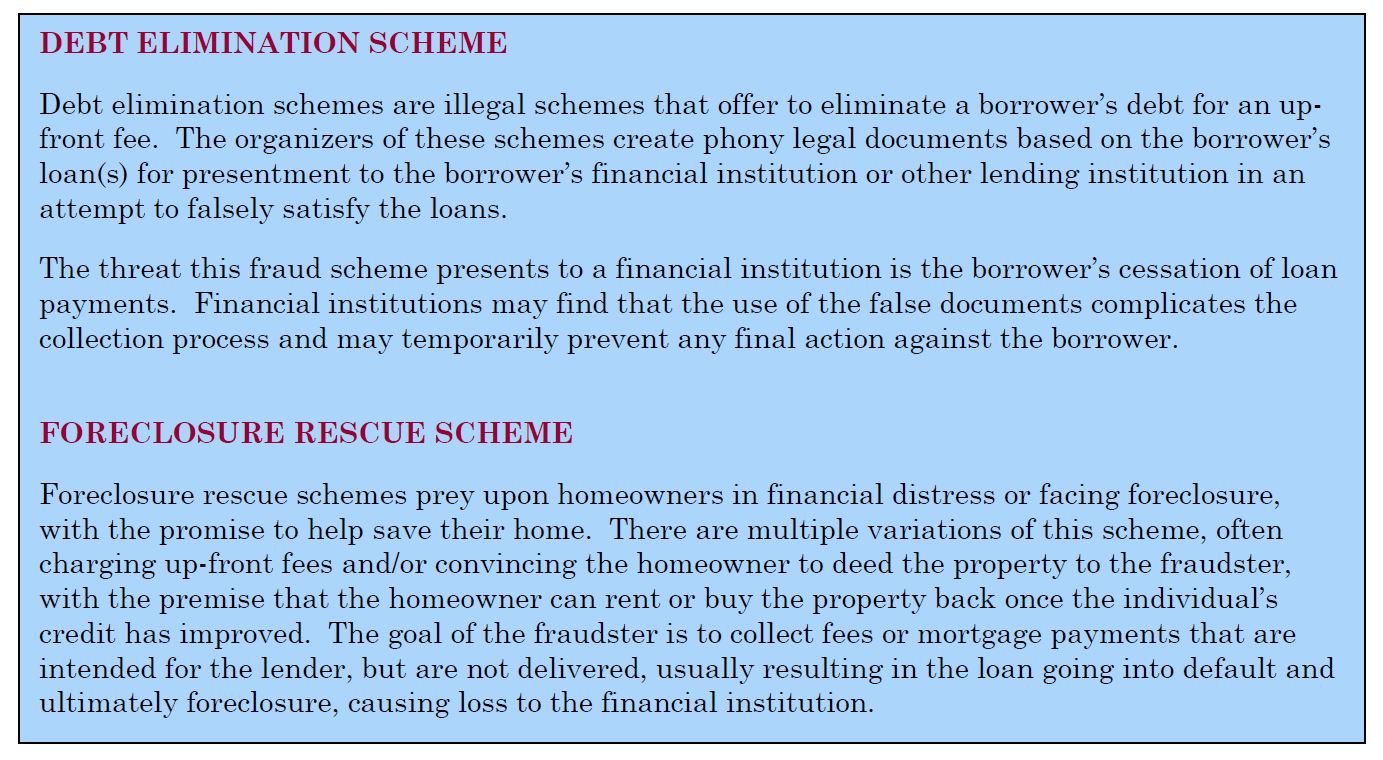
Share this:

  • Click to share on X (Opens in new window) X
  • Click to share on Facebook (Opens in new window) Facebook
Like Loading...

How Homeowners Can Effectively Handle the Mortgage Loan Modification Challenges

13 Wednesday Apr 2016

Posted by BNG in Banks and Lenders, Judicial States, Loan Modification, Non-Judicial States, Your Legal Rights

≈ Leave a comment

Tags

bank, lenders, load modification, mortgage, Mortgage broker, mortgage lender, Mortgage loan, mortgage loan modification, mortgage loans, Mortgage servicer

For the past few years, homeowners in foreclosure situations have discovered the ugly protocol involving mortgage loan modification. These series of repeated process between the homeowner and the alleged lender can sometimes lead to frustrations, stress and emotional distress. This post is designed to help homeowners cope with the frustrations of mortgage loan modification protocol.

1) Before agreeing to any more loan applications, write to your lender.  Ask them to stipulate to the following statements in an affidavit form:
“Please stipulate and warrant that you are the owner of the obligation, or have the authority from the owner of the obligation to modify my loan.
If you can not or will not stipulate and warrant that you have the authority to modify my loan within 30 days, then you fully admit that you never had the authority to modify my loan.  You acted not in good faith and are practicing fraud and deceit.

This is an admission that will be used in all future litigation against your company.  You can not represent that you have the ability and authority to modify my loan while hiding the fact that you actually do not have such authority.”

BE SURE TO ASK FOR THE SPECIFIC NAME OF THE PERSON MAKING THE DECISION FOR YOUR LOAN MOD. You can get a deposition from this person if you move in to litigation.

2) Get a Securitization Audit.
If you get a third party expert witness to testify that your loan has been securitized, then present the audit to your servicer.  Ask them pointedly:
“It seems that my loan has been securitized.  Please see the enclosed securitization audit.  If my loan has been securitized, then you no longer own my promissory note.  If this is the case, then I am very confused.  Please explain to me how you have the authority to modify my loan.
Please stipulate and warrant that you are the owner of the obligation, or have the authority from the owner of the obligation to modify my loan.
If you can not or will not stipulate and warrant that you have the authority to modify my loan within 30 days, then you fully admit that you never had the authority to modify my loan.  You acted not in good faith and are practicing fraud and deceit.

This is an admission that will be used in all future litigation against your company.  You can not represent that you have the ability and authority to modify my loan while hiding the fact that you actually do not have such authority.”

3) Sue Your “Lender”
If you can gather enough evidence to prove that:
a) Your servicer has no authority to modify your loan, yet represent that they do.
b) They have acted not in good faith…and have continued to deny your loan mod, time and time again…especially with contradictory statements like “you make too much money” followed by “you make too little money”.
c) Find out from your securitization auditor that you qualify for HAMP but no actual application with HAMP was done with your loan.
d) You were put into a trial payment program…which you pay on time consistently…and are either foreclosed upon, or denied anyway for good measure, then you have a justifiable cause of action.

The title of your action would be asking for a “Permanent Injunction”.  Consult your attorney.  Basically, a permanent injunction is such that your bank can not foreclose on your home until such times as they offer you a sustainable loan modification.  The basis for this injunction is because they represent to you that they have the authority to modify the loan, and go through the motions of giving you a loan modification application.

The principle we want to use here is to prove that the “lender” is not acting in good faith.  We are going to make them eat their words.  In other words, if they represent that they can do a loan modification, but in fact, they can not…then they are guilty of misrepresentation.  Be sure to consult the Fair Debt Collections Practices Act under misrepresentation as another claim in your civil action.

The strategy here is, by suing your “lender”, you are now costing them big money…to the tune of $10,000 to $25,000 just to defend your action against them.  When it starts to hurt them…then they will be more likely to come to the table to deal with you more fairly.  Currently, there is ABSOLUTELY NO REASON for them to give you a loan mod.

Home owners should wake up TODAY! before it’s too late by mustering enough courage for “Pro Se” Litigation (Self Representation – Do it Yourself) against the Lender – for Mortgage Fraud and other State and Federal law violations using foreclosure defense package found at http://www.fightforeclosure.net “Pro Se” litigation will allow Homeowners to preserved their home equity, saves Attorneys fees by doing it “Pro Se” and pursuing a litigation for Mortgage Fraud, Unjust Enrichment, Quiet Title and Slander of Title; among other causes of action. This option allow the homeowner to stay in their home for 3-5 years for FREE without making a red cent in mortgage payment, until the “Pretender Lender” loses a fortune in litigation costs to high priced Attorneys which will force the “Pretender Lender” to early settlement in order to modify the loan; reducing principal and interest in order to arrive at a decent figure of the monthly amount the struggling homeowner could afford to pay.

If you find yourself in an unfortunate situation of losing or about to lose your home to wrongful fraudulent foreclosure, and need a complete package that will show you step-by-step litigation solutions helping you challenge these fraudsters and ultimately saving your home from foreclosure either through loan modification or “Pro Se” litigation visit: http://www.fightforeclosure.net

Share this:

  • Click to share on X (Opens in new window) X
  • Click to share on Facebook (Opens in new window) Facebook
Like Loading...

How California Homeowners Can Technically Disqualify their Foreclosure Mill Attorney

09 Thursday Oct 2014

Posted by BNG in Banks and Lenders, Case Laws, Case Study, Federal Court, Foreclosure Defense, Fraud, Judicial States, Litigation Strategies, MERS, Non-Judicial States, Pleadings, Pro Se Litigation, State Court, Trial Strategies, Your Legal Rights

≈ Leave a comment

Tags

California, Mortgage Electronic Registration System, Pro se legal representation in the United States

In this age of fraudulent foreclosures by foreclosure mills, homeowners should be in a position to effectively challenge and disqualify the foreclosure mill Attorneys, if for anything, that can effectively delay your foreclosure and ultimately save your home.

In most foreclosure cases, the existence of conflict of interest is obvious. If you look at your pleadings carefully, you will notice that in most cases, the pleadings will reflect that the Attorney who is representing your purported lender is “also” representing MERS. In other words the law firm is acting as counsel for the lender who initiated this foreclosure proceeding, in conjunction with MERS who is also a defendant in the case. Incredibly the lender’s counsel (who is like a plaintiff – for commencing and prosecuting the foreclosure proceeding), even though it has already acted as counsel for the defendant, MERS, in similar cases! OR representing both the lender and MERS in non judicial foreclosure cases where the homeowner is suing everyone involved in his mortgage loan transaction. By virtue of commencing foreclosure via a MERS purported assignment, the lender has trapped itself. It is only when a homeowner uses such opportunity to bring that to the court’s attention with a “motion to disqualify counsel” will the homeowner take advantage of the situation.

It is fundamental that the same law firm cannot represent a plaintiff and a defendant in the same case.

The purported lender may dispute its representation of MERS, but there is no other explanation for why the purported lender’s own employees prepared the purported assignment and executed it on behalf of MERS. In order words, if the Attorney representation of both parties was not a conflict, then why did the lender’s own employee prepare the purported assignment and sign it for MERS? Even if you case does not involve the an Attorney representing both the lender and MERS, If the homeowner research carefully within your region, you will notice that the same counsel had in the past became the counsel of record for MERS in many other cases active before courts. As such, the Attorney’s status as counsel for the defendant MERS is not reasonably in dispute.

Homeowners should make the arguments that calls into question
the fair administration of justice. To illustrate, the homeowner fear that MERS may institute legal proceedings against him in the future. After all, what is to stop MERS from taking the position, at some point in the future, that it is the owner and holder of the Note and deed of trust.
Where would that leave the homeowner Or the then-owner of the subject property? Or the title insurance company that writes title insurance based on the title that is derived from a foreclosure on the subject property (if a foreclosure is allowed)?

Homeowners should argue that under a myriad of cases, the conflict of interest by which lender’s counsel is operating, couple with the affect that conflict is having on the administration of justice requires its disqualification as counsel. See State Farm Mut. Auto. Ins. Co. v. KA.W., 575 So. 2d 630 (Fla 1991); Koulisis v Rivers, 730 So. 2d 289 (Fla. 4th DCA 1999); Campell v. American Pioneer Savings Bank, 565 So. 2d 417 (Fla. 4th DCA 1990).

To the extent that lender’s counsel disagree with the facts set forth herein, homeowner should argue that the court cannot simply accept the law firm’s version of events as true. Rather, in that event, an evidential hearing is required. To illustrate further, on February 12, 2010, the Second District reversed a summary judgment of foreclosure where the plaintiff bank did not show a proper assignment of mortgage. See BAC Funding Consortium, Inc. v. Jacques, Cas No 2D08-3553 (Fla. 2d DCA 2010). This ruling comes on the heels of the Florida Supreme Court’s recent rule change requiring that all mortgage foreclosure lawsuits be executed under oath.

Other jurisdiction have started noticing the fraud brought upon the Honorable courts, entertained motions to disqualify counsels and have also disqualified counsels based on facts as stated herein. After all, only in recent years have banks and their employees begun drafting assignments in mass quantities in an attempt to “push through” non-judicial and judicial foreclosures. Other jurisdictions, however, have begun catching on to these unseemly tactics. One New York court, for example, after discussing problems with an assignment of mortgage similar to those set forth above, ruled:
“Even if [plaintiff] is able to cure the assignment defect, plaintiff’s counsel then has to address the conflict of interest that exist with his representation of both the assignor of the instant mortgage, MERS as nominee for HSBC Mortgage, and the assignee of the instant mortgage, HSBC….”

HSBC Bank USA, N.A. v. Vazquez, 2009 N.Y. Slip. Op. 51814 (2009); see also Bank of N.Y. v. Mulligan, 2008 N.Y. Slip. Op. 31501 (2008) (The Court is concerned that [the person who signed the assignment] may be engaged in a subterfuge, wearing various corporate hats«´); Deutsche Bank National Trust Co. v. Castellanos, 2008 N.Y. Slip. Op. 50033 (2008) (If he is a Vice President of both the assignor and the assignee, this would create a conflict of interest and render the July 21, 2006 assignment void.´); HSBC Bank, N.A. v. Cherry, 2007 N.Y. Slip. Op.52378 (2007) (The Court is concerned that there may be fraud on the part of HSBC, or at least malfeasance. Before granting an application for an order of reference, the Court requires an affidavit from [the person who signed the assignment] describing his employment history for the past three years.)

The situation here is similar to that presented to the First District in Live and Let Live, Inc. v. Carlsberg Mobile Home Props., Ltd., 388 So. 2d 629 (Fla. 1st DCA 1980). In that case, plaintiff’s attorney was the escrow agent for the real estate transaction upon which the lawsuit was based. What he knew or was told at closing was relevant at trial. Id. Deeming him a central figure in the lawsuit, the First District required his disqualification. Id. In so ruling, the court cited ethical considerations promulgated by the Florida Supreme Court in In Re Integration Rule of The Florida Bar, 235 So. 2d 723 (Fla. 1970), including DR 5-102, which provides:

(A) If, after undertaking employment in contemplated or pending litigation, a lawyer learns or it is obvious that he or a lawyer in his firm ought to be called as a witness on behalf of his client, he shall withdraw from the conduct of the trial and his firm, if any, shall not continue representation in the trial. (B) If, after undertaking employment in contemplated or pending litigation, a lawyer learns or it is obvious that he or a lawyer in his firm ought to be called as a witness other than on behalf of his client, he may continue the representation until it is apparent that his testimony is or may be prejudicial to his client.

A potent weapon in any lawyer’s arsenal is a motion to disqualify opposing counsel. If used successfully, it stops the opposing party in its tracks and forces an adversary to start over with a new lawyer. And for those on the receiving end of such a motion, it is crucial to know whether it should be granted or rejected. Courts have developed a four-factor test to assess the merits of a disqualification motion, but before we discuss that test, consider the following example.

Assume “Attorney A” is long-time litigation counsel for Widgetco Inc. Widgetco is being sued, and the opposing party deposes one of Widgetco’s employees who is not named as a party in the suit but who has percipient knowledge of the underlying facts of the case. Attorney A defends the deposition of that employee and, at the start of the session, states on the record that he is appearing as counsel for the employee. A year later the employee steals company trade secrets and opens a competing business.

Widgetco then hires Attorney A to sue the former employee for misappropriation of trade secrets and unfair competition. Counsel for the former employee promptly files a motion to disqualify Attorney A on the ground that he has a conflict of interest because he was counsel for the employee during the deposition in the prior case. Is Attorney A out of luck and off the case? Not necessarily.

PERSONAL RELATIONSHIP REQUIRED
To win the disqualification motion, the former employee must first show that he or she was personally represented by Attorney A. In addition, the employee must show a “substantial relationship” between Attorney A’s current and previous representation of the former employee (Brand v. 20th Century Ins. Co., 124 Cal. App. 4th 594, 602 (2004)). An attorney representing a corporation does not automatically have an attorney-client relationship with the organization’s individual constituents (officers, directors, shareholders, employees) (Vapnek, Tuft, Peck & Wiener, California Practice Guide: Professional Responsibility, ¶ 3.90 (The Rutter Group, 2007)). Rather, courts distinguish between a corporate counsel’s representation of corporate officers, directors, and employees “in their representative capacities and the representation of those persons in their individual capacities.” (Koo v. Rubio’s Restaurants, Inc., 109 Cal. App. 4th 719, 732-33 (2003).) As one court has stated, “[G]enerally, there is no individual attorney-client privilege between a corporation’s attorney and individuals within the corporation unless there is a clear showing that the individual consulted the corporate counsel in the officer’s individual capacity.” (Tuttle v. Combined Ins. Co., 222 F.R.D. 424, 429 (E.D. Cal. 2004).)

The preeminent case explaining this distinction is Meehan v. Hopps (144 Cal. App. 2d 284 (1956)), in which long-time corporate counsel represented the corporation in a suit against Stewart Hopps, a former officer and chairman of the board. Hopps moved to disqualify the corporation’s counsel, arguing that he had spent many hours conferring with counsel, and had delivered to counsel memoranda and personal files relating to various legal matters in which the corporation was involved (144 Cal. App. 2d at 287, 290). The court of appeal affirmed the trial court’s denial of the motion to disqualify, holding that “[t]he attorney for a corporation represents it, its stockholders and its officers in their representative capacity” and in no way “represents the officers personally.” (144 Cal. App. 4th at 290; see also Talvy v. American Red Cross, 205 A.D. 2d 143, 150, 618 NYS 2d 25, 29 (N.Y. Ct. App. 1984) (“Unless the parties have expressly agreed otherwise in the circumstances of a particular matter, a lawyer for the corporation represents the corporation, not the employees”).) The court concluded not only that the attorney could act adversely to Hopps, but also that he could use against Hopps any information that Hopps “was required by reason of his position with the corporation to give to that attorney.” (144 Cal. App. 4th at 290.) Thus, as commentators have noted, “[t]he fact that counsel may have learned confidential information about [former officers now adverse to the company] does not disqualify counsel from continuing to represent the corporation.” (Friedman, California Practice Guide: Corporations at ¶ 6:3.2 (The Rutter Group, 2007).) The primary issue, then, on a motion to disqualify a lawyer who previously represented a client’s employee is whether the former employee can establish that he or she had a personal attorney-client relationship with the company’s litigation counsel (Koo, 109 Cal. App. 4th at 729). The rule against representation adverse to a former client does not apply when the relationship of attorney and client has never, in fact, been created between the attorney and the complaining party. (See 1 Witkin, California Procedure at § 151, p. 206 (4th ed. 1996).)

A formal contract is not necessary to establish that an attorney-client relationship exists (Waggoner v. Snow, Becker, Kroll, Klaris & Kravis, 991 F.2d 1501, 1505 (9th Cir. 1993) (applying California law)). On the other hand, the former employee’s mere subjective belief that he or she was personally represented by corporate counsel is not sufficient (Fox v. Pollack, 181 Cal. App. 3d 954, 959 (1986)). Rather, it is the former employee’s burden to prove that the totality of the circumstances reasonably implies an agreement by the company’s lawyer not to accept other representations adverse to the former employee’s personal interests (Responsible Citizens v. Superior Court, 16 Cal. App. 4th 1717, 1733 (1994)).

THE FOUR-FACTOR TEST
A federal court applying California law has cited four factors to use in assessing whether the totality of the circumstances reasonably implies an agreement of personal representation. The four factors are: (1) the nature and extent of the contacts between the attorney and the purported client; (2) whether the purported client divulged confidential information to the attorney; (3) whether the attorney provided the purported client with legal advice; and (4) whether the purported client sought or paid for the attorney’s services (Fink v. Montes, 44 F. Supp. 2d 1052, 1060 (C.D. Cal. 1999)).

Attorney contacts. The first factor of the Fink test involves the nature and extent of the contacts between the attorney and the former employee. California case law does not address whether a corporate lawyer whose sole contact with a corporate employee is to prepare him or her for deposition and/or to defend the employee at deposition is by reason of that contact alone disqualified from representing the corporation in a lawsuit against the employee. However, cases from other jurisdictions generally provide that the corporate attorney is not deemed to represent the employee personally in such circumstances.

For example, in Polin v. Kellwood Co. (866 F. Supp. 140 (S.D.N.Y. 1994)) a former officer of a company met with the company’s lawyers to prepare for his deposition in a lawsuit involving the company. In a later lawsuit against that same former officer, the district court held that the corporate lawyers were not automatically disqualified from representing the company because “[t]he mere fact that a corporate lawyer meets with an employee – or as here, an ex-employee – to prepare for a deposition, cannot make the employee the client of the lawyer.” (866 F. Supp. at 142.)

Also instructive is Spinello Cos. v. Metra Industries, Inc. (2006 Westlaw 1722626 (D. N.J. 2006)), in which the defendant (a former officer) sought to disqualify Spinello’s counsel because he had defended the officer at, and prepared him for, a deposition in a previous lawsuit involving Spinello. The court concluded that no personal attorney-client relationship existed between the company’s counsel and the former officer (2006 Westlaw 1722626 at *6).

Courts have reached a different conclusion when the attorney specifically identifies himself or herself on the record as “counsel for the individual employee” (or the attorney remains silent when the employee identifies the attorney as personal counsel). For example, in Advance Mfg. Technologies, Inc. v. Motorola, Inc. (2002 Westlaw 1446953 (D. Ariz. 2002)), a former employee of Motorola met with Motorola’s counsel to prepare for deposition. At the deposition, when asked by opposing counsel whether he was represented by an attorney, the former employee said he was represented by Motorola’s lawyer. Motorola’s lawyers “remained silent and did not deny or otherwise qualify [the former employee’s] affirmative response.” (2002 Westlaw 1446953 at *1.) The court determined that silence in the face of the potential client’s expressed belief of representation made the belief an objectively reasonable one and, indeed, manifested the attorney’s “implied consent to an attorney-client relationship.” (2002 Westlaw 1446953 at *5.)

Similarly, in E.F. Hutton & Co. v. Brown (305 F. Supp. 371 (D. Tex. 1969)), the district court held that corporate counsel who represented a corporate officer at an SEC investigative proceeding, and at a bankruptcy hearing at which the officer testified, had a personal attorney-client relationship with that officer. Critical to the district court’s finding in E.F. Hutton was the fact that in both proceedings the corporate lawyer made formal appearances as counsel for the individual officer (305 F. Supp. at 386-87). The court noted that though an attorney’s appearance in a judicial or semi-judicial proceeding “creates a presumption that an attorney-client relationship exists between the attorney and the person with whom he appears,” that presumption becomes “almost irrebuttable” when the attorney enters a “formal appearance” for that person (305 F. Supp. at 387, 391-92).

E.F. Hutton and Advance Manufacturing Technologies should be contrasted with Waggoner (991 F.2d at 1506), in which the Ninth Circuit found that no attorney-client relationship existed, in part, because the lawyer was identified as “corporate counsel” both at trial and during a deposition of his client’s former officer.

In addition, in today’s legal world it is not uncommon for depositions to be videotaped and for the videographer to ask for “appearances of counsel,” which are part of the video record (and sometimes part of the sten-ographic record as well). To avoid any confusion, then, corporate counsel defending an employee should always state that he or she is representing the witness in the witness’s capacity as an employee of the company, and not individually. Counsel must also be careful in objecting to document requests served with deposition notices for a client’s employee: Those objections should clearly indicate that they are made on behalf of the deponent as an employee, not as an individual.

Confidential information. The second Fink factor analyzes whether the former employee divulged confidential information to the attorney (44 F. Supp. 2d at 1060). The confidential information to which the Fink court refers concerns the individual employee; it is not confidential information relating to the business of the corporation.

A court will look at whether the confidential information was disclosed to the attorney in a situation in which the employee had an expectation of privacy. In the Spinello case noted above, the court held that the corporate employee had no expectation of privacy in conversations with a corporate lawyer about issues relating to the corporation. It acknowledged that the former employee had conversations with the company lawyer in preparation for his deposition, but observed that the confidential information exchanged was in regard to the company’s business plan. The court then noted that all exchanges were for the benefit of the company, concluding that the employee “had no reasonable expectation of privacy regarding these conversations to the exclusion of … Spinello Companies when they were made and cannot claim they are confidential now.” (See 2006 Westlaw 1722626 at *5.)

Accordingly, a company attorney may consider having a company officer present during preparation sessions for the deposition of a company employee; with the officer present, the employee can have no reasonable expectation of privacy.

Legal advice. The third Fink factor addresses whether the corporate lawyer provided the former employee with legal advice. Again, the court will be looking to see if personal legal advice has been given, apart from legal advice regarding company business. (See Tuttle, 222 F.R.D. at 429 (no attorney-client privilege because employee did not seek legal advice from corporate attorneys “in a personal capacity”); U.S. v. Keplinger, 776 F.2d 678, 700 (7th Cir. 1985), cert. denied, 476 U.S. 1183 (1986) (“Defendants do not dispute the attorney’s testimony that defendants never explicitly sought individual legal advice or asked about individual representation”).)

Obviously, explaining to a witness the rules of a deposition and general practices in responding to questions should not be considered personal legal advice (upon which a later disqualifying motion could be based). Such advice simply protects the company’s interests and is consistent with a finding that the law firm represented the person only as an employee of the company and not as an individual.

If the individual officer or employee is potentially a party to the case, it is much more likely that corporate counsel can be shown to have provided personal legal advice. In such a situation, in which the employee’s personal interests are at stake, a court could easily conclude that the lawyer’s representation of the employee was personal in nature.

Who paid? The fourth and final Fink factor is whether the former employee sought out or paid for the services of the corporation’s attorney. In the usual situation involving the deposition of a corporate employee, the company – not the employee-seeks out representation by the corporate attorney. This is often reflected in the retention agreement. Thus, one court found no attorney – client relationship between company counsel and a former CEO because the engagement letter limited the engagement to the company’s intellectual property matters (Synergy Tech & Design Inc. v. Terry, 2007 Westlaw 1288464 (N.D. Cal 2007)). Typically, the attorney will be compensated by the company and not by the individual. In the Synergy case, the court found no attorney-client relationship, based in part on the fact that the corporation was “billed for or paid for all of the filing fees and expenses” (2007 Westlaw 1288464 at *8). Lawyers representing a corporation should therefore take extra care when defending the deposition of a client’s employee.

Whenever an attorney enters an appearance – whether during a deposition or at the courthouse – care should be taken to make clear the identity of the client, especially if corporate entities and individual corporate employees are involved in the case. One never knows if a corporate client’s employee will turn into an adversary who might seek to have the company’s lawyer removed from a future case.

When Homeowner’s good faith attempts to amicably work with the Bank in order to resolve the issue fails;

Home owners should wake up TODAY! before it’s too late by mustering enough courage for “Pro Se” Litigation (Self Representation – Do it Yourself) against the Lender – for Mortgage Fraud and other State and Federal law violations using foreclosure defense package found at http://www.fightforeclosure.net “Pro Se” litigation will allow Homeowners to preserved their home equity, saves Attorneys fees by doing it “Pro Se” and pursuing a litigation for Mortgage Fraud, Unjust Enrichment, Quiet Title and Slander of Title; among other causes of action. This option allow the homeowner to stay in their home for 3-5 years for FREE without making a red cent in mortgage payment, until the “Pretender Lender” loses a fortune in litigation costs to high priced Attorneys which will force the “Pretender Lender” to early settlement in order to modify the loan; reducing principal and interest in order to arrive at a decent figure of the monthly amount the struggling homeowner could afford to pay.

If you find yourself in an unfortunate situation of losing or about to lose your home to wrongful fraudulent foreclosure, and need a complete package that will show you step-by-step litigation solutions helping you challenge these fraudsters and ultimately saving your home from foreclosure either through loan modification or “Pro Se” litigation visit: http://www.fightforeclosure.net

Share this:

  • Click to share on X (Opens in new window) X
  • Click to share on Facebook (Opens in new window) Facebook
Like Loading...

What Nevada Homeowners Needs to Know About Removal of Cases to the Federal Court

30 Saturday Aug 2014

Posted by BNG in Banks and Lenders, Case Laws, Case Study, Federal Court, Foreclosure Defense, Judicial States, Non-Judicial States, Pro Se Litigation, Your Legal Rights

≈ Leave a comment

A 2013 Nevada Supreme Court Certification created a legal dilemma for the Banks and purchasers of deeds of trust.

Removal to U.S. District court  may not be an option in residential wrongful foreclosure actions for banks and other purchasers of trust deeds, and their eviction counterparts, after the Nevada Supreme Court’s recent en banc opinion in Chapman v. Deutsche Bank Nat’l Trust Co., 129 Nev. Adv. Op. 34 (May 30, 2013).

Typically, in Nevada, when a residential borrower defaults, the mortgage servicer will initiate a nonjudicial foreclosure. After completing Nevada’s mandatory foreclosure mediation program, the nonjudical foreclosure will proceed to a trustee’s sale. Often, borrowers will continue to improperly occupy the property, forcing the purchaser at the trustee’s sale (typically the bank or servicer) to begin eviction proceedings in state justice court. In response, and in an effort to stay eviction proceedings, borrowers will often file a separate lawsuit in state district court for wrongful foreclosure/quiet title, among other claims.

At this point, if the defendant purchaser of the property can establish diversity or federal question jurisdiction, it will usually seek removal of the borrower’s lawsuit to U.S. District court. The purchaser’s eviction proceedings remain in state justice court and are either completed before the borrower’s lawsuit is adjudicated or the eviction proceedings are stayed pending the outcome of the lawsuit in U.S. District court. In any event, a purchaser could at least rest assured that its lawsuit would proceed in U.S. District court and not be remanded to state court.

Chapman has changed all of that in that it significantly impairs the federal court removal option under this typical scenario. Accordingly, banks and other purchasers of trust deeds will have to alter how they deal with evictions and nonjudicial foreclosures in Nevada to reduce Chapman’s affect.

Chapman is the result of  two questions certified to the Nevada Supreme Court by the Ninth Circuit Court of Appeals in Chapman v. Deutsche Bank Nat’l Trust Co., 651 F.3d 1039 (9th Cir. 2011). The Ninth Circuit asked the Nevada Supreme Court:

  1. Is a quiet title action under Nevada Revised Statutes § 40.010, which is premised on an allegedly invalid trustee’s sale under Nevada Revised Statutes § 107.080(5)(a), properly characterized under Nevada law as a proceeding in personam, in rem, or quasi in rem?
  2. Is an unlawful detainer action under Nevada Revised Statutes § 40.255(1)(c) properly characterized under Nevada law as a proceeding in personam, in rem, or quasi in rem?

Id. at 1048.

The Nevada Supreme Court answered these questions by determining that eviction and quiet title actions are both properly characterized as proceedings involving a property interest. To be precise, the Court chose not to make a distinction between in rem and quasi in rem proceedings, but held that eviction and quiet title actions are not in personam. At first glance, this holding seems rather benign, but the practical effects are far reaching because of the typical scenario explained above. If the bank first files an eviction proceeding, and while the eviction process is still open, the borrower files a separate action in state court contesting ownership to the property, under Chapman, removal of the borrower’s action to U.S. District court is prevented under a doctrine known as the prior exclusive jurisdiction doctrine.

Under this doctrine, “when one court is exercising in rem jurisdiction over a res, a second court will not assume in rem jurisdiction over the same res.” Marshall v. Marshall, 547 U.S. 293, 311 (2006). Accordingly, where parallel state and federal court proceedings seek to “‘determine interests in specific property as against the whole world’ (in rem), or where ‘the parties’ interests in the property … serve as the basis of the jurisdiction’ for the parallel proceedings (quasi in rem), then ‘the doctrine of prior exclusive jurisdiction fully applies.’” Chapman, 651 F.3d at 1044 (internal citations omitted).

Hence, if an eviction proceeding was first filed and remains open while a second quiet title lawsuit is filed by a borrower, removal of the quiet title action is now precluded in Nevada by the prior exclusive jurisdiction doctrine. If one does remove the second matter, a swift and likely successful motion to remand can now be expected. In order to avoid this situation, and to protect a party’s ability to litigate in U.S. District court, there are a few options worth considering.

First, if a bank has an ongoing eviction proceeding in state justice court, and then is served with a quiet title action in state district court, a trust deed purchaser may move on an expedited basis to transfer the eviction proceeding to where the quiet title action was filed, and then remove to U.S. District court. Because the right to remove is governed by statute, 28 U.S.C. §1441(a), and in the normal case a defendant has only 30 days to remove after being served, 28 U.S.C. § 1446(b), the bank will need to be extra vigilant in moving to transfer the eviction proceeding to state district court and then timely remove the case to U.S. District court. A second option is to voluntarily dismiss the eviction action without prejudice,  then remove the quite title proceeding to U.S. District court. The bank can then move in the U.S. District court to evict. In the appropriate case, a trust deed purchaser can initiate a quiet title action in U.S. District court and seek injunctive relief to remove a borrower from the trustee deed purchaser’s property.

The Chapman case will certainly change the way the financial services industry and other purchasers of trust deeds handle eviction proceedings in Nevada. Chapman does not preclude removal, but banks and other purchasers of trust deeds will have to carefully consider the timing and method by which it removes borrowers from property that has been foreclosed upon.

When Homeowner’s good faith attempts to amicably work with the Bank in order to resolve the issue fails;

Home owners should wake up TODAY! before it’s too late by mustering enough courage for “Pro Se” Litigation (Self Representation – Do it Yourself) against the Lender – for Mortgage Fraud and other State and Federal law violations using foreclosure defense package found at http://www.fightforeclosure.net “Pro Se” litigation will allow Homeowners to preserved their home equity, saves Attorneys fees by doing it “Pro Se” and pursuing a litigation for Mortgage Fraud, Unjust Enrichment, Quiet Title and Slander of Title; among other causes of action. This option allow the homeowner to stay in their home for 3-5 years for FREE without making a red cent in mortgage payment, until the “Pretender Lender” loses a fortune in litigation costs to high priced Attorneys which will force the “Pretender Lender” to early settlement in order to modify the loan; reducing principal and interest in order to arrive at a decent figure of the monthly amount the struggling homeowner could afford to pay.

If you find yourself in an unfortunate situation of losing or about to lose your home to wrongful fraudulent foreclosure, and need a complete package that will show you step-by-step litigation solutions helping you challenge these fraudsters and ultimately saving your home from foreclosure either through loan modification or “Pro Se” litigation visit: http://www.fightforeclosure.net

Share this:

  • Click to share on X (Opens in new window) X
  • Click to share on Facebook (Opens in new window) Facebook
Like Loading...
← Older posts
Newer posts →

Enter your email address to follow this blog and receive notifications of new posts by email.

Recent Posts

  • Are you facing foreclosure? consider these step
  • San Fernando Valley Con Man Pleads Guilty in Multi-Million Dollar Real Estate Fraud Scheme that Targeted Vulnerable Homeowners
  • Mortgage Application Fraud!
  • What Homeowners Must Know About Mortgage Forbearance
  • Cosigning A Mortgage Loan: What Both Parties Need To Know

Categories

  • Affirmative Defenses
  • Appeal
  • Bankruptcy
  • Banks and Lenders
  • Borrower
  • Case Laws
  • Case Study
  • Credit
  • Discovery Strategies
  • Fed
  • Federal Court
  • Foreclosure
  • Foreclosure Crisis
  • Foreclosure Defense
  • Fraud
  • Judgment
  • Judicial States
  • Landlord and Tenant
  • Legal Research
  • Litigation Strategies
  • Loan Modification
  • MERS
  • Mortgage fraud
  • Mortgage Laws
  • Mortgage loan
  • Mortgage mediation
  • Mortgage Servicing
  • Non-Judicial States
  • Notary
  • Note – Deed of Trust – Mortgage
  • Pleadings
  • Pro Se Litigation
  • Real Estate Liens
  • RESPA
  • Restitution
  • Scam Artists
  • Securitization
  • State Court
  • Title Companies
  • Trial Strategies
  • Your Legal Rights

Archives

  • June 2025
  • February 2022
  • March 2021
  • February 2021
  • September 2020
  • October 2019
  • July 2019
  • May 2019
  • April 2019
  • March 2019
  • January 2019
  • September 2018
  • July 2018
  • June 2018
  • May 2018
  • April 2018
  • March 2018
  • February 2018
  • January 2018
  • December 2017
  • November 2016
  • April 2016
  • March 2016
  • January 2016
  • December 2015
  • September 2015
  • October 2014
  • August 2014
  • July 2014
  • June 2014
  • May 2014
  • April 2014
  • January 2014
  • December 2013
  • November 2013
  • October 2013
  • September 2013
  • August 2013
  • July 2013
  • June 2013
  • May 2013

Recent Posts

  • Are you facing foreclosure? consider these step
  • San Fernando Valley Con Man Pleads Guilty in Multi-Million Dollar Real Estate Fraud Scheme that Targeted Vulnerable Homeowners
  • Mortgage Application Fraud!
  • What Homeowners Must Know About Mortgage Forbearance
  • Cosigning A Mortgage Loan: What Both Parties Need To Know
Follow FightForeclosure.net on WordPress.com

RSS

  • RSS - Posts
  • RSS - Comments

Tags

5th circuit court 9th circuit 9th circuit court 10 years Adam Levitin adding co-borrower Adjustable-rate mortgage adjustable rate mortgage loan administrative office of the courts adversary proceeding affidavits Affirmative defense after foreclosure Alabama Annual percentage rate Appeal Appeal-able Orders Appealable appealable orders Appealing Adverse Decisions Appellate court Appellate Issues appellate proceeding appellate record applying for a mortgage Appraiser Areas of Liability arguments for appeal Arizona Article 9 of the Japanese Constitution Asset Asset Rental Assignment (law) Attorney Fees Attorney general August Aurora Loan Services of Nebraska automatic stay avoid foreclosure Avoid Mistakes During Bankruptcy Avoid Mistakes in Bankruptcy bad credit score bank bank forecloses Bank of America Bank of New York Bankrupcty Bankruptcy bankruptcy adversary proceeding bankruptcy appeal Bankruptcy Appeals Bankruptcy Attorney bankruptcy code bankruptcy court Bankruptcy Filing Fees bankruptcy mistakes bankruptcy on credit report bankruptcy process Bankruptcy Trustee Banks Banks and Lenders Bank statement Barack Obama Berkshire Hathaway Bill Blank endorsement Borrower borrower loan borrowers Borrowers in Bankruptcy Boston Broward County Broward County Florida Builder Bailout Business Buy and Bail Buyer Buyers buying a house buying foreclosed homes California California Court of Appeal California foreclosure California Residents Case in Review Case Trustees Center for Housing Policy CFPB’s Response chapter 7 chapter 7 bankruptcy chapter 11 chapter 11 bankruptcy Chapter 11 Plans chapter 13 chapter 13 bankruptcy Chinese style name Chunking circuit court Citi civil judgments Civil procedure Clerk (municipal official) Closed End Credit Closing/Settlement Agent closing argument collateral order doctrine collection Collier County Florida Colorado Complaint Computer program Consent decrees Consequences of a Foreclosure Consumer Actions Consumer Credit Protection Act Content Contractual Liability Conway Cosigning A Mortgage Loan Counsels Court Court clerk courts Courts of Nevada Courts of New York Credit credit bureaus Credit Counseling and Financial Management Courses credit dispute letter credit disputes Credit history Creditor credit repair credit repair company credit report credit reports Credit Score current balance Debt Debt-to-income ratio debtor Deed in lieu of foreclosure Deed of Trust Deeds of Trust defaulting on a mortgage Default judgment Defendant Deficiency judgment deficiency judgments delinquency delinquency reports Deposition (law) Detroit Free Press Deutsche Bank Dingwall Directed Verdict Discovery dispute letter District Court district court judges dormant judgment Double Selling Due process Encumbered enforceability of judgment lien enforceability of judgments entry of judgment Equifax Equity Skimming Eric Schneiderman Escrow Evans Eviction execution method execution on a judgment Experian Expert witness extinguishment Fair Credit Reporting Act (FCRA) Fake Down Payment False notary signatures Fannie Mae Fannie Mae/Freddie Mac federal bankruptcy laws Federal Bureau of Investigation Federal Court federal courts Federal government of the United States Federal Home Loan Bank Board Federal Housing Administration Federal Judgments Federal Rules of Civil Procedure federal statute Federal tax FHA FICO Fictitious Loan Filing (legal) filing for bankruptcy Finance Finance charge Financial institution Financial reports Financial Services Financial statement Florida Florida Homeowners Florida Supreme Court Fonts Forbearance foreclose foreclosed homes foreclosing on home Foreclosure foreclosure auction Foreclosure Crisis foreclosure defense foreclosure defense strategy Foreclosure in California foreclosure in Florida Foreclosure laws in California Foreclosure Pending Appeal foreclosure process Foreclosure Rescue Fraud foreclosures foreclosure suit Forms Fraud fraud prevention Fraudulent Appraisal Fraudulent Documentation Fraudulent Use of Shell Company Freddie Mac fresh financial start Glaski good credit good credit score Good faith estimate Governmental Liability HAMP HAP hardship home Home Affordable Modification Program home buyer Home insurance homeowner homeowners home ownership Homes Horace housing counselor How Many Bankruptcies Can a Homeowner File How Much Debt Do I Need To File Bankruptcy HSBC Bank USA Ibanez Ibanez Case Identify Theft injunction injunctive injunctive relief installment judgments Internal Revenue Service Interrogatories Investing involuntary liens IOU issuance of the remittitur items on credit report J.P. Morgan Chase Jack Conway Jack McConnell joint borrowers JPMorgan Chase JPMorgan Chase Bank Juarez Judgment judgment creditors judgment expired Judgments after Foreclosure Judicial judicial foreclosures Judicial States July Jury instructions Justice Department Kentucky Kristina Pickering Landlord Language Las Vegas late payment Late Payments Law Lawsuit lawsuits Lawyer Lawyers and Law Firms Lease Leasehold estate Legal Aid Legal Aid by State Legal Assistance Legal burden of proof Legal case Legal Help Legal Information lender lenders Lenders and Vendors lending and servicing liability Lien liens lien stripping lien voidance lifting automatic stay Linguistics Lis pendens List of Latin phrases litigator load modification Loan Loan Modification Loan Modification and Refinance Fraud loan modification specialists Loan origination loans Loan Servicer Loan servicing Los Angeles loses Making Home Affordable Massachusetts Massachusetts Supreme Judicial Court Mastropaolo MBA Letter MBIA McConnell Means Test Forms Mediation mediation program Medical malpractice MER MERS Michigan Monetary Awards Monetary Restitution money Montana mortgage Mortgage-backed security Mortgage Application Fraud Mortgage broker mortgage company Mortgage Coupon Mortgage Electronic Registration System Mortgage fraud Mortgage law mortgage lender Mortgage loan mortgage loan modification mortgage loan modifications mortgage loans Mortgage mediation Mortgage modification Mortgage note mortgages Mortgage servicer Mortgage Servicing Fraud motion Motion (legal) Motion in Limine Motions National Center for State Courts National City Bank National Mortgage Settlement Natural Negotiable instrument Nelva Gonzales Ramos Nevada Nevada Bell Nevada Foreclosure Nevada mortgage loans Nevada Supreme Court New Jersey New Mexico New York New York Stock Exchange New York Times Ninth Circuit non-appealable non-appealable order Non-judicial non-judicial foreclosure non-judicial foreclosures Non-judicial Foreclosure States Non-Judicial States non-recourse nonjudicial foreclosures North Carolina note Notice Notice of default notice of entry of judgment Nueces County Nueces County Texas Objections Official B122C-2 Official Form B122C-1 Ohio Options Oral argument in the United States Orders Originator overture a foreclosure sale Owner-occupier Payment Percentage Perfected periodic payments personal loans Phantom Sale Plaintiff Plan for Bankruptcy Pleading post-judgment pre-trial Pro Bono Process for a Foreclosure Processor Process Service Produce the Note Promissory note pro per Property Property Flip Fraud Property Lien Disputes property liens pro se Pro se legal representation in the United States Pro Se Litigating Pro Se litigator Pro Se trial litigators Protecting Tenant at Foreclosure Act Protecting Tenants PSA PTFA public records purchase a new home Quiet title Real estate Real Estate Agent Real Estate Liens Real Estate Settlement Procedures Act Real property RealtyTrac Record on Appeal refinance a loan Refinance Fraud Refinancing registered judgment Regulatory (CFPB) relief remittance reports remove bankruptcy remove bankruptcy on credit report Remove Late Payments Removing Liens renewal of judgment renewing a judgment Reno Reno Air Request for admissions Rescission Residential mortgage-backed security Residential Mortgage Lending Market RESPA Restitution Reverse Mortgage Fraud Rhode Island robert estes Robert Gaston Robo-signing Sacramento Scam Artists Scope Secondary Mortgage Market Securitization securitized Security interest Se Legal Representation Self-Help Seller servicer servicer reports Services servicing audit setting aside foreclosure sale Settlement (litigation) short sale Short Sale Fraud Social Sciences Social Security South Dakota Special agent standing state State Court State Courts state law Statute of Limitations statute of limitations for judgment renewals statute of repose stay Stay of Proceedings stay pending appeal Straw/Nominee Borrower Subpoena Duces Tecum Summary judgment Supreme Court of United States Tax lien tenant in common Tenants After Foreclosure Tenants Without a Lease Tennessee Texas The Dodd Frank Act and CFPB The TRID Rule Thomas Glaski TILA time-barred judgment Times New Roman Times Roman Timing Title 12 of the United States Code Title Agent Tolerance and Redisclosure Transferring Property TransUnion trial Trial court TRO true owners of the note Trust deed (real estate) Trustee Truth in Lending Act Tuesday Typeface Types of Real Estate Liens U.S. Bancorp U.S. Securities and Exchange Commission UCC Underwriter Uniform Commercial Code United States United States Attorney United States Code United States Congress United States Court of Appeals for the First Circuit United States Department of Housing and Urban Development United States Department of Justice United States district court United States District Court for the Eastern District of California United States federal courts United States federal judge Unperfected Liens US Bank US Securities and Exchange Commission valuation voluntary liens Wall Street Warehouse Lender Warehouseman Washington Washington Mutual Wells Fargo Wells Fargo Bank withdrawal of reference write of execution wrongful foreclosure wrongful foreclosure appeal Wrongful Mortgage Foreclosure Yield spread premium

Fight-Foreclosure.com

Fight-Foreclosure.com

Pages

  • About
  • Buy Bankruptcy Adversary Package
  • Buy Foreclosure Defense Package
  • Contact Us
  • Donation
  • FAQ
  • Services

Archives

  • June 2025
  • February 2022
  • March 2021
  • February 2021
  • September 2020
  • October 2019
  • July 2019
  • May 2019
  • April 2019
  • March 2019
  • January 2019
  • September 2018
  • July 2018
  • June 2018
  • May 2018
  • April 2018
  • March 2018
  • February 2018
  • January 2018
  • December 2017
  • November 2016
  • April 2016
  • March 2016
  • January 2016
  • December 2015
  • September 2015
  • October 2014
  • August 2014
  • July 2014
  • June 2014
  • May 2014
  • April 2014
  • January 2014
  • December 2013
  • November 2013
  • October 2013
  • September 2013
  • August 2013
  • July 2013
  • June 2013
  • May 2013

Website Powered by WordPress.com.

Privacy & Cookies: This site uses cookies. By continuing to use this website, you agree to their use.
To find out more, including how to control cookies, see here: Cookie Policy
  • Subscribe Subscribed
    • FightForeclosure.net
    • Join 349 other subscribers
    • Already have a WordPress.com account? Log in now.
    • FightForeclosure.net
    • Subscribe Subscribed
    • Sign up
    • Log in
    • Report this content
    • View site in Reader
    • Manage subscriptions
    • Collapse this bar
 

Loading Comments...
 

    %d