• About
  • Buy Bankruptcy Adversary Package
  • Buy Foreclosure Defense Package
  • Contact Us
  • Donation
  • FAQ
  • Services

FightForeclosure.net

~ Your "Pro Se" Foreclosure Fight Solution!

FightForeclosure.net

Category Archives: State Court

A Guide to California Homeowners Defending Post-Foreclosure Evictions

24 Saturday Aug 2013

Posted by BNG in Affirmative Defenses, Federal Court, Foreclosure Defense, Judicial States, Landlord and Tenant, Non-Judicial States, Pro Se Litigation, State Court, Your Legal Rights

≈ Leave a comment

Tags

Eviction, Foreclosure, HAP, Leasehold estate, Los Angeles, PTFA, Real estate, Sacramento

Elements of a Post-foreclosure Eviction
– Notice Requirements
– Compliance with CC 2924
– Present Right to Possession
Unlawful Detainer Litigation

Notice Requirements

Former Borrowers v. Tenants

– Former borrowers
3 days’ notice
– Tenants
90 days’ notice (in most cases)

Protecting Tenants at Foreclosure Act (Section 702)

– All bona fide tenants
Must be given at least 90 days’ notice
– Bona fide tenants with more than 90 days remaining on lease
Entitled to stay until the end of the lease, if lease entered into before “notice of foreclosure”

– EXCEPTION: lease may be terminated with a 90-day notice if purchaser will occupy unit as primary residence or if lease terminable at will under state law

Bona Fide Tenancy (PTFA)

A lease or tenancy is bona fide only if:
– Tenant is not the mortgagor or the mortgagor’s child, spouse, or parent; and
– Lease was the result of an arms length transaction; and
– Rent is not substantially less than fair market rent (unless the reduction is due to governmental subsidy)

HCV (Section 8) Tenants

– Section 8 tenants are deemed to be bona fide tenants. 74 Fed. Reg. 30108
– New owner takes title subject to both the Section 8 lease and the HAP contract

– EXCEPTION: Lease may be terminated with a 90 day notice if new owner will occupy unit as primary residence
– Any eviction notices must also be sent to the Housing Authority. 24 CFR 982.310(e)(2)(ii).

State Law Notice Requirements

CCP 1161b
– 60-day notice requirement for all tenants
– AB 2610 (effective 1/1/13):
– 90-day notice requirement for all tenants
– lease protections
– CCP 1161c
– Cover sheet requirement for post-foreclosure eviction notices

Service of Notice

Cal. law (CCP 1162):
– Personal service;
– Substitute service; or
– Posting and mail
– Does actual receipt cure service defects?
– Compare Valov v. Tank (1985) 168 CA3d 867 with Culver Ctr. Partners E #1 LP v. Baja Fresh Westlake Village, Inc. (2010) 185 CA4th 744

3/60/90 Day Notices

– Invalid? Alta Cmty. Invs. III v. Ottoboni, No. 1370195 (Cal. Super. Ct. July 29, 2010) (holding that 3/30/60/90 day notice is fatally ambiguous)

Post-FC Evictions in Just-Cause Jurisdictions

Just cause for eviction required
– Nonpayment of Rent
– 90-day notice required? PNMAC Mortg. v. Stanko, No. 11U04495, 2012 WL 845508 (Los Angeles, Cal. Super. Ct. Mar. 7, 2012) (yes)
– AB 1953 (effective 1/1/13):
– Cannot demand rent accrued before compliance with CC 1962
– Breach of Lease
– 90-day notice required?

Compliance with CC 2924

CCP 1161a

A person who holds over . . . may be removed therefrom as prescribed in this chapter:
– (3) Where the property has been sold in accordance with Section 2924 of the Civil Code, under a power of sale contained in a deed of trust executed by such person, or a person under whom such person claims, and the title under the sale has been duly perfected.
“Title” issues may be litigated in post-foreclosure UDs
– Malkoskie v. Option One Mortg. Corp., 188 Cal. App. 4th 968 (2010)

Properly Conducted Sale

Trustee must have authority to conduct sale
– Wells Fargo Bank, N.A. v. Detelder-Collins, No. APP10000325 (Riverside Super. Ct. App. Div. Mar. 28, 2012) (UD judgment reversed because plaintiff failed to provide substitution of trustee to show that trustee had authority to conduct sale)
Sale void if conducted in breach of loan mod.
– Barroso v. Ocwen Loan Servicing, LLC, 208 Cal. App. 4th 1001 (2012) (permanent modification)

Failure to provide proper foreclosure notices
– JP Morgan Chase v. Callandra, No. 1371026 (Cal. Super. Ct., Santa Barbara Co. Oct. 21, 2010) (tenant may challenge foreclosure based on failure to post NTS)
– But tender/prejudice requirement for former homeowners

Right to Possession – Present Right to Possession

Expiration of Notice Period?
– Expiration of Bona Fide Lease?
– Must still satisfy 90-day notice requirement

UD Litigation – Unlawful Detainer Process

Service of Summons and Complaint
– Personal;
– Substitute; or
– Nail and mail with court approval (after reasonable diligence)
– Five days to answer
– Pre-answer motions:
– Delta motion to quash (prejudgment claimant?)
– Demurrer (defect must appear on face of complaint)
– Answer
– Summary Judgment
– Trial

60-Day “Curtain” (CCP 1161.2)

Limited civil UDs are masked for the first 60 days
– Unmasked after 60 days unless tenant prevails within the 60 days

Except for post-foreclosure cases
– Permanently masked unless plaintiff prevails against all defendants after trial within 60 days

Unnamed Occupants

“Doe” occupants
– Must intervene in case by filing prejudgment claim of right to possession within 10 days of service
– BUT see AB 2610 (effective 1/1/13):
– PJCRTP form may be filled out and presented at any time, even after judgment

Appeal

Notice of appeal – 30 days after notice of entry of judgment
– No automatic stay of the writ of possession
– Ask for stay
– Trial court
– Writ proceeding in appellate division
– Appeal bond
– Little case law for post-foreclosure UD issues
21

Hypo

Tom Tenant’s 3-BR home in Sacramento, CA was sold at foreclosure sale on October 1. Tom’s existing lease expires on November 1, 2013. Under this lease, he pays $1,600 in rent each month under the lease, but the surrounding homes rent for about $2,300 per month. On October 5, Ivan Investor, who purchased the property at the trustee sale, served Tom with a 60-day notice to quit. Is the notice correct?

– What if Tom was a Section 8 HCV tenant?
– Or if Tom lived in Oakland instead of Sacramento?

Homeowners who finds themselves in a situation where their lender is fraudulently trying to use cooked up documents to steal their most prized possessions “their homes”, needs to do whatever is necessary to stop these interlopers from stealing their homes. To do this, homeowners need to fight them to the finish in order to avoid the situation of change of status from “borrowers to tenants” as described above. Homeowners in wrongful foreclosures should do their best to reclaim what is rightfully theirs even if the lenders initially succeeded in foreclosing using fraudulent documents. It can reversed and dismissed by the courts through vigorous litigation, that’s where http://www.fightforeclosure.net comes in.

foreclosure_dismissal_Proof

To learn how you can effectively use well structured (Pro Se “Self Representation”) litigation pleadings to effectively challenge and reclaim your status as a homeowner instead of a tenant, visit http://www.fightforeclosure.net

34.052234 -118.243685

Share this:

  • Share on X (Opens in new window) X
  • Share on Facebook (Opens in new window) Facebook
Like Loading...

How Attorney Mistakes Can Result to Homeowners Losing their Homes in Wrongful Foreclosure Litigation.

23 Friday Aug 2013

Posted by BNG in Banks and Lenders, Case Laws, Case Study, Federal Court, Foreclosure Defense, Judicial States, Litigation Strategies, Non-Judicial States, Pleadings, Pro Se Litigation, State Court, Trial Strategies, Your Legal Rights

≈ Leave a comment

Tags

Law, Lawsuit, Medical malpractice, North Carolina, Services, Statute of Limitations, Tennessee, United States

One of the biggest mistakes we see in various court cases especially in wrongful foreclosure cases where homeowners who are represented by counsel is the failure by plaintiffs’ attorneys to file the complaint within the statutes of limitation period. Attorneys fail to file a claim within the appropriate statutes of limitation for numerous reasons. For example, lawyers often fail to determine the correct statute of limitation applicable to the claim. For instance to effectively bring a TILA lawsuit against your lender, it must be filed within “One Year”, of your mortgage closing otherwise the courts can only allow the cause of action based on whether your motion for equitable tolling is granted or not.

For wrongful foreclosure homeowners who hired Attorneys to represent them, do not assume that your Attorney knows the statutes of limitation period for every cause of action you intend to bring against your lender to save your home, because if your Attorney miss all major causes of action that would have disqualified your lender from stealing your home as a result of fraud, you may end up losing your home even if your lender is liable for other violations which may entitle you to a couple of thousands of dollars in compensation. Your goal is to save your home, so it is not a matter to be taken for granted because you paid your Attorneys big bucks to represent you.

Litigation attorneys are at a greater risk of malpractice claims than all other types of attorneys. Typically, errors arising out of litigation accounted for 35% to 40% of all claims reported. Clients who lose suits often point to a
perceived error by their attorney as the reason their suit was unsuccessful and seek a remedy against the attorney. The main causes of malpractice stem from missing deadlines, failing to calendar, failing to file, failing to
meet discovery obligations, inadequate trial preparation, inappropriate post-trial actions and improper withdrawal. The use of good docketing and tickler systems and the development of good client relations can significantly reduce malpractice risk

While Attorneys obviously need to be knowledgeable about the substantive issues in any lawsuit, some Attorneys does not take care to learn and follow the procedural rules of court.

Even experienced Attorneys do not know every procedural rule for every court in which they practice. Rather, they know where to find the particular procedural rules governing the litigation and make sure they follow them,
thereby reducing their exposure to malpractice actions.

This post, while not exhaustive, provides important tips to help homeowners who are being represented by Attorneys ensure that they are getting their money’s worth thereby avoid common pitfalls that usually
result in malpractice liability when Attorneys fails their clients. After all when you pay someone $5000-$10000 to save your home, you expect them to put their best foot forward. However, always remember that (YOU ARE YOUR OWN BEST ADVOCATED), as a Pro Se Litigant with http://www.fightforeclosure.net

The post highlights ten prominent points during the course of litigation where attorneys are prone to make mistakes, emphasizing specific
types of rules and procedures that are often overlooked. Armed with the information contained in this post, homeowners can help reduce the possibility of losing the homes as a result of negligence conduct of their hired lawyers which could possibly exposure the lawyers to malpractice liability.

THESE FOLLOWING AREAS ARE WHERE THE HOMEOWNERS SHOULD PAY CLOSE ATTENTION TO – THESE ARE WHERE ATTORNEYS USUALLY MAKE MISTAKES.

A GOOD DOCKETING SYSTEM

Attorneys risk malpractice claims when they correctly identify the expiration date of a claim but fail to file the complaint in a timely manner, allowing the claim to expire. One common pitfall is that the attorney or staff person
calendars the deadline in the attorney’s calendar, but the attorney fails to check the calendar, thus missing the date.

Homeowners should ensure that their lawyers can reduce their malpractice risk by diligently calendaring statutes of limitation deadlines and other deadlines that arise within their case. Everything that involves a time limit should be entered into the docket system and the system should generate several advance warnings of each deadline to be given to the attorney and support persons involved.

Although it is ultimately the lawyer’s responsibility to meet deadlines, unforeseen circumstances may prevent the lawyer from meeting a deadline. Homeowners should ensure that their case is assigned a backup lawyer or staff member who is responsible for bringing the deadline to the attention of the main attorney on the matter; or who is able to meet a filing deadline in the lawyer’s absence.

AVOID FILING AT THE LAST MINUTE

Malpractice suits for missing the statutes of limitation also arise when the lawyer and/or his office staff simply neglect to follow through and make sure the complaint is filed with the proper court on or before the deadline. A
variety of unforeseen problems may delay filings. For example, lawyers may sometimes assume that complaints sent by overnight mail will arrive in time and be processed by the court the next day. Similarly, office staff or third
parties hired to assist with the filing may make errors, such as filing the complaint with the wrong court, or missing a last minute deadline.

Such errors can be avoided by routinely filing complaints, motions and other documents in advance of the deadline. Filing at the last minute is a risky practice. Unexpected glitches are bound to occur from time to time. Filing ahead of time will give you breathing room to resolve the unforeseeable problems that might get in the way of filing before the limitation period expires.

KNOWING THE APPLICABLE LAW

DETERMINE THE CORRECT STATUTES OF LIMITATION FOR YOUR JURISDICTION

Attorneys often miss statutes of limitation deadlines when they incorrectly assume that the statutes of limitation runs after the same amount of time in different jurisdictions. For example, the statutes of limitation for a wrongful death claim in Tennessee runs in one-year.  However, a North Carolina plaintiff ’s attorney handling a wrongful death suit arising in Tennessee might assume that North Carolina’s two-year statutes of limitation for a wrongful death claim applies in the situation. If the attorney files a claim after Tennessee’s expiration date but before North Carolina’s expiration date, the attorney missed the appropriate state’s deadline and could face a claim for malpractice.

PERFORM ADEQUATE RESEARCH AND INVESTIGATION

Nearly half of all malpractice claims arise from substantive errors. Examples include failure to learn or properly apply the law, and inadequate discovery or investigation. In addition to ascertaining all relevant statutes of limitation deadlines, it is important that homeowners ensure that their attorneys are  familiar and comply with the law and standards of care in each applicable state.

One common type of malpractice claim resulting from inadequate knowledge of substantive law is in the area of personal injury claims arising out of automobile accidents. Such a claim arises, for example, where the client suffers personal injury in a wreck and there is a $25,000 limit on the defendant’s auto insurance. Since the client has $100,000 worth of damages, the defendant’s carrier readily issues a check for the policy limit of $25,000. The lawyer neglects to investigate whether any other coverage
exists. The client later learns he could have recovered an additional $75,000 from his own insurance policy that included uninsured/underinsured “UM/UIM” coverage. By then, however, it is too late because the client has
already signed a release of all claims against the tortfeasor. Since “[a]n underinsured [UIM] motorist carrier’s liability is derivative of the tortfeasor’s liability,” the UIM carrier may decline to provide any coverage. Liberty Mut. Ins. Co. v. Pennington, 141 N.C. App. 495, 499, 541 S.E.2d 503, 506
(2000), cert. granted, 353 N.C. 451, 548 S.E.2d 526 (2001); see also Spivey v. Lowery, 116 N.C. App. 124, 446 S.E.2d 835 (1994) (UIM carrier was not liable after plaintiff executed general release).

Experience lawyers in these areas and situations usually require have the client execute a limited release that protects the client’s right to recover UIM or UM benefi ts. For an example of a limited release that was upheld by the courts, review North Carolina Farm Bureau, Mut. Ins. Co. v. Bost, 126 N.C. App. 42, 483 S.E.2d 452, review denied, 347 N.C. 138, 492 S.E.2d 25 (1997). In other cases, the lawyer may fail to notify the UIM carrier of the
claim in a timely manner. If the client is unable to recover from his UIM carrier because of his lawyer’s neglect, he may have a claim for damages against the attorney.

In these cases that pertains to personal injury, the law requires the plaintiff to timely serve the summons and complaint on both the tortfeasor and the UM carrier prior to the expiration of the statutes of limitation. See N.C. Gen. Stat. § 20-279.21(b)(3); Thomas v. Washington, 136 N.C. App. 750, 525 S.E.2d 839, review denied, 352 N.C. 598, 545 S.E.2d 223 (2000). Failure to properly serve either the tortfeasor or the UM carrier may result in lost benefi ts for the client and a malpractice claim against the attorney.

These types of errors usually can be prevented through careful research and methodical procedures.

When dealing with wrongful foreclosure case, homeowners should stay abreast of new legal developments. Experts should be consulted, where needed.

PROVIDE ADEQUATE SUPERVISION OVER ASSIGNED TASKS

Malpractice concerns arise when lawyers fail to adequately supervise non-lawyers or junior associates. Lawyers can be held responsible for mistakes made by their employees. See e.g., Pincay v. Andrews, 367 F.3d 1087 (9th Cir. 2004) (Judge Kozinski’s dissent; holding attorney liable for a paralegal’s miscalculation). Such malpractice risk can be minimized
by providing adequate supervision and fostering an environment where questions and concerns can be freely raised. Staff should be carefully supervised as the attorney is ultimately the responsible party.

FILING THE COMPLAINT AND SERVICE OF PROCESS

After the proper statutes of limitation period has been properly identified and the complaint properly filed, other pitfalls await the unwary attorney. Attorneys commonly make mistakes in naming and serving the proper parties. Such defects can often be corrected. However, when a lawsuit is commenced at the eleventh hour (just before the statutes of limitation expires), as in most wrongful foreclosure cases, the attorney may not
have time to correct such flaws, and the client may suffer prejudicial harm as a result.

IDENTIFY AND NAME THE PROPER DEFENDANT

One of the most common mistakes attorneys make is that they fail to discover and identify the proper name of the corporate defendant whom the plaintiff seeks to sue. In a wrongful foreclosure case that involved securitization of mortgage loans, sometimes defendants mights be more than one. To avoid such errors, homeowners should ensure that their attorneys should make every effort to ascertain the defendant’s proper
corporate name either before filing the complaint or as soon as possible thereafter through discovery. A diligent effort should be made to determine all possible entities and persons who should be named as parties in the lawsuit. If situation involves foreign defendants, take special care in correctly naming and serving foreign defendants. Foreign service requirements, including Hague Convention requirements, may need to be followed.

SERVE ALL DEFENDANTS WITHIN STATUTORILY PRESCRIBED TIME LIMITATIONS.

Attorneys who commit errors in timely serving a complaint and summons on a defendant may also face malpractice liability.

Attorneys must serve a defendant with a complaint and summons within the statutorily required time limitations. These limitations vary according
to jurisdiction. For instance, an attorney must serve a defendant to a lawsuit in federal court within 120 days of the fi ling of the complaint. Fed. R. Civ. P. 4(m). However, a defendant in a lawsuit in North Carolina State court must be served in most cases within 60 days after the date of the
issuance of the summons. N.C. Gen. Stat. § 1A-1, Rule 4(c).

Attorneys who fail to perfect service upon a defendant within the statutory expiration period may request an extension of time for service of process. A federal court will grant an extension only if the attorney provides good
cause for the delay in service. Fed. R. Civ. P. 4(m). On the other hand, a North Carolina court will issue an alias or pluries summons to extend the time period for service upon request, provided certain guidelines are met. N.C. Gen. Stat. § 1A-1, Rule 4(d)(2). Thus, an attorney may be vulnerable to malpractice claims for failing to follow the rules of the particular court in which the case is being litigated. For instance, attorneys may request an alias or pluries summons “at any time within 90 days after the date of issue of the last preceding summons in the chain of summonses.” Id. Provided that the request is not made in “violations of the letter or spirit of the rules for the purpose of delay or obtaining an unfair advantage,” an attorney may request numerous alias or pluries summonses and extend the service deadline for a lengthy period of time without committing malpractice. Smith v. Quinn, 324 N.C. 316, 319, 378 S.E.2d 28 (1989). However, an attorney who does not request an alias or pluries summons within the 90 day time period invalidates the old summons and begins a new action. See CBP Resources v. Ingredient Resource Corp., 954 F. Supp. 1106, 1110 (M.D.N.C. 1996). An attorney risks malpractice liability if the statutes of limitation runs before the alias or pluries summons is issued in such a situation.

In addition, an attorney must refer to the original summons in an alias or pluries summons or else the alias or pluries summons is invalid. Integon Gen. Ins. Co. v. Martin, 127 N.C. App. 440, 441, 490 S.E.2d 242 (1997).

In addition, the attorney may encounter the situation where he is unable to serve the defendant with the summons and complaint because the defendant has died. To complicate matters further, the statutes of limitation
has expired. Homeowners should ensure that their Attorneys consult the statutes for their respective Jurisdictions. This statute will help the lawyer resolve the issue and save the homeowners cause of action.

KEEP THE SUMMONS ALIVE OR ENTER INTO ENFORCEABLE TOLLING AGREEMENTS WITHIN THE STATUTES OF LIMITATION WHILE ENGAGING IN SETTLEMENT DISCUSSIONS.

It is often in the client’s best interest to pursue settlement before spending the time and money involved to file or serve a complaint. However, in the instants where the Banks are not willing to work with homeowners, but where rather interested in stealing the homes through wrongful foreclosure, homeowners are left with little options but to pursue the litigation with their Attorneys or Pro Se, in order to save their homes.

In such cases, it is important that the homeowner let their Counsels know that  it is crucial to keep the required summons alive and/or enter into an enforceable tolling agreement with the opposing party. Such tolling agreements must be executed before the statutes of limitation passes. Regardless of how close the parties may be to settlement, the Attorneys should not let the statutes of limitation pass without invoking proper protections for the homeowners.

For More Information How You Can Aggressively Defend Your Wrongful Foreclosure on Your Own “Pro Se”, thereby Avoiding These Costly Attorney Mistakes That Can Potentially Cost You the Most Valuable Investment You Have Ever Made which is “Your Home – The American Dream” Visit http://www.fightforeclosure.net (You Are Your Own Best Advocate!)

Share this:

  • Share on X (Opens in new window) X
  • Share on Facebook (Opens in new window) Facebook
Like Loading...

What Homeowners in Foreclosure Defense Needs to Know About the Issues of “Standing vs. Capacity to Sue”

18 Sunday Aug 2013

Posted by BNG in Affirmative Defenses, Case Laws, Case Study, Federal Court, Foreclosure Defense, Fraud, Judicial States, Litigation Strategies, Mortgage Laws, Non-Judicial States, Pleadings, Pro Se Litigation, State Court, Trial Strategies, Your Legal Rights

≈ 1 Comment

Tags

Court, Lawsuit, Mastropaolo, Motion (legal), New York, Plaintiff, Wells Fargo, Wells Fargo Bank

Homeowners in Judicial foreclosure states need to realize that Banks claim of ownership of the note is not an issue of standing but an element of its cause of action which it must plead and prove

The term “standing” has been applied by the courts to two legally distinct concepts. The first is legal capacity, or authority to sue. The second is whether a party has asserted a sufficient interest in the outcome of a dispute.

Standing and capacity to sue are related, but distinguishable legal concepts. Capacity requires an inquiry into the litigant’s status, i.e., its “power to appear and bring its grievance before the court”, while standing requires an inquiry into whether the litigant has “an interest in the claim at issue in the lawsuit that the law will recognize as a sufficient predicate for determining the issue.”

Wells Fargo Bank Minnesota, Nat. Ass’n v Mastropaolo, 42 AD3d239, 242 (2d Dept 2007) (internal citations omitted). Both concepts can result in dismissal on a pre answer motion by the defendant and are waived if not raised in a timely manner.

In some Jurisdictions such as New York, an action may be dismissed based on the grounds that the Plaintiff lacks the legal capacity to sue. CPLR 3211(a)(3) It governs no other basis for dismissal. CPLR 3211(e) provides that a motion to dismiss pursuant to CPLR 3211(a)(3) is waived if not raised in a pre-answer motion or a responsive pleading.

Many decisions treat the question of whether the Plaintiff in a foreclosure action owns the note and mortgage as if it were a question of standing and governed by CPLR 3211(e).

Citigroup Global Markets Realty Corp. v. Randolph Bowling , 25 Misc 3d 1244(A), 906 N.Y.S.2d 778 (Sup. Ct. Kings Cty 2009);  Federal Natl. Mtge. Assn. v. Youkelsone, 303 AD2d546, 546—547 (2d Dept 2003);
Nat’l Mtge. Consultants v. Elizaitis, 23 AD3d 630, 631 (2dDept 2005);
Wells Fargo Bank, N.A. v. Marchione, 2009 NY Slip Op 7624, (2d Dept 2009)

There is a difference between the capacity to sue which gives the right to come into court, and possession of a cause of action which gives the right to relief.  Kittinger v Churchill  Evangelistic Assn Inc., 239 AD 253, 267 NYS 719 (4th Dept 1933). Incapacity to sue is not the same as insufficiency of facts to sue upon. Ward v Petri, 157 NY3d 301 (1898)

In the case of Ohlstein v Hillcrest, a defendant moved to dismiss a complaint in part based on lack of legal capacity to sue where plaintiff had assigned her stock. The Court denied that branch of the motion holding that even if plaintiff had assigned her stock, “the defect to be urged is that the complaint does not estate [sic] a cause of action in favor of the one who is suing, the alleged assignor – not that the plaintiff does not have the legal capacityto sue. Legal incapacity, as properly understood, generally envisages a defect in legal status,not lack of a cause of action in one who is sui juris.” Ohlstein v Hillcrest, 24 Misc 2d 212,214, 195 NYS2d 920, 922 (Sup Ct NY Co 1959).

The difference was articulated by the Court in the case of  Hebrew Home for Orphans v Freund, 208 Misc. 658, 144 N.Y.S.2d 608 (Sup Ct Bx 1955). The plaintiff in that case sought a judgment declaring that an assignment of a mortgage it held was valid. The defendants moved to dismiss the complaint on the grounds that since the assignment was not accompanied by delivery of the bond and mortgage to plaintiff, plaintiff did not own the bond and mortgage and thus had no legal capacity to sue or standing to maintain the action. The Court denied the motion, stating:

The application to dismiss the complaint on the alleged ground that the plaintiff lacks legal capacity to sue rests upon a misapprehension of the meaning of the term. See Gargiulo v.Gargiulo, 207 Misc. 427, 137 N.Y.S.2d 886. Rule 107(2) of the Rules of Civil Practice relates to a plaintiff’s right to come into Court, and not to his possessing a cause of action. Idat 660-661, 610.

The Court then quotes Kittinger v Churchill for the principle that,

“The provision for dismissal of the complaint where the plaintiff has not the capacity to sue (Rules of Civil Practice, rules 106, 107) has reference to some legal disability, such as infancy, or lunacy, or want of title in the plaintiff to the character in which he sues. There is a difference between capacity to sue, which gives the right to come into court, and possession of a cause of action, which gives the right to relief in court.
Ward v. Petrie, 157 NY 301, 51 N.E. 1002;  Bank of Havana v. Magee,
20 NY 355; Ullman v. Cameron, 186 NY 339, 78 N.E.1074. The plaintiff is an individual suing as such. He is under no disability, and sues in norepresentative capacity. He is entitled to bring his suits before the court, and to cause a summons to be issued, the service of which upon the defendants brings the defendants in to court. There is no lack of capacity to sue.

The other meaning of standing involves whether the party bringing the suit has a sufficient interest in the dispute. Some cases have held that in this context, standing is jurisdictional, reasoning that where there is no aggrieved party, there is no genuine controversy, and where there is no genuine controversy, there is no subject matter  jurisdiction.
Stark v Goldberg, 297 AD2d 203, 204(1st Dept 2002);  xelrod v New York StateTeachers’ Retirement Sys., 154 AD2d 827, 828 (3rd Dept 1989).

Some courts have held that the jurisdiction of the court to hear the controversy is not affected by whether the party pursuing the action is, in fact, a proper party.They have held that if not raised in the answer or pre-answer motion to dismiss, the defense that the a party lacks standing is waived. Wells Fargo Bank Minnesota, Nat. Ass’n v. Perez,70 AD3d 817, 818, 894 N.Y.S.2d 509, 510 (2nd Dept 2010), Countrywide Home Loans, Inc.v. Delphonse, 64 AD3d 624, 625, 883 N.Y.S.2d 135 (2nd Dept 2009),
HSBC Bank, USA v. Dammond, 59 AD3d 679, 680, 875 N.Y.S.2d 490 (2nd Dept 2009)

The issue of whether a Plaintiff owns the mortgage and note is a different question from  whether it has an interest in the dispute. Whether a party has a sufficient interest in the dispute is determined by the facts alleged in the complaint, not whether Plaintiff can prove the allegations.
Wall St. Associates v. Brodsky, 257 AD2d 526, 684 N.Y.S.2d 244 (1st Dept1999),  Kempf v. Magida, 37 AD3d 763, 764, 832 N.Y.S.2d 47, 49 (2nd Dept 2007). For the purpose of determining whether a party has sufficient interest in the case the allegations areassumed to be true.

It is important to note that This issue is not analogous to the issue of whether citizens have standing to seek judicial intervention in response to what they believe to be governmental actions which would impair the rights of members of society, or a particular group of citizens, (e.g. Schulz v. State, 81 NY2d 336, 343, 615 N.E.2d 953, 954 (1993), or whether registered voters have standing to challenge the denial of the right to vote in a referendum pursuant to Section 11 of Article VII of the State Constitution, or whether commercial fishermen have standing to complain of the pollution of the waters from which they derive their living, see also  Leo v. Gen. Elec. Co.,  145 AD2d 291, 294, 538 N.Y.S.2d 844, 847 (2nd Dept 1989). The issue of standing in these types of cases turn on whether the claimants have an interest sufficiently distinct from societyin general.

Foreclosure actions implicate a concrete interest specific to a plaintiff, and the determination must be made as to whether it has been aggrieved and is therefore entitled to receive monetary damages for the alleged breach of the law.

Therefore homeowners needs to realize that when Banks pled that it owns the note and mortgage and asserts the right to foreclose on the mortgage which it asserts is in default. If it is successful in proving its claims, then usually it is entitled to receive the proceeds of the sale of the mortgaged property. Homeowners should understand that the objection that the Plaintiff in fact does not own the note and mortgage is not a defense based on a lack of standing. Courts will usually claim homeowners “does not say” (insufficient facts were alleged). But that the homeowner’s argument is that the facts alleged are not true. It is not a question of whether the Bank has alleged a sufficient interest in the dispute, but of whether the Bank can prove its prima facie case.

In Judicial States where the Banks are the plaintiff; unlike standing, denial of the Plaintiff’s claim that it owns the note and mortgage is not an affirmative defense because it is usually a denial of an allegation in the complaint that is an element of the Plaintiff’s cause of action.

In a Judicial foreclosure case, the Plaintiff must plead and prove as part of its prima facie case that it owns the note and mortgage and has the right to foreclose. Wells Fargo Bank, N.A., 80AD3d 753, 915 N.Y.S.2d 569 (2d Dept 2011); Argent Mtge. Co., LLC v. Mentesana, 79AD3d 1079, 915 N.Y.S.2d 591 (2d Dept 2010); Campaign v Barba , 23 AD3d 327, 805 NYS2d 86 (2nd Dept 2005).

However, it is usually not enough for the Defendant (Homeowner) to filed a pro se “answer” containing a “general denial”, which is a denial of all of “Plaintiff’s allegations”.

In Hoffstaedter v. Lichtenstein , 203 App.Div. 494, 496, 196 N.Y.S. 577 (1st Dept 1922),the First Department held that the general denial put the allegations in the plaintiff’scomplaint in issue. In that case, the defendant executed a note in favor of the plaintiff as a promise to pay for certain goods. When plaintiff brought an action to recover on the note, the defendant answered with a general denial. It went on to state that “[i]t is elementary that under a general denial a defendant may disprove any fact which the plaintiff is required to prove to establish a prima facie cause of action.” Id., at 578.

The Court of Appeals cited  Hoffstaedter v. Lichtenstein in holding that a general denial puts in issue those matters already pled.
Munson v. New York Seed Imp. Co-op., Inc., 64 NY2d 985, 987, 478 N.E.2d 180, 181 (1985).The general denials contained in the answer enable defendant to controvert the facts upon which the plaintiff bases her right to recover. Strook Plush Company v. Talcott, 129 AD 14, 113 NYS 214 (2nd Dept 1908). A generaldenial is sufficient to challenge all of the allegations in a complaint. Bodine v. White , 98 NYS232, 233 (App. Term 1906).The Second Department in Gulati v. Gulati, 60 AD3d 810, 811-12, 876 N.Y.S.2d 430, 432-33 (2nd Dept 2009), held it was that where a claim would not take the plaintiff by surprise and “does not raise issues of fact not appearing on the face of the complaint”, a denial of the allegations in the plaintiff’s complaint was sufficient. It heldthat where the plaintiff alleged as an element of her prima facie case that the defendant abandoned the marital residence without cause or provocation, and the defendant denied these allegations in his answer, defendant did not need to further allege abandonment as an affirmative defense

The Fourth Department in Stevens v. N. Lights Associates, 229 AD2d 1001, 645 N.Y.S.2d 193, 194 (4th Dept 1996), found that a denial by defendant that it was in control of the premises where plaintiff fell did not need to be separately pled as a defense, as the denialof control did not raise any issue of fact which had not already been pled in the complaint.See also
Scully v. Wolff, 56 Misc. 468, 107 N.Y.S. 181 (App. Term 1907),  Bodine v. White,98 N.Y.S. 232 (App. Term 1906).

In this case, Defendant’s contesting Plaintiff’s claim in the complaint that it owns the note and mortgage could not take the Plaintiff by surprise as a general denial contests Plaintiff’s factual allegations in the complaint itself, and does not rely upon extrinsic facts. Since ownership of the note was pled in the complaint and is an element of the Plaintiff’s cause of action, Defendant did not waive the defense that Plaintiff did not own the note, because he made a general denial to the factual allegations contained in the complaint.

In fact, the identity of the owner of the note and mortgage is information that is often in the exclusive possession of the party seeking to foreclose. Mortgages are routinely transferred through MERS, without being recorded. The notes underlying the mortgages, as negotiable instruments, are negotiated by mere delivery without a recorded assignment or notice to the borrower. A defendant has no method to reliably ascertain who in fact owns the note, within the narrow time frame allotted to file an answer.

In jurisdictions such as New York, CPLR 3018(b) provides that an affirmative defense is any matter “which if not pleaded would be likely to take the adverse party by surprise” or “would raise issues of fact not appearing on the face of a prior pleading”.

CPLR 3018(b) also lists some common affirmative defenses, although the list is not exhaustive. The list of affirmative defenses in CPLR 3018(b) are those which raise issues such as res judicata or statute of limitations which are based on facts not previously alleged in the pleadings.

“The defendant has the burden of proof of affirmative defenses, which in effect assume the truth of the allegations of the complaint and present new matter in avoidance thereof.” 57 NY Jur. 2d Evidence and Witnesses 165″.

To survive motion to dismiss or Summary Judgement, it is important that Pro Se Homeowners using “Standing” as a foreclosure defense also review their PSA in order to include missing or lack of assignments.

This defense will be based on “Conveyance from the Depositor to the Trust”.

Homeowners arguments under these defense will be based that the Trustee violated the terms of the trust by acquiring the note directly from the sponsor’s successor in interest rather than from the Depositor, for instance ABC, as required by the PSA.

In Article II, section 2.01 Conveyance of Mortgage Loans, the PSA requires that the Depositor deliver and deposit with the Trustee the original note, the original mortgage and an original assignment . The Trustee is then obligated to provide to the Depositor an acknowledgment of receipt of the assets before the closing date. PSA Article II, Section 2.01.

The rationale behind this requirement is to provide at least two intermediate levels of transfer to ensure the assets are protected from the possible bankruptcy by the originator which permits the security to be provided with the rating required for the securitization to be saleable.
Deconstructing the Black Magic of Securitized Trusts, Roy D. Oppenheim Jacquelyn K. Trask-Rahn 41 Stetson L. Rev. 745 Stetson Law Review (Spring 2012).

So to further the arguement, homeowners should argue that the assignment of the note and mortgage from original lender to Trustee which is called (A-D), rather than from the Depositor ABC violates section 2.01 of the PSA which requires that the Depositor deliver to and deposit the original note, mortgage and assignments to the Trustee.

In most cases, “if homeowner’s pleadings are in order”, meaning (The evidence submitted by homeowner that the note was acquired after the closing date and that assignment was not made by the Depositor), is sufficient to raise questions of fact in the court as to whether the Bank owns the note and mortgage, and usually will Deny motion to Dismiss(in non-juidical States) or preclude granting Bank’s summary judgment (in Judicial States).

The courts will usually find and conclude that the assignment of the homeowner’s note and mortgage, having not been assigned from the Depositor to the Trust, is therefore void as in being in contravention of the PSA.

For More Info How You Can Use Well Structured Pleadings Containing Facts and Case Laws Necessary To Win Your Foreclosure Defense Visit: http://www.fightforeclosure.net

Share this:

  • Share on X (Opens in new window) X
  • Share on Facebook (Opens in new window) Facebook
Like Loading...

Quiet Title Action ~ What Florida Home Owners Need to Know

14 Wednesday Aug 2013

Posted by BNG in Affirmative Defenses, Appeal, Banks and Lenders, Federal Court, Foreclosure Crisis, Foreclosure Defense, Fraud, Judicial States, Litigation Strategies, Loan Modification, MERS, Mortgage Laws, Non-Judicial States, Pleadings, Pro Se Litigation, State Court, Trial Strategies, Your Legal Rights

≈ 2 Comments

Tags

Center for Housing Policy, Florida, Foreclosure, MER, Mortgage Electronic Registration System, RealtyTrac, Securitization, United States

Quiet Title Actions: How to Force the Banks To Prove Up

The Foreclosure Crisis

I. THE FORECLOSURE CRISIS

• ISSUE ONE: Who Owns Your Note?

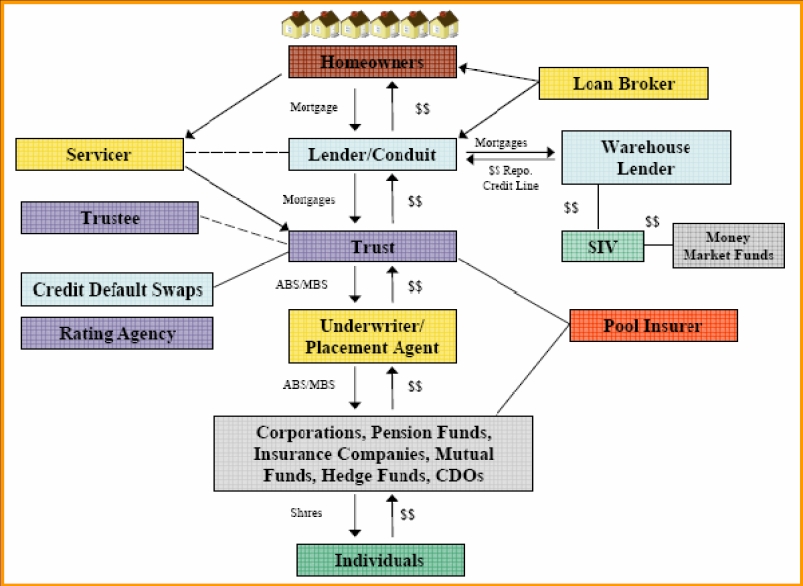
1. The Securitization Process:
– A. Originator Sells To Nominee (First Sale)
– B. The Nominee Sells To Depositor (Second Sale)
– C. The Depositor Sells to the REMIC Trust
• The REMIC Trust created to hold “pool” of mortgages and sell “shares” in
the REMIC Trust to investors.
• A Trustee is designated to operate the trust (typically a bank).
• The REMIC Trust operates through “Bylaws” and “Pooling and Servicing
Agreements”.
• The Pooling and Servicing Agreement outlines how the income from the
mortgages will be managed and the Servicing Agent who will collect income
and foreclose in the event of default.

The Foreclosure Crisis

• One in every 365 housing units in the United States was branded with a foreclosure notice recorded in December 2011, according to RealtyTrac.com. That means 850,000 Americans got a big lump of coal in their stocking from Uncle Scrooge.
• Over 2,076,764 American homes are now in foreclosure.
• One in every 165 housing units in California (more that twice the national average) received a foreclosure notice in December, for a total of 80,488 properties. In Nevada, the figure was one in every 93 houses.
• USA Today reports that almost 1 in 5 children in Nevada lived or live in owneroccupied homes that were lost to foreclosure or are at risk of being lost. The percentages are 15% in Florida, 14% for Arizona, and 12% for California. That’s about one in eight children in California. Five years into the foreclosure crisis, an estimated 2.3 million children have lived in homes lost to foreclosure.
• RealtyTrac reports that foreclosure and REO (real estate-owned) homes accounted for 24 percent of all residential sales during the fourth quarter of 2011.
• Here in relatively affluent Palm Beach County, homeowners are No. 1 in the state for the average number of loans in foreclosure that are delinquent. It has the fourth highest number of foreclosures, 45,829 with an average delinquency of 623 days.

Florida’s Foreclosure Statistics

• Florida is leading the country in foreclosure rates.
• Florida metro areas dominate the top 25 list for cities with the worst foreclosure rates — including the eight highest in the nation, according to a report released Tuesday.#
• In all, 17 of the top 25 cities with the highest foreclosure rates as of March are Florida cities, according to the Center for Housing Policy, the research arm of the Washington, D.C.-based National Housing Conference. #
• With a 10.9 percent foreclosure rate, Jacksonville is ranked 18th overall, but 14 other Florida cities had higher rates. Miami topped the list with the nation’s highest rate of 18.2 percent. #
• Miami’s conventional mortgage foreclosure rate in March was 14.2 percent, while its subprime rate was 39.1 percent. Jacksonville’s conventional foreclosure rate was 7.8 percent while its subprime rate was 29 percent.
• But given the fact that Florida cities made up 15 of the 25 cities with the highest “serious” mortgage delinquency rates — either behind by 90 days behind or more or now in foreclosure, there could be more foreclosures in the state’s future. And just like on the foreclosure list, Miami was also first, with a delinquency rate of 23.6 percent; and Jacksonville was 18th, with a rate of 15.6 percent.

Who Owns Your House?

• ISSUE ONE: WHO OWNS YOUR HOUSE?
– Promissory Note (the “Note”): Loan Agreement
– Mortgage/Deed of Trust: Power of Sale Document
– Grant Deed: You own until you breach the Promissory Note and
your Lender (or Others) use the Power of Sale Document to
Foreclose
– Before Securitization: Your Lender held your Note was always
the Foreclosing Entity.
– After Securitization: No One Knows Who Owns Your Note

Who Owns Your Note?

ISSUE TWO: Who Owns Your Note?
1. The Securitization Process:
– A. Originator Sells To Nominee (First Sale)
– B. The Nominee Sells To Depositor (Second Sale)
– C. The Depositor Sells to the REMIC Trust
• The REMIC Trust created to hold “pool” of mortgages and sell “shares” in
the REMIC Trust to investors.
• A Trustee is designated to operate the trust (typically a bank).
• The REMIC Trust operates through “Bylaws” and “Pooling and Servicing
Agreements”.
• The Pooling and Servicing Agreement outlines how the income from the
mortgages will be managed and the Servicing Agent who will collect income
and foreclose in the event of default.

• Why Is There a Question?
1. The Securitization Process: No One Knows Who Owns Your
Note
– The Original Lenders Failed to Properly Assign Your Note to
Subsequent Purchasers
– Incompetent Personnel
– No Training: No One Trained to Sell Notes Properly
– Never Occurred Before: Prior to Securitization Didn’t
Transfer or Sell Notes
– Thousands of Assignments Left Blank
– Remic Trusts Never Receive Assignments or Possession of
Notes: Current litigation

2. Mortgage Electronic Registration System, Inc
1. Created by over 44 Financial Institutions in 1998 to Avoid the
Registration of Securitized Mortgages : Saves Millions of
Dollars in Recordation fees;
2. Presently Being Sued in (5) States for Unlawfully failing to pay
Recording Fees on Securitized Mortgage Transactions
• WHAT IS MERS FUNCTION?
– TO CAMOUFLAGE THE SALE OF YOUR LOAN TO MULTIPLE
ENTITIES IN THE SECURITIZATION PROCESS;
– AVOID RECORDING FEES ON EVERY SALE OF YOUR LOAN
TO SUBSEQUENT PURCHASERS.
– ACT AS “BENEFICIARY” OF YOUR DEED OF TRUST OR
“NOMINEE” OF YOUR MORTGAGE

What is MERS?

• “MERS is a mortgage banking ‘utility’ that registers
mortgage loans in a book entry system so that … real
estate loans can be bought, sold and securitized (Similar
to Wall Street’s book entry utility for stocks and bonds is
the Depository Trust and Clearinghouse.”
• MERS is enormous. It originates thousands of loans
daily and is the mortgagee of record for at least 40
million mortgages and other security documents.
• MERS acts as agent for the owner of the note. Its
authority to act should be shown by an agency
agreement. Of course, if the owner is unknown, MERS
cannot show that it is an authorized agent of the owner.

Result: BANKS CAN’T PROVE THEY OWN YOUR LOAN

• The Wall Street Journal Picks Up the Scent
• An article by Nick Timiraos appeared in The Wall Street Journal on June 1, 2011 – “Banks Hit Hurdle to Foreclosures.”
• “Banks trying to foreclose on homeowners are hitting another roadblock,” Timiraos writes, “as some delinquent borrowers are successfully arguing that their mortgage companies can’t prove they own the loans and therefore don’t have the right to foreclose.”
• If you (or I) try to boot a homeowner into the street without any proof that we’re entitled to the property, the cops will lock us up. Stealing is stealing, whether it is somebody’s wallet or their 3-bedroom 2-bath in the suburbs with two dogs and a kid. When a bank tries to steal the bungalow without proof that they have a right to foreclose, it’s a “hurdle” or “another roadblock.”
• Semantics aside, this is good news for all people holding grant deeds. This year, the Journal reports, cases in California, North Carolina, Alabama, Florida, Maine, New York, New Jersey, Texas, Massachusetts and other states have raised questions about whether banks properly demonstrated ownership.
• In some cases, borrowers are showing courts that banks failed to properly assign ownership of mortgages after they were pooled into mortgage-backed securities. In other cases, borrowers say that lenders backdated or fabricated documents to fix those errors.
• “Flawed mortgage-banking processes have potentially infected millions of foreclosures, and the damages against these operations could be significant and take years to materialize,” said Sheila Bair, chairman of
the Federal Deposit Insurance Corp., in testimony to a Senate committee last month.
• In March, an Alabama court said J.P. Morgan Chase & Co. couldn’t foreclose on Phyllis Horace, a delinquent homeowner in Phenix City, Ala., because her loan hadn’t been properly assigned to its owners
– a trust that represents investors – when it was securitized by Bear Stearns Cos. The mortgage assignment showed that the loan hadn’t been transferred to the trust from the subprime lender that originated it.

The Problem With MERS

• Federal bankruptcy courts and state courts have found that MERS and its member banks often confused and misrepresented who owned mortgage notes. In thousands of cases, they apparently lost or mistakenly destroyed loan documents.
• The problems, at MERS and elsewhere, became so severe last fall that many banks temporarily suspended foreclosures.
• Not even the mortgage giant Fannie Mae, an investor in MERS, depends on it these days.
• “We would never rely on it to find ownership,” says Janis Smith, a Fannie Mae spokeswoman, noting it has its own records.
• Apparently with good reason. Alan M. White, a law professor at the Valparaiso University School of Law in Indiana, last year matched MERS’s ownership records against those in the public domain.
• The results were not encouraging. “Fewer than 30 percent of the mortgages had an accurate record in
MERS,” Mr. White says. “I kind of assumed that MERS at least kept an accurate list of current ownership.
They don’t. MERS is going to make solving the foreclosure problem vastly more expensive.”
• The Arkansas Supreme Court ruled last year that MERS could no longer file foreclosure proceedings there, because it does not actually make or service any loans. Last month in Utah, a local judge made the no-lessstriking decision to let a homeowner rip up his mortgage and walk away debt-free. MERS had claimed ownership of the mortgage, but the judge did not recognize its legal standing.
• And, on Long Island, a federal bankruptcy judge ruled in February that MERS could no longer act as an “agent” for the owners of mortgage notes. He acknowledged that his decision could erode the foundation of the mortgage business.
• But this, Judge Robert E Grossman said, was not his fault.
• “This court does not accept the argument that because MERS may be involved with 50 percent of all residential mortgages in the country,” he wrote, “that is reason enough for this court to turn a blind eye to
the fact that this process does not comply with the law.”

Legal Issues

1. SEPARATION OF THE NOTE AND THE DEED
• In the case of MERS, the Note and the Deed of Trust are held by separate entities. This can pose a unique problem dependent upon the court. The prevailing case law illustrates the issue:
• “The Deed of Trust is a mere incident of the debt it secures and an assignment of the debt carries with it the security instrument. Therefore, a Deed Of Trust is inseparable from the debt and always abides with the debt. It has no market or ascertainable value apart from the obligation it secures.
• A Deed of Trust has no assignable quality independent of the debt, it may not be assigned or transferred apart from the debt, and an attempt to assign the Deed Of Trust without a transfer of the debt is without effect. “
• This very “simple” statement poses major issues. To easily understand, if the Deed of Trust and the Note are not together with the same entity, then there can be no enforcement of the Note. The Deed of Trust enforces the Note. It provides the capability for the lender to foreclose on a property. If the Deed is separate from the Note, then enforcement, i.e. foreclosure cannot occur.
The following ruling summarizes this nicely.
• In Saxon vs Hillery, CA, Dec 2008, Contra Costa County Superior Court, an action by Saxon to foreclose on a property by lawsuit was dismissed due to lack of legal standing. This was because the Note and the Deed of Trust were “owned” by separate entities. The Court ruled that when the Note and Deed of Trust were separated, the enforceability of the Note was negated until rejoined.

2. MERS IS A NOMINEE AND NOT THE HOLDER OF THE NOTE
• The question now becomes as to whether a Note Endorsed in Blank and transferred to different entities does allow for foreclosure. If MERS is the foreclosing authority but has no entitlement to payment of the money, how could they foreclose? This is especially true if the true beneficiary
is not known. Why do I raise the question of who the true beneficiary is?
• THE MERS WEBSITE STATES…..
• “On MERS loans, MERS will show as the beneficiary of record. Foreclosures should be commenced in the name of MERS. To effectuate this process, MERS has allowed each servicer to choose a select number of its own employees to act as officers for MERS.
Through this process, appropriate documents may be executed at the servicer’s site on behalf of MERS by the same servicing employee that signs foreclosure documents for non-MERS loans. Until the time of sale, the foreclosure is handled in same manner as non-MERS foreclosures. At the time of sale, if the property reverts, the Trustee’s Deed Upon Sale will follow
a different procedure. Since MERS acts as nominee for the true beneficiary, it is important that the Trustee’s Deed Upon Sale be made in the name of the true beneficiary and not MERS. Your title company or MERS officer can easily determine the true beneficiary. Title companies have indicated that they will insure subsequent title when these procedures are followed.”

3. MERS IS THE NOMINEE AND NOT THE BENEFICIARY
• To further reinforce that MERS is not the true beneficiary of the loan, one need only look at the following Nevada Bankruptcy case, Hawkins, Case No. BK-S-07-13593-LBR (Bankr.Nev. 3/31/2009) (Bankr.Nev., 2009) – “A “beneficiary” is defined as “one designated to benefit from an appointment, disposition, or assignment . . . or to receive something as a result of
a legal arrangement or instrument.” BLACK’S LAW DICTIONARY 165 (8th ed. 2004). But it is obvious from the MERS’ “Terms and Conditions” that MERS is not a beneficiary as it has no rights whatsoever to any payments, to any servicing rights, or to any of the properties secured by the loans. To reverse an old adage, if it doesn’t walk like a duck, talk like a duck, and quack like a duck, then it’s not a duck.”
• When the initial Deed of Trust is made out in the name of MERS as Nominee for the Beneficiary and the Note is made to AB Lender, there should be no issues with MERS acting as an Agent for AB Lender. Hawkins even recognizes this as fact.
• The issue does arise when the Note transfers possession. Though the Deed of Trust states “beneficiary and/or successors”, the question can arise as to who the successor is, and whether Agency is any longer in effect. MERS makes the argument that the successor Trustee is a MERS
member and therefore Agency is still effective, and there does appear to be merit to the argument on the face of it.The original Note Holder, AB Lender, no longer holds the note, nor is entitled to payment. Therefore, that Agency relationship is terminated. However, the Note is endorsed in blank, and no Assignment has been made to any other entity, so who is the true
beneficiary? And without the Assignment of the Note, is the Agency relationship intact?

4. MERS FORECLOSURE PROCEDURES
• There, you have it. Direct from the MERS website. They admit that they
name people to sign documents in the name of MERS. Often, these are
Title Company employees or others that have no knowledge of the actual
loan and whether it is in default or not.
• Even worse, MERS admits that they are not the true beneficiary of the loan.
In fact, it is likely that MERS has no knowledge of the true beneficiary of the
loan for whom they are representing in an “Agency” relationship. They
admit to this when they say “Your title company or MERS officer can
easily determine the true beneficiary.
• Why are the Courts Accepting MERS as a Nominee or Agent of the
“Lenders”? The “beneficiary” term is erroneous. Even MERS states it
is not a “beneficiary”.
• If so, MERS cannot assign deeds of trust or mortgages to third parties
legally.

• ISSUE THREE: Does MERS have the Right to Participate in Your
Foreclosure?
– NO. According to the Majority of Federal Court Opinions and Every State Supreme Court decision which has addressed this Issue: Oregon and Washington Supreme Ct Decisions Pending
– Every Attorney General who has examined the legality of MERS has determined it is illegal business enterprise: New York; Delaware; Oregon, Washington, Idaho; with more to come.
_ Declared Unlawful Business Organization : ( In re: Agard, No. 10-77338, 2011 Bankr. LEXIS 488, at 58-59 (Bankr. E.D.N.Y. Feb 10, 2011)
_ In California, the federal court determined that MERS has to have a written contract with the new noteholder in order to have the authority to appoint or assign the beneficial interest in the note sufficient to foreclose (In re: Vargas: US Dist Ct, Central Dist of Calif; Case No LA 08-107036-SB).
– Judge Michael Simon of the Oregon Federal Court has found that MERS cannot assign its beneficiary status in a deed of trust to a third party for foreclosure purposes due to the fact that MERS does not under Oregon law have the legal authority to do so (James, et al v Reconstruct Trust, et al: US Dist Ct. Case No: 3:11-cv-00324-ST).

         Solutions

QUIET TITLE ACTIONS: Definition
• quiet title action n. a lawsuit to establish a party’s title to real property
against anyone and everyone, and thus “quiet” any challenges or claims to
the title. Such a suit usually arises when there is some question about clear
title, there exists some recorded problem (such as an old lease or failure to
clear title after payment of a mortgage), an error in description which casts
doubt on the amount of property owned, or an easement used for years
without a recorded description. An action for quiet title requires description
of the property to be “quieted,” naming as defendants anyone who might
have an interest (including descendants—known or unknown—of prior
owners), and the factual and legal basis for the claim of title. Notice
must be given to all potentially interested parties, including known and
unknown, by publication. If the court is convinced title is in the plaintiff (the
plaintiff owns the title), a quiet title judgment will be granted which can be
recorded and thus provide legal “good title.“

• QUIET TITLE ACTIONS:
– Purpose: Require All Adverse Claims to Title to Prove to the Court the
Worthiness of Their Claim:
– Mortgages/Deeds Of Trust:
• Who is the Owner of Your Note? Prove It
• Who is the Beneficiary of Your Deed of Trust/Mortgage? The Owner of the
Note
• Who has the Legal Right to Foreclose?
– ONLY THE OWNER OF THE NOTE IS A TRUE BENEFICIARY
– ONLY THE BENEFICIARY OF THE MORTGAGE OR DEED OF
TRUST OR ITS LEGAL REPRESENTATIVE CAN FORECLOSE
– MERS IS NOT A BENEFICIARY-According to its own Website
– MERS IS NOT A LEGAL REPRESENTATIVE OF ANY REMIC TRUST
» No Contract
» At Best MERS has a Contractual Relationship with Original Lender

• FLORIDA QUIET TITLE STATUTES-Civil Practice and Procedure
• 65.061 Quieting title; additional remedy.—
• (1) JURISDICTION.–Chancery courts have jurisdiction of actions by any person or corporation claiming legal or equitable title to any land…. and shall determine the title of plaintiff and may enter judgment quieting the title and awarding possession to the party entitled thereto….
• (2) GROUNDS.–When a person or corporation not the rightful owner of land has any conveyance or other evidence of title thereto, or asserts any claim, or pretends to have any right or title thereto, any person or corporation is the true and equitable owner of land the record title to which is not in the person or corporation because of the defective execution of any deed or mortgage because of the omission of a seal thereon, the lack of witnesses, or any defect or omission in the wording of the acknowledgment of a party or parties thereto, when the person or corporation claims title thereto by the defective instrument and the defective instrument was apparently made and delivered by the grantor to convey or mortgage the real estate and was recorded in the county where the land lies which may cast a cloud on the title of the real owner….
• (4) JUDGMENT.–If it appears that plaintiff has legal title to the land or is the equitable owner thereof based on one or more of the grounds mentioned in subsection (2), or if a default is entered against defendant (in which case no evidence need be taken), the court shall enter judgment removing the alleged cloud from the title to the land and forever quieting the title in plaintiff and those claiming under him or her since the commencement of the action and adjudging plaintiff to have a good fee simple title to said land or the interest thereby cleared of cloud.

DECLARATORY RELIEF
• WHO OWNS THE NOTE? WHO IS ENTITLED TO FORECLOSE?
• FEDERAL RULES OF CIVIL PROCEDURE: RULE 57. DECLARATORY JUDGMENT
• 28 U.S.C. §2201. Rules 38 and 39 govern a demand for a jury trial. The existence of another adequate remedy does not preclude a declaratory judgment that is otherwise appropriate. The court may order a speedy hearing of a declaratory-judgment action.
• The fact that a declaratory judgment may be granted “whether or not further relief is or could be prayed” indicates that declaratory relief is alternative or cumulative and not exclusive or extraordinary. A declaratory judgment is appropriate when it will “terminate the controversy” giving rise to the proceeding. Inasmuch as it often involves only an issue of law
on undisputed or relatively undisputed facts, it operates frequently as a summary proceeding, justifying docketing the case for early hearing as on a motion, as provided for in California (Code Civ.Proc. (Deering, 1937) §1062a), Michigan (3 Comp.Laws (1929) §13904), and Kentucky
(Codes (Carroll, 1932) Civ.Pract. §639a–3).
• The “controversy” must necessarily be “of a justiciable nature, thus excluding an advisory decree upon a hypothetical state of facts.” Ashwander v. Tennessee Valley Authority, 297 U.S. 288, 325, 56 S.Ct. 466, 473, 80 L.Ed. 688, 699 (1936). The existence or nonexistence of any right, duty, power, liability, privilege, disability, or immunity or of any fact upon which such legal relations depend, or of a status, may be declared.

• WRONGFUL FORECLOSURE:
• What is a Wrongful Foreclosure Action?
• A wrongful foreclosure action typically occurs when the lender starts a
judicial foreclosure action when it simply has no legal cause. Wrongful
foreclosure actions are also brought when the service providers accept
partial payments after initiation of the wrongful foreclosure process, and
then continue on w i t h the f o r e c l o s u r e process. These
predatory lending strategies, as well as other forms of misleading
homeowners, are illegal.
• The borrower is the one that files a wrongful disclosure action with the court against the service provider, the holder of the note and if it is a non-judicial foreclosure, against the trustee complaining that there was an illegal, fraudulent or willfully oppressive sale of property under a power of sale contained in a mortgage or deed or court judicial proceeding. The borrower can also allege emotional distress and ask for punitive damages in a wrongful foreclosure action.

• FRAUD CLAIMS
• Mortgage Payments: Have you been paying mortgage payments to the
wrong financial institution?
• JP Morgan Chase: Bought “Assets” of WAMU from FDIC in 2008
– All Mortgage Loans from 2003-2008 were already sold to REMIC Trusts
– What Did Chase Bank Buy? Servicing Contracts?
– Can Chase Bank Foreclose on Notes It Does Not Own?
• One West Bank: Bought “Assets” of IndyMac from FDIC in 2008
– All Mortgage Loans from 2003-2008 were already sold to REMIC Trusts
– What did One West Bank Buy? Servicing Contracts?
– Can One West Foreclose on Notes It Does Not Own?
• Bank of America: Bought “Servicing Contracts” from Countrywide in 2008
– All Mortgage Loans from 2003-2008 were already sold to REMIC Trusts
– What Did Bank of America Buy? Servicing Contracts
– Can Bank of America Foreclose on Notes It Does Not Own?

• QUIET TITLE LITIGATION:
– Potential Outcomes:
• Actual Quiet Title: Removal of All Liens, Encumbrances,
Mortgages:
• Principal Reduction: Mediation or Arbitration Resulting in
Substantial Reduction in Your Mortgage Balance
• Damage Claims against Financial Institutions: Punitive Damages?
• TROS and Injunctions: Stopping the Foreclosure Process
• Did Default Insurance Pay Off My Mortgage
• Declaratory Relief:
– Who Do I Pay My Mortgage To?
– Who Can Foreclose on My House?

Credit Rehabilitation
• Credit Rehabilitation
• The Fair Credit Reporting Act (FCRA) gives you the right to contact credit bureaus directly and dispute items on your credit reports. You can dispute any and all items that are inaccurate, untimely, misleading, biased, incomplete or unverifiable (questionable items). If the bureaus cannot verify that the information on their reports is indeed correct, then those items must be deleted.
• PeabodyLaw has created the “Mortgage Audit Plan”:
– Obtain a Securitization Audit from Audit Pros, Inc.
– Peabody Law will utilize the results of your Securitization Audit to file a
court action seeking a court order removing all negative credit reporting
items from your credit history based upon the findings of the audit.
– Upon receipt of Court Judgment rendering the nullification of unlawful
and erroneous credit references, Peabody Law will send a Demand
Letter with the Judgment attachment to each Credit Reporting Agency
demanding retraction and removal of all negative credit references
relating to mortgage payments, foreclosures, short sales, etc.

For a Complete Pro Se “Do It Yourself” Foreclosure Defense Kit With Well Drafted Pleadings and Step By Step Guide For Saving Your Home Visit: http://www.fightforeclosure.net

25.788969 -80.226439

Share this:

  • Share on X (Opens in new window) X
  • Share on Facebook (Opens in new window) Facebook
Like Loading...

Who Has Standing To Foreclose? – A Review of Massachusettes Case & Other Jurisdictions

09 Friday Aug 2013

Posted by BNG in Affirmative Defenses, Appeal, Banks and Lenders, Case Laws, Case Study, Federal Court, Foreclosure Defense, Fraud, Judicial States, Legal Research, Litigation Strategies, MERS, Mortgage Laws, Non-Judicial States, Note - Deed of Trust - Mortgage, Pleadings, Pro Se Litigation, Securitization, State Court, Your Legal Rights

≈ Leave a comment

Tags

Fannie Mae, Foreclosure, Ibanez, Massachusetts, Massachusetts Supreme Judicial Court, U.S. Bancorp, Uniform Commercial Code, US Bank

                                            Introduction

As a result of the collapse of the housing market in this country in or around 2008, the number of residential foreclosures has increased exponentially, putting unprecedented strains on the system.

Although most foreclosures are uncontested, since there is rarely any doubt that the borrower has defaulted in repayment of the debt, in the past several years a cottage industry has developed challenging the creditor’s “standing” to foreclose, sometimes colloquially known as the “show me the Note” defense.

The Commonwealth of Massachusetts has seen its share of this phenomenon, maybe more than its share.

This post will briefly review the string of Massachusetts judicial decisions over the past several years addressing various aspects of the foreclosure standing question, and will use those cases to “issue-spot” and frame questions that practitioners in every state should consider and perhaps need to answer before moving ahead with foreclosures or to defend past foreclosures in litigation, whether in defense of borrowers’ lawsuits or in eviction proceedings. Other notables decisions will also be surveyed to flesh out the issues and arguments further, without attempting to be exhaustive of the subject or to present the proverbial 50-State survey.

                                   The Massachusetts Story

We begin with the Massachusetts foreclosure story. In early 2009, a judge on Massachusetts specialized Land Court called into question a title standard of the State’s Real Estate Bar Association that had been relied upon by the Massachusetts foreclosure Bar. REBA Title Standard No. 58 said that a foreclosure was not defective so long as an assignment of the mortgage was obtained at any time before or after the foreclosure. In other words, the title could be cleared by obtaining an assignment even after the conduct of the foreclosure auction sale. Land Court Judge Keith Long in U.S. Bank, N.A. v. Ibanez, 2009 WL 795201 (Mass. Land Ct. Mar. 26, 2009), held that the title standard did not correctly state Massachusetts law, and that under the Massachusetts foreclosure statute, M.G.L. c. 244, a creditor had to be the mortgagee to foreclose. In 2011, the Massachusetts Supreme Judicial Court in U.S. Bank, N.A. v. Ibanez, 458 Mass. 637 (2011), affirmed, holding that a foreclosing entity, if not the original mortgagee, must hold an assignment of the mortgage at the time it first published the notice of sale.

If the assignment of the mortgage was obtained after publication of the notice, a subsequently-completed foreclosure is unlawful and void.

Because Massachusetts is a non-judicial foreclosure jurisdiction, the foreclosing creditor does not have available ares judicata defense to a post-foreclosure challenge to title or possession.

Thus, the Massachusetts Court has held that a borrower or other defendant in an eviction action can defend by contesting the validity of a purchaser’s title if it stems from an invalid foreclosure, even if the mortgagor had done nothing to contest the foreclosure itself. Bank of New York v. Bailey, 460 Mass. 327 (2011).

The plaintiffs in Ibanez were securitization trustees and while the evidence in the record was incomplete, contributing to the result, the trustees were presumed to have held the notes in the respective loan pools, including the defendants’ notes, for the benefit of the investors. The Ibanez Court required the mortgagee to hold an assignment, and implicitly found that it would not be sufficient to confer standing to foreclose to hold the note without also holding the mortgage or obtaining an assignment, but nothing in the decision presaged a requirement that the mortgagee possess the note.

The argument that the mortgagee must also hold the note to foreclose was pressed to the Massachusetts high court almost immediately in the wake of Ibanez. This issue arises in Massachusetts because, contrary to the majority and longstanding American rule that the mortgage is mere security for the note and follows the note as a matter of law, Carpenter v. Longan, 83 U.S. 271 (1872), Massachusetts is a title-theory state that allows for the note and mortgage to be held separately. Under Article 3 of the Uniform Commercial Code (“UCC”), a note can be transferred by delivery of possession of an endorsed note, but Massachusetts, as a title theory state, requires a signed instrument to convey a mortgage, “which represents legal title to someone’s home.” Ibanez, 458 Mass. at 649. Comparable to the equity of redemption residing in the mortgagor, to reclaim legal title by repaying the debt and redeeming the mortgage, the owner of the note under Massachusetts law holds beneficial ownership of the mortgage and has the right to compel an assignment of the mortgage by the mortgagee, who holds the mortgage in trust for the holder of the note, in what has been described as a resulting trust implied by law. Id. at 652.

In Eaton v. Fannie Mae, 462 Mass. 569 (2012), the Court laid down a new rule that foreclosing mortgagees must either (a) hold the note, or (b) be acting on behalf of the note holder. In other words, the Court held that “one who, although not the note holder himself, acts as the authorized agent of the note holder,” may exercise the power of sale. Id. at 586. Notably, unlike in Ibanez where the Court rejected entreaties for prospective application of its decision, the Eaton court chose to apply its holding prospectively only to foreclosures noticed after the date of the decision out of “concern for litigants and others who have relied on existing precedents,” this being a “new rule.” Id. at 588.

Massachusetts courts, like courts elsewhere, have also considered the standing of Mortgage Electronic Registration Systems, Inc. (“MERS”) to foreclose mortgages and to assign mortgages for foreclosure. MERS, discussed in greater detail below, holds title to mortgages as nominee for MERS Members. The Eaton court discussed MERS in several footnotes, see 462 Mass. 569 nn. 5, 7, 27 & 29, and implicitly accepted MERS’ pre-foreclosure assignment of the mortgage to the mortgage servicer.

In a federal court appeal earlier this year, the First Circuit Court of Appeals in Boston held expressly that MERS has the authority to assign mortgages it holds as nominee. Culhane v. Aurora Loan Services, — F.3d —-, 2013 WL 563374 (1st Cir., Feb. 15, 2013). Indeed, in the District Court decision the Court of Appeals affirmed, District Judge William Young remarked that “the MERS system fits perfectly into the Massachusetts model for the separation of legal and beneficial ownership of mortgages.” Culhane v. Aurora Loan Services, 826 F. Supp. 2d 352, 371 (D. Mass. 2011).

The recent Massachusetts mortgage foreclosure decisions were surprising, bordering on shocking, both to lenders and the Massachusetts real estate and foreclosure bars. In Ibanez, the Court disapproved a title standard of the well-respected statewide real estate bar group that conveyancers and others looked to for guidance, and in Eaton the Massachusetts Court for the first time announced a requirement that a foreclosing mortgagee be able to demonstrate its relationship to the mortgage note notwithstanding that there is no requirement under Massachusetts law to record or file notes or note transfers. 462 Mass. at 586;see also Wells Fargo Bank, N.A. v. McKenna , 2011 WL 6153419, at *2 n.1 (Mass. Land Ct. Dec. 8, 2011) (“There never has been recording of notes at the registries of deeds at any time. Notes are never recorded—not (as they may be in some other states) when the initial mortgage is recorded, nor at any time after that, including at the time, following the auction sale, when the foreclosure deed and

affidavit are put on at the registry.”). Whether the greater numbers of foreclosures and the perceived financial excesses and highly publicized alleged “sloppiness” of the mortgage industry have caused some courts to be more “pro-consumer,” or it is only that some of the legal doctrines underlying foreclosure standing had not been closely examined in a century or more, the rulings were unexpected. In part, they may represent the challenge of adapting historical, and in some cases ancient, property law to modern commerce, or vice versa. But they point out the critical need to understand state law, and to not take for granted that traditional custom and practice will be upheld, or that courts will not struggle applying that law or those established customs and practice to non-traditional modern mortgage ownership structures.

Mortgage notes, representing the debt for which the mortgages are collateral, will generally qualify as negotiable instruments whose ownership and transfer is governed by the principles of Article 3 of the UCC, adopted largely intact in most American jurisdictions. But despite the efforts of the UCC Commissioners to harmonize the law of security interests, including in some respects in real property, mortgage law and mortgage foreclosure in particular remains predominantly a creature of local state law. Thus, for mortgage foreclosure purposes, where the foreclosing creditor stands, in the legal vernacular, may depend on where the house sits. The discussion below frames some of the key standing inquiries suggested by the Massachusetts experience, and surveys some recent case law from across the country addressing the same or similar questions, and compares and contrasts the judicial precedents.

Although subsidiary questions such as whether the state is a title theory or lien theory jurisdiction, and whether the mortgage is deemed to follow the note as a matter of law, may affect how the questions are answered in any particular state, the core questions remain the same and can generally be framed in the following terms:

1. What relationship must the foreclosing entity have to the mortgage (or to the corresponding deed of trust in jurisdictions that know the security instrument by that terminology), and at what time must it hold or have it?

2. What relationship, if any, must the foreclosing entity have to the promissory note secured by the mortgage (or by the deed of trust), and at what time?

3. Does MERS when it holds the mortgage as nominee (or when it is named as beneficiary under a deed of trust) have standing to foreclose, or the ability to assign the mortgage (or deed of trust) to the lender, trustee or servicer for foreclosure?

4. Who has standing to foreclose in the securitization context, given the legal relationships under the standard Pooling and Servicing Agreement between and among the securitization trustee, the mortgage servicer and, where applicable, MERS as nominee under the mortgage (or deed of trust)?

There is a large body of case law nationwide on all of these questions, with additional decisions being handed down on virtually a daily basis; what follows below is only a representative sampling intended to illustrate the more significant issues and arguments, to inform the analysis of applicable local state law.

        1. Relationship Between Foreclosing Entity and Mortgage.

In U.S. Bank, N.A. v. Ibanez, 458 Mass. 637 (2011), as discussed above, the Massachusetts Supreme Judicial Court held that a foreclosing entity must hold an assignment of the mortgage at the time of the publication of the notice of sale. Other states differ on whether they require a foreclosing party to hold the mortgage either at the time of the foreclosure sale itself or when notice is issued.

In considering any question of a party’s status in the foreclosure process, it is first important to note whether jurisdictions are judicial or non-judicial jurisdictions:

– Judicial  foreclosure states require the foreclosing party to initiate a court proceeding in order to foreclose. The foreclosure complaint seeks permission from the court to foreclose on the secured property.

– Non-judicial foreclosure jurisdictions do not require court involvement. Instead, the foreclosing entity must follow certain practices as set by state statute, such as mailing notices of acceleration and default, and publishing notice in the local papers. That entity often is the deed of trust trustee, under state law. If the borrower wishes to contest the sale, he or she may seek to enjoin it before the sale occurs.

Twenty-two states are considered judicial foreclosure jurisdictions, whereas 28 are deemed non-judicial.

In New York, where foreclosures are conducted judicially, one court recently stated that “a plaintiff has standing where it is both the holder or assignee of the subject mortgage and the holder or assignee of the underlying note at the time the action is commenced.” Wells Fargo Bank, N.A. v Wine, 90 A.D.3d 1216, 1217 (N.Y. App. Div. 3d Dep’t 2011).

To a similar effect, one Florida court has said a party must “present evidence that it owns and holds the note and mortgage in question in order to proceed with a foreclosure action.” Gee v. U.S. Bank N.A., 72 So. 3d 211, 213 (Fla. Dist. Ct. App. 5th Dist. 2011). But a different Florida appellate court has held that an assignment of the mortgage may not be necessary at the time a complaint is filed. Standing to bring a judicial foreclosure requires “either an assignment or an equitable transfer of the mortgage prior to the filing of the complaint.” McLean v. JP Morgan Chase Bank N.A., 79 So. 3d 170, 172 (Fla. Dist. Ct. App. 4th Dist. 2012). Because ownership of a mortgage follows an assignment of the debt under that case, the mortgage does not need to be assigned to the plaintiff before the Complaint is filed if it proves ownership of the note at that time.

New Jersey, also a judicial state, has said that if a foreclosing creditor bases standing to foreclose on assignment of the mortgage, the assignment must precede filing of the foreclosure complaint; however, if the foreclosing creditor held the note at the time of filing the complaint, assignment of the mortgage is unnecessary to establish standing to foreclose. Deutsche Bank Nat’l Trust Co. v. Mitchell, 422 N.J. Super. 214, 222-25 (App. Div. 2011). There, although Deutsche Bank had not proved its standing because the mortgage assignment it relied on was executed a day after it filed its complaint, the Court remanded to allow Deutsche Bank to demonstrate standing by proving that it possessed the note prior to filing the complaint. Contrast state filing rules with the law of a non-judicial state like Michigan, which allows a foreclosing party to be “either the owner of the indebtedness or of an interest in the indebtedness secured by the mortgage or the servicing agent of the mortgage.” MCL 600.3204(1)(d)). Thus, under the statute, a loan servicer is expressly authorized to foreclose regardless of whether it holds the note or mortgage. However, by the date of the foreclosure sale, the mortgage must be assigned to the foreclosing party if it is not the original mortgagee. MCL 600.3204(3).

Where an assignment of the mortgage may be required in order to foreclose, there are differences regarding whether the assignment of mortgage is required to be recorded.

– Massachusetts: In U.S. Bank, N.A. v. Ibanez, 458 Mass. 637 (2011), although the Court required the foreclosing entity to hold the mortgage, it notably did not require the assignment of mortgage be recorded – or even be in recordable form.

– California, likewise, does not require that assignments of a deed of trust be recorded prior to foreclosure, despite a statutory pre-foreclosure recording requirement for mortgage assignments (mortgages are uncommon in California). Calvo v. HSBC Bank USA, N.A., 199 Cal. App. 4th 118, 122-2 (Cal. App. 2d Dist. 2011).

– New York, recording is also not required. See, e.g., Bank of NY v. Silverberg, 86 A.D.3d 274, 280 (N.Y. App. Div. 2nd Dep’t 2011) (rejecting contention that absence of recorded assignment allowed inference that plaintiff did not own the note and mortgage; “an assignment of a note and mortgage need not be in writing and can be effectuated by physical delivery”).

But some non-judicial states require that assignments of deeds of trusts or mortgages be recorded before a foreclosure can occur:

– Oregon: Ore. Rev. Stat. § 86.735(1)

– Idaho: Idaho Stat. § 45-1505(1)

– Minnesota: Minn. Stat. § 580.02(3)

– Montana: Mont. Code Ann. § 71-1-313(1)

– Wyoming: Wyo. Stat. § 34-4-103(a)(iii)

Regardless of any requirement, assignees typically record mortgage assignments to put the world on notice of their interest. See MetLife Home Loans v. Hansen, 48 Kan. App. 2d 213 (Kan. Ct. App. 2012) (“The assignment of the Mortgage was merely recorded notice of a formal transfer of the title to the instrument as required by recording statutes, which are primarily designed to protect the mortgagee against other creditors of the mortgagor for lien-priority purposes, not to establish the rights of the mortgagee vis-à-vis the mortgagor.”

                           Need for Correct Corporate Names

When an assignment of mortgage is required, it must also be assigned to the correct corporate entity. Confusion over corporate names can impede foreclosures.

For example, the servicer of a loan filed a judicial foreclosure action alleging that it was the assignee of the original lender. Bayview Loan Servicing, L.L.C. v. Nelson, 382 Ill. App. 3d 1184 (Ill. App. Ct. 5th Dist. 2008). Reversing the trial court’s judgment in favor of the servicer (Bayview Loan Servicing, L.L.C.), the Court of Appeals held that the servicer was not allowed to foreclose because the mortgage was not assigned to it. Rather, the mortgage had been assigned to an affiliated entity, Bayview Financial Trading Group, L.P. Id. at 1187. Without any evidence that the foreclosing entity held the note or mortgage, the fact that it was servicer was insufficient to allow it to foreclose. Id. at 1188.

But the situation was different in a judicial foreclosure filed in the same state by Standard Bank, which was the successor to the originator of the loan as a result of several mergers and name changes. Std. Bank & Trust Co. v. Madonia, 964 N.E.2d 118 (Ill. App. Ct. 1st Dist. 2011). The mortgagors argued that the plaintiff bank was required to show a mortgage assignment or endorsement of the note to it. Rejecting that argument, the Court held that the plaintiff bank retained all of the interests of the originator, including those under the note and mortgage, as a result of the mergers. Id. at 123.

A court may require proof of a merger. The note and mortgage in this case were assigned to Wells Fargo Home Mortgage, Inc. Wells Fargo Bank, N.A. v. deBree, 2012 ME 34 (Me. 2012). Upon the borrowers’ default, Wells Fargo Bank, N.A. filed a complaint as “Successor by Merger to Wells Fargo Home Mortgage, Inc.” The trial court granted summary judgment for Wells Fargo Bank. On appeal, the Maine Supreme Judicial Court held that Wells Fargo Bank had not proved its ownership of the mortgage note and mortgage because there was no evidence that it, as opposed to Wells Fargo Home Mortgage, Inc., owned the instruments. Id. at ¶ 9. The Court rejected the Bank’s arguments that the borrowers had waived their argument, and it declined to take judicial notice that Wells Fargo Home Mortgage had merged into Wells Fargo Bank. Id.at ¶¶ 9-10. The showing of ownership was necessary for the Bank to prevail on summary judgment, so the foreclosure judgment was vacated. Id. at ¶ 11.

                 2. Relationship Between Foreclosing Entity and Note

In Eaton v. Fannie Mae, 462 Mass. 569 (2012), discussed above, the Massachusetts Supreme Judicial Court announced a new rule, applicable to foreclosures noticed after June 22, 2012 (the date of the decision), requiring that foreclosing mortgagees must either (a) hold the note; or (b) be acting on behalf of the noteholder, at the time of foreclosure. In other words, the Court held that “one who, although not the note holder himself, acts as the authorized agent of the note holder” may exercise the power of sale.

Various courts in other states are split as to whether a foreclosing entity must hold the note.

California, for example, allows by statute non-judicial foreclosure by the “trustee, mortgagee, or beneficiary, or any of their authorized agents.” Debrunner v. Deutsche Bank National Trust Co., 204 Cal. App. 4th 433, 440 (Cal. App. 6th Dist. 2012) (quoting Cal. Civ. Code § 2924(a)(1)). The party foreclosing need not have possession of or a beneficial interest in the note because no such prerequisite appears in comprehensive statutory framework. Id. at 440-42.

In Idaho, a non-judicial foreclosure state, the state supreme court expressly rejected the idea that a party must have ownership of the note and mortgage. Trotter v. Bank of N.Y. Mellon, 152 Idaho 842, 861-62 (2012). Rather, “the plain language of the [deed of trust foreclosure] statute makes it clear that the trustee may foreclose on a deed of trust if it complies with the requirements contained within the Act.” Id. at 862.

Despite these states’ rejections of any requirement to hold the note, some courts in other jurisdictions do seem to require the foreclosing party to also be the noteholder, for example, or perhaps at least an agent or authorized person:

– New York: According to this intermediate appellate division, judicial foreclosure plaintiff must both hold the note and the mortgage at the time the action is commenced. Wells Fargo Bank, N.A. v Wine, 90 A.D.3d 1216, 1217 (N.Y. App. Div. 3d Dep’t 2011).

– Florida: In Florida, the holder of a note, or its representative, may foreclose. Gee v. U.S. Bank N.A., 72 So. 3d 211, 213 (Fla. Dist. Ct. App. 5th Dist. 2011). If the plaintiff is not the payee of the note, it must be endorsed to the plaintiff or in blank. Id.

– Maryland: The transferee of an unendorsed promissory note has the burden of establishing its rights under the note by proving the note’s prior transfer history, especially where the mortgagor requests an injunction to stop foreclosure. Anderson v. Burson, 424 Md. 232, 245 (2011). Thus, the Court held that although the agent of the substitute trustee under the mortgage had physical possession of the note, it was not a holder of the note because there was no valid endorsement; it could nevertheless still enforce the note based on concessions from the mortgagors. Id. at 251-52.

– Oklahoma: “To commence a foreclosure action in Oklahoma, a plaintiff must demonstrate it has a right to enforce the note and, absent a showing of ownership, the plaintiff lacks standing.” Wells Fargo Bank, N.A. v. Heath, 2012 OK 54, ¶ 9 (Okla. 2012).

– Washington: Under Washington’s non-judicial foreclosure statute, the trustee is required to “have proof that the beneficiary is the owner of any promissory note or other obligation secured by the deed of trust.” RCW61.24.030(7)(a). Note, however, that borrowers cannot bring a judicial action based on a beneficiary or trustee’s failure to prove to the borrower that the beneficiary owns the note. Frazer v. Deutsche Bank Nat. Trust Co., 2012 WL 1821386, at *2 (W.D. Wash. May 18, 2012) (“[T]he Washington Deed of Trust Act requires that a foreclosing lender demonstrate its ownership of the underlying note to the trustee, not the borrower.”).

Some jurisdictions more clearly take an either/or approach to foreclosing. In Michigan, for example, the foreclosing entity must be “either the owner of the indebtedness or of an interest in the indebtedness secured by the mortgage or the servicing agent of the mortgage.” Residential Funding Co., LLC v. Saurman, 490 Mich. 909 (2011) (quoting MCL 600.3204(1)(d)). The question in Saurman was whether foreclosures by MERS, as a mortgagee that did not hold the note, were proper. The Michigan Supreme Court upheld the foreclosures because the mortgagee’s interest in the note—even though not an ownership interest—was a sufficient interest in the indebtedness to allow it to foreclose.

There are other state courts that follow the either/or approach as well, for example:

– Ohio: In CitiMortgage, Inc. v. Patterson, 2012 Ohio 5894 (Ohio Ct. App., Cuyahoga County Dec. 13, 2012), the Ohio Court of Appeals held that a party has standing if “at the time it files its complaint of foreclosure, it either (1) has had a mortgage assigned or (2) is the holder of the note.” Id. at ¶ 21. Thus, the plaintiff in Patterson had standing because it possessed the note when it filed its complaint, even though the mortgagewas not assigned until later. Id. at ¶ 22.

– Alabama: In Sturdivant v. BAC Home Loans Servicing, LP, — So.3d —-, 2011 Ala. Civ. App. LEXIS 361 (Ala. Civ. App. Dec. 16, 2011), the Alabama Court of Civil Appeals ruled that a party lacked standing to foreclose because it was not yet the assignee of a mortgage when it initiated foreclosure. In Perry v. Fannie Mae, 100 So. 3d 1090 (Ala. Civ. App. 2012), the Court explained that the mortgage need not be assigned to a foreclosing party at the time it initiates foreclosure if it is a holder of the note. Because the evidence showed that the foreclosing party held the note at the time it initiated foreclosure proceedings, the foreclosure was proper. Id. at 1094-96.

– New Jersey: As noted in the preceding section, New Jersey recognizes standing to file a complaint to foreclose based on either assignment of the mortgage or possession of the note. Deutsche Bank Nat’l Trust Co. v. Mitchell, 422 N.J. Super. 214, 222 (App. Div. 2011).

MERS is a system for electronically tracking interests in mortgages that are traded on the secondary market. MERS members (approximately 6,000) agree that MERS serves as mortgagee or beneficiary, and when loan ownership or servicing rights are sold from one MERS member to another, MERS remains the titleholder to the security.

                                   3. Standing of MERS

                                         What is MERS?

MERS is a system for electronically tracking interests in mortgages that are traded on the secondary market. MERS members (approximately 6,000) agree that MERS serves as mortgagee or beneficiary, and when loan ownership or servicing rights are sold from one MERS member to another, MERS remains the titleholder to the security instrument as nominee on behalf of whomever owns the loan. MERS is modeled on the “book entry system” used to track ownership in stock exchanges.

The use of nominees predates MERS: “The use of a nominee in real estate transactions, and as mortgagee in a recorded mortgage, has long been sanctioned as a legitimate practice.” In re Cushman Bakery, 526 F. 2d 23, 30 (1st Cir. 1975) (collecting cases). However, the concept of a nominee serving as agent for one member of a group of possible principals—where the principal may change in a way not reflected in the public record—has fostered arange of reactions, from commendation to criticism to confusion, but ultimately MERS (and its members) have repeatedly prevailed in foreclosure challenge litigation.

                               Authority of MERS to Foreclose

Most courts to consider the issue have ruled that MERS may serve as mortgagee or beneficiary and foreclose, for example:

– Texas: Athey v. MERS, 314 S.W. 3d 161, 166 (Tex. App. 2010) (MERS could foreclose, though it never held the note).

– Utah: Burnett v. MERS, 2009 WL 3582294 (D. Utah Oct. 27, 2009) (“MERS had authority under the Deed of Trust to initiate foreclosure proceedings”).

– Nevada: Croce v. Trinity Mortg. Assurance Corp. 2009 WL 3172119, at 3 (D. Nev. Sept. 28, 2009) (collecting cases from Georgia, California, Florida, and Colorado rejecting argument “that MERS does not have standing as a beneficiary under the Note and Deed of Trust, and therefore, is not authorized to participate in the foreclosure proceedings.”); see also Edelstein v. Bank of N.Y. Mellon,286 P.3d 249, 254 (Nev. 2012) (“The deed of trust also expressly designated MERS as the beneficiary… it is an express part of the contract that we are not at liberty to disregard, and it is not repugnant to the remainder of the contract.”).

– Michigan: Residential Funding Corp. v. Saurman, 805 N.W. 2d 183 (Mich. 2011) held that MERS had a sufficient interest to foreclose because it owned “legal title to a security lien whose existence is wholly contingent on the satisfaction of the indebtedness.”

In addition, at least two states—Minnesota (Minn. Stat. § 507.413) and Texas (Tex. Prop. Code § 51.0001)—have enacted statutes recognizing that MERS can foreclose.

Some state courts, nevertheless, have raised various questions about MERS’s role as it relates to foreclosures.

– Oregon: In Niday v. GMAC Mortg., 284 P. 3d 1157 (Or. App. 2012), the Oregon Court of Appeals ruled that MERS did not meet Oregon’s statutory definition of “beneficiary,” disagreeing with the majority of trial court rulings that had ruled MERS could serve as beneficiary.

Niday is on appeal to the Supreme Court of Oregon; oral argument was heard January 8, 2013.

– Maine: The Maine Supreme Court has ruled that MERS cannot meet its definition of “mortgagee,” and thus had no standing to foreclose judicially. MERS v. Saunders, 2 A. 3d 289 (Me. 2010) (“MERS is not in fact a ‘mortgagee’ within the meaning of our foreclosure statute”).

– Washington: Bain v. Metro. Mortg. Group, Inc., 285 P.3d 34, 46 (Wash. 2012) ruled that MERS did not meet the statutory definition of deed of trust beneficiary, though Bain did not explain whether this impaired foreclosure proceedings.

 Nearly two years ago, MERS changed its rules of membership to provide that the noteholder must arrange for an assignment to be executed from MERS to the foreclosing entity prior to commencement of any foreclosure proceeding, judicial or non-judicial. So, this issue may be a legacy question after all.

                         Authority of MERS to Assign Mortgage

Even before the change in the membership rules, MERS often assigned mortgages to the foreclosing entity so that entity could foreclose. Some borrowers have argued that, as nominee, MERS does not have the power to assign the mortgage. These challenges have been almost universally rejected, as the security instruments expressly authorize MERS, as nominee, to take any action required of its principal and refer to the mortgagee or beneficiary as MERS and its “successors and assigns.” Indeed the First Circuit recently rejected this very argument. See Culhane v. Aurora Loan Services, — F.3d —-, 2013 WL 563374 (1st Cir., Feb. 15, 2013).

Likewise, the fact that an assignment of the security instrument may occur after the transfer of the note is not problematic, and makes sense under the MERS model: “[MERS] members often wait until a default or bankruptcy case is filed to have a mortgage or deed of trust assigned to them so that they can take steps necessary to seek stay relief and/or to foreclose…. [T]he reason they wait is that, if a note is paid off eventually, as most presumably are, MERS is authorized to release the [deed of trust] without going to the expense of ever recording any assignments.”Edelstein, 286 P.3d at 254.

Borrowers have also claimed that MERS lacks authority to assign the note. Since MERS typically does not hold notes, language in MERS assignments referencing the note in addition to the mortgage likely reflects a lack of precision. Insofar as MERS did not hold a note the issue is immaterial.

                             Splitting” the Note and Mortgage

Some borrowers have alleged that the naming of MERS as holder of title to the mortgage, while the lender holds title to the note, separates the note from the security instrument thereby rendering assignments void and the security instrument unenforceable. As one court has colorfully described it, the debt is the cow, and the mortgage the cow’s tail—while the debt can survive without the security instrument, the instrument has no independent vitality without the debt. See Commonwealth Prop. Advocates, LLC v. MERS, 263 p.3d 397, 403 (Utah App. 2011).

As noted, in Massachusetts, those arguments have been squarely rejected as Massachusetts permits the note and mortgage to be held separately. Indeed the District of Massachusetts remarked that the “MERS system fits perfectly into the Massachusetts model for the separation of legal and beneficial ownership of mortgages.” Culhane v. Aurora Loan Services, 826 F. Supp. 2d 352, 371 (D. Mass. 2011), aff’d — F.3d —-, 2013 WL 563374 (1st Cir. Feb. 15, 2013).

This theory has typically been rejected elsewhere as well, as, if successful, it would “confer[] an unwarranted windfall on the mortgagor.” Id. (citing Restatement (Third) of Prop.: Mortgages § 5.4 cmt. a). In Edelstein, 286 P.3d 249, 255 (Nev. 2012), for example, the court held that in Nevada, “to have standing to foreclose, the current beneficiary of the deed of trust and the current holder of the promissory note must be the same.” However, under the MERS system, the parties agree that MERS holds the security instrument while the note is transferred among its members—as long as the two instruments are united in the foreclosing entity prior to foreclosure, the Nevada court held, the foreclosing entity has standing to foreclose in that state.

Along similar lines, some borrowers allege that operation of MERS makes it impossible to identify who the proper noteholder is, because only the security instrument (not the note) was assigned by MERS. “A ‘show me the note’ plaintiff typically alleges a foreclosure is invalid unless the foreclosing entity produces the original note.” Stein v. Chase Home Fin., LLC, 662 F. 3d 976, 978 (8th Cir. 2011). Of course, when the foreclosing entity is able to produce the note, the claim is typically defeated on summary judgment, id., and many courts considering “show me the note” arguments in the MERS context have dismissed them as a matter of law without any inquiry into note ownership. E.g., Diessner v. MERS, 618 F. Supp. 2d 1184, 1187 (D. Ariz. 2009) (“district courts have routinely held that Plaintiff’s ‘show me the note’ argument lacks merit”) (collecting cases from California, Nevada, and Arizona) (internal quotations omitted).

                             Unrecorded Assignment Theories

Some states (including Massachusetts after November 1, 2012)statutorily require that, in order to bring a non-judicial foreclosure, all assignments of thesecurity instrument must be recorded.  E.g., ORS 86.735(1) (Oregon) (trustee sale may proceed only if “any assignments of the trust deed by the trustee or the beneficiary … are recorded”). In Oregon, a few borrowers have successfully argued that, because the security follows the debt as a matter of law, transfers of the debt while MERS remains lienholder of record result in assignments that go unrecorded, precluding non-judicial foreclosure.  See Niday, 284 P. 3d at 1169 (“any assignments” language in ORS 86.735(1) includes “assignment by transfer of the note, ” and that all such assignments from the initial lender to subsequent lenders must be recorded prior to commencement of a non-judicial foreclosure proceeding).  Niday is under review by the Supreme Court of Oregon, which heard oral argument on January 8, 2013.

Other courts considering the same argument have rejected it. For instance, Minnesota, Idaho, and Arizona have the same statutory requirement that assignments must be recorded, but have not found note transfers to trigger an obligation to create and record an assignment of the corresponding security instrument. E.g., Jackson v. MERS, 770 N.W.2d 487 (Minn. 2009) (answering “no” to certified question: “Where an entity, such as defendant MERS, serves as mortgagee of record as nominee for a lender and that lender’s successors and assigns and there has been no assignment of the mortgage itself, is an assignment of the ownership of the underlying indebtedness for which the mortgage serves as security an assignment that must be recorded prior to the commencement of a mortgage foreclosure by advertisement under Minn. Stat. ch. 580?”); Homeyer v. Bank of America, N.A.,2012 WL 4105132, at *4 (D. Idaho Aug. 27, 2012) (“Idaho law does not require recording each assignment of a trust deed based upon transfer of the underlying note.”); Ciardi v. Lending Co., Inc., 2010 WL 2079735, at *3 (D. Ariz. May 24, 2010) (“Plaintiffs have failed to cite any Arizona statute that requires the recording of a promissory note or even the assignment of a promissory note.”). These cases ruled that a transfer of a promissory note does not create an “assignment” for purposes of those statutes.

                                         4. Securitization Standing

                                           What is Securitization?

Securitization is the packaging of debt into instruments broadly referred to as “mortgage-backed securities”; one court has described it with analogies: “One could analogize this process to taking raw ingredients and combining them to make bread then selling the slices individually, or putting different kinds of meat into a sausage grinder then selling the individual sausages. What is born from this process are new debt instruments, sold on the open market, that have pooled-and-sliced home loans as their ingredients. Different debt instruments work in different ways, but the basic concept is that home loan debt gets repackaged and sold to other investors rather than being held by the bank that originated the loan.” Bisson v. Bank of America, N.A., — F.Supp.2d —-, 2013 WL 325262, at *1 (W.D. Wash. Jan. 15, 2013). The securitization market emerged to facilitate the inflow of capital to fund home loans, and it “allows banks to spread mortgage risk across the financial system rather than hold it all themselves.”  Id.

Although securitization has fallen well off its peak of approximately $1 trillion in originations in 2006, it is projected to rise from $4 billion in 2012 to $25-30 billion in 2013.

There are several parties to a securitization agreement, but the borrower is not one of them. A typical securitization arrangement involves the following parties:

· Originator: The originator is the party identified as “lender” on note and mortgage (or deed of trust).

· Depositor: The depositor is either the originator or someone that buys loans from originators and pools them into securities pursuant to a Pooling and Servicing Agreement (“PSA”) to which the depositor, trustee, and master servicer are parties.

· Trust: Entity into which loans are pooled (e.g., “Structured Asset Securities Corp. Mortgage Pass-Through Certificates, Series 2006-Z”). Sometimes referred to as a “Special Purpose Vehicle,” “Real Estate Mortgage Investment Conduit” or “REMIC,” orsimply a “Mortgage-Backed Security.”

· Trustee/Custodian: The trustee of the securitization trust (not to be confused with the trustee of a deed of trust, which conducts non-judicial foreclosure sales in deed of trust states) holds loans on behalf of the individual security holders, receiving the borrower’s payments from the loan servicer.

· Individual Investors: Shares of mortgage-backed securities are purchased by investors who, when loans are paid on schedule, ultimately benefit from borrowers’ mortgage payments.

· Master Servicer: The master servicer under the PSA services the individual loans in the pool, interfacing with borrowers, collecting loan payments and transferring them to the trust, and often handling foreclosures and post-foreclosure property management.

           The Effect of Securitization on Foreclosure

Securitization adds complexity to chain of title to the mortgage, and chain of ownership of the note. See, e.g., In re Almeida, 417 B.R. 140, 142-45 (Bankr. D. Mass. 2009) (describing chain of title to a mortgage securing a securitized note); In re Samuels, 415 B.R. 8, 16-22 (considering challenge to direct assignment of mortgage from originator to trustee, not including an intervening assignment to the trust).

Some borrowers have claimed that insurance contracts or credit default swap agreements preclude default—i.e., the trust was insured against loss, collected the insurance when the borrower defaulted, and should not be allowed to foreclose as well because such foreclosure would grant a “double recovery.” Larota-Florez v. Goldman Sachs Mortg. Co., 719 F. Supp. 2d 636, 642 (E.D. Va. 2010). These arguments have not gained traction. Horvath v. Bank of N.Y., N.A., 641 F.3d 617, 626 n.2 (4th Cir. 2011) (rejecting argument that trustee of securitization trust “should not have been able to foreclose on his property because they did not suffer any losses from his default,” because “that defense does not allow individuals in default on a mortgage to offset their outstanding obligations by pointing to the mortgagee’s unrelated investment income”); Commonwealth, 2011 UT App 232 ¶¶ 3, 10 (rejecting argument “that defendants, having been paid off in the sale of the loan, could not seek a second payoff by foreclosure of the Trust Deed” as a “mere conclusory allegation” that could not sustain a viable claim).

Other borrowers have commissioned “securitization audits,” which purportedly trace the history of the loan in an attempt to cast doubt upon whether the foreclosing entity has standing. These arguments have also generally failed. E.g., Norwood v. Bank of America, 2010 WL 4642447 (Bankr. N.D. Ga. Oct. 25, 2010); Dye v. BAC Home Loans Servicing, LP, 2012 WL 1340220 (D. Or. Apr. 17, 2012) (granting motion to dismiss despite findings of “Mortgage Securitization Audit”). Still other borrowers have challenged the foreclosing entity’s compliance with the PSA. As noted above, borrowers are not parties to these agreements; as such, courts have generally found that borrowers do not have standing to challenge the foreclosing entity’s compliance or lack thereof with it. See, e.g., In re Correia, 452 B.R. 319, 324 (1st Cir. B.A.P. 2011) (stating that debtors, who were not parties to the PSA or third-party beneficiaries thereof, lacked standing to challenge defendants’ compliance with PSA); Sami v. Wells Fargo Bank, 2012 WL 967051, at *5-6 (N.D. Cal. Mar. 21, 2012) (rejecting claim “that Wells Fargo failed to transfer or assign the note or Deed of Trust to the Securitized Trust by the ‘closing date,’ and that therefore, ‘under the PSA, any alleged assignment beyond the specified closing date’ is void”).

                       Which Securitization Parties May Foreclose?

As discussed above, there are several parties to a securitization. The parties most likely to be involved in a foreclosure are the trustee and servicer. On occasion, foreclosures have been conducted in the name of MERS.

As the party interfacing with the borrowers on a day-to-day basis, the servicer is often in best practical position to handle foreclosure proceedings, but may be required, under some states’ laws, to demonstrate its entitlement to foreclose on behalf of the securitization trustee. So, for example, in Maine, a judicial foreclosure state, the servicer must show its authority to enforce the note. See Bank of America, N.A. v. Cloutier, 2013 WL 453976, at *3 (Me. Feb. 7, 2013) (foreclosure plaintiff must “identify the owner or economic beneficiary of the note and, if the plaintiff is not the owner, to indicate the basis for the plaintiff’s authority to enforce the note pursuant to Article 3-A of the UCC”).

Most non-judicial states do not apply special requirements to loan servicers; the only significant inquiry is whether the trustee of the deed of trust was properly appointed by the beneficiary of record. In Utah, for example, “the statute governing non-judicial foreclosure in Utah does not contain any requirement that the trustee demonstrate his or her authority in order to foreclose. The court declines to create a requirement where the legislature chose not to include one. Therefore, the court holds that, under the terms of the relevant documents and the current statute, [a trustee] is not required to demonstrate its authority to foreclose before initiating a foreclosure proceeding.” Hoverman v. CitiMortgage, Inc., 2011 U.S. Dist. LEXIS 86968, at *16-17 (D. Utah Aug. 4, 2011); see also Trotter, 275 P.3d at 861 (Idaho 2012) (“A trustee is not required to prove it has standing before foreclosing on a deed of trust” as long as “the Appointment of Successor Trustee, Notice of Default, and Notice of Trustee’s Sale complied with the statutoryrequirements and were recorded as specified in the statute”).

The situation can change, however, if the loan becomes involved in a judicial proceeding, such as a bankruptcy. To move for relief from stay in bankruptcy—even in a deed of trust state—a servicer must somehow show authority to enforce the note, though assignment of the security instrument may not be necessary. E.g., In re Tucker, 441 B.R. 638, 645 (Bankr. W.D. Mo. 2010) (“even if, as here, the deed of trust is recorded in the name of the original lender…, the holder of the note, whoever it is, would be entitled to foreclose, even if the deed of trust had not been assigned to it.”). And, conversely, failure to show authority to enforce the note can lead to denial of motions for relief from stay. E.g., In re Wilhelm, 407 B.R. 392 (Bankr. D. Idaho 2009) (denying relief from stay to group of movants that included both servicers and securitization trustees because they presented insufficient proof that they owned the notes in question); In re Mims, 438 B.R. 52, 57 (Bankr. S.D.N.Y. 2010) (servicer that held title to themortgage but did not show it had been assigned the note was not a “real party in interest” in proceeding to lift stay).

In addition to the servicer, the trustee is often the foreclosing party. As the party holding title to the loan on behalf of the loan investors, the trustee is certainly a proper party to foreclose—if it has the right to do so under state law, which may require that it have been formally assigned the mortgage.

In Massachusetts, for instance—and as discussed more above—the trustee must also hold an assignment of the mortgage. In Ibanez, the trustee commenced foreclosures before they had been assigned the mortgages, and did not record assignments until after the foreclosure was completed. The trustee argued it had already received the note when the loan had been securitized years earlier, and that gave it all it needed to foreclose. The court rejected that argument—Massachusetts, as a “title theory” state, requires assignment of mortgage to foreclose. Securitization may have showed intent to assign mortgages, but was not an actual assignment.

Lien-theory states often take a different position, and do not require a trustee to also hold the mortgage, which is nothing more than the right to enforce a lien. See, e.g., Edelstein v. Bank of N.Y. Mellon, 286 P.3d 249, 254 (Nev. 2012);KCB Equities, Inc. v. HSBC Bank USA, N.A. , 2012 Tex. App. LEXIS 4418, at *4-5 (Tex. App.—Dallas).

                                       Conclusion

The recent Massachusetts foreclosure case law is likely some what atypical, driven as it has been by some relatively unusual aspects of Massachusetts law.

But the questions the Massachusetts Supreme Judicial Court has been called upon to answer, concerning the necessary relationship between the lien of the security interest, the debt and the foreclosing creditor, are universal and have been the subject of considerable litigation across the country during the recent “foreclosure crisis.” And the questions are controlled for the most part by state law, and state property and foreclosure law are much less uniform than the law governing the notes themselves as negotiable instruments. This paper has identified the principal issues and arguments so practitioners can ask the right questions and try to determine the law in their particular jurisdiction before proceeding.

For More Information How You Can Use Solid Augments To Effective Challenge and Save Your Home Visit: http://www.fightforeclosure.net

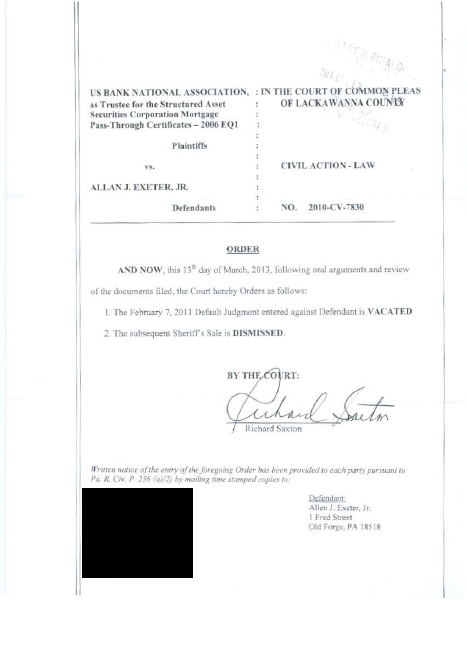
Share this:

  • Share on X (Opens in new window) X
  • Share on Facebook (Opens in new window) Facebook
Like Loading...

Understanding Mortgage Fraud ~ A Comprehensive Guide For Homeowners

31 Wednesday Jul 2013

Posted by BNG in Affirmative Defenses, Appeal, Banks and Lenders, Federal Court, Foreclosure Defense, Fraud, Judicial States, MERS, Mortgage Laws, Non-Judicial States, Notary, Note - Deed of Trust - Mortgage, Pro Se Litigation, Scam Artists, Securitization, State Court, Your Legal Rights

≈ Leave a comment

Tags

Blank endorsement, Business, MER, mortgage, Mortgage loan, Negotiable instrument, Real estate, Securitization

How Homeowners Can Effectively Determine Various Forms of Fraud in their Mortgage Loan With Defective mortgage documents.

A) Why Titles of Home Foreclosure Sale To Buyers Are Often Defective.

                    How Can We Deal With the Problem?

Securitization Flow Chart and Structure

sec1

sec2

B) Transfer of Promissory Note

 – –   Negotiable instrument under Article 3 of the UCC

–  Transferred by:

•   Endorsement

•   Delivery of the instrument

•   Acceptance of delivery

•   Negotiation = Endorsement + Delivery + Acceptance

C) Transfer of Mortgage

– – Mortgage is a real estate instrument

Subject to the statute of frauds

Must comply local real estate law

– Transferred by:

•   Written assignment

•   Delivery of the instrument

•   Acceptance of delivery

•   Recording of transferred mortgage

•   “Assignment” = Written Transfer/Assignment + Delivery + Acceptance + Recording

D)  Notarization Requirements

•   Most state laws require “strict” compliance

•   Signer must admit, by oath or affirmation, in the PRESENCE of notary to having voluntarily signed the document, and signer’s capacity

•   Signer must make the OATH or AFFIRMATION before signing

•   Must identify the signer by a federal or state issued photographic ID

•   Penalties include civil and criminal

•   Felony in most states to take a false acknowledgement

•   Document is invalid with improper notarization

E) The Alphabet Problem With Securitized Transfers

•   The loan closed in the name of the Broker/Lender

•   Broker is funded by Warehouse Line of Credit
Warehouse Lender then sells paper to a Special Investment Vehicle (SIV)

•   SIV then sells paper the Sponsor/Depositor

•   Sponsor or Depositor then transfers to Trust

F)  How Many Transfers

•   A-Transfer: Consumer to Broker

•   B-Transfer: Broker to Warehouse Lender

•   C-Transfer: Warehouse Lender to SIV

•   D-Transfer: SIV to the Depositor or Sponsor

•   E-Transfer: Depositor or Sponsor to Trust

G) How Many Documents

•   Four assignments and deliveries and acceptances of the Mortgage

•   Four endorsements and deliveries of the Note

•   Eight separate notarizations

•   Eight UCC-1 financing statements

•   Four recordings

•   Four filing and transfer fees

H) The Allonge

•   A paper attached to a negotiable note

•   Purpose is to provide written endorsement

•   Only used when back of negotiable instrument is FULL (no room)

•   No need for notarization

•   Simple signature and title sufficient,as with endorsement on note

I) Similar ABCDE Problem With the Mortgage Instrument

•   A. Consumer must sign and deliver to Broker

•   B. Broker must assign and deliver to the Warehouse Lender

•   C. Warehouse Lender must assign and deliver to the SIV

•   D. SIV must assign and deliver to the Depositor

•   E. Depositor must assign and deliver to the Trust

•   And all these assignments must be recorded!

J)  Who Holds the Bearer Paper and Mortgages for the Trust?

•   Normally a third-party bank that provides document custody services to the trust

•   Provides trailing document filings

•   Provides custody chambers for all members

•   Executes assignments for members

•   Execute endorsements for members

•   Executes deliveries and acceptances

•   Provide on-line document status certifications

K) What Does Trust Really Hold?

•   Electronic data with loan numbers & collateral descriptions

•   Electronic image of the original deed of trust

•   Electronic image of the original mortgage note

•   Rights in the documents by way of UCC-1 financing statements and the pooling & servicing agreements

L) The 3d-PartyOutsource Providers

•   Fidelity National Default Services

•   First American National Default Services

•   National Default Exchange, LP(Barrett Burke Owned Entity

•   Promiss Default Solutions(McCalla Raymer Owned Entity)

•   National Trustee Services(Morris Schneider Owned Entity)

•   LOGS Financial Services(Gerald Shapiro Owned Entity)

M) What Do the Outsource Providers Do for the Servicers?

•   Create Assignments

•   Create Allonges

•   Create Endorsements

•   Sign documents as if they were the VP or Secretary of a Bank, SIV, Depositor, Sponsor or the Trust

•   Notarize these documents

•   Create Lost Note Affidavits

•   Create Lost Assignment Affidavits

•   Create Lost Allonge Affidavits

•   Draft court pleadings and notices

•   Draft default correspondence, reports, etc.

N) How to Identify a Defective Endorsement or Allonge

•   Allonge can never be used to transfer a mortgage

•   Allonge can never be used if there is enough room on the original mortgage note for the written endorsement

•   Note is endorsed and not assigned

•   Date of the endorsement is before or after the date of the registration of trust

•   And much more …

O) Defective Endorsements

•   Notary is from Dakota County, Minnesota

•   Notary is from Hennepin County, Minnesota

•   Notary is from Jacksonville, Florida

•   Signor’s company has no offices in notary’s state

•   Date of endorsement and date of notarization are different

•   Signor’s name is stamped –not written in script

•   Signor claims to have signing authority but no authority attached

P) What About the Mortgages?

•   Assignments and delivery follow same model as with the notes

•   MERS is used to avoid registration of each assignment with local register of deeds

•   MERS claims no beneficial interest in the note

•   MERS claims no ownership rights in note or mortgage

•   MERS claims it is nominee for true owner

•   MERS delegates signing authority to all MERS members to sign documents as officers of MERS

•   MERS does not supervise any of it’s designated signors

•   MERS is not registered as a foreign corporation in most states

Q) How Does Trust Establish Lawful Ownership?

•   Unbroken chain of note endorsements and acceptances from A to B, B to C, C to D, and D to E

•   Unbroken chain of mortgage assignments and deliveries and acceptances from A to B, B to C, C to D, and D to E

•   Unbroken chain of UCC-1 financing filings throughout the chain

•   Unbroken chain of recorded mortgage assignments

R) But What Is Filed In a Typical Foreclosure?

•   Complaint alleging that the borrower (A) executed a note and mortgage in favor of the plaintiff (E)

•   Note and mortgage from borrower (A) to originating lender (B) attached

•   Sometimes a purported mortgage assignment from (B) to (E) attached, also purporting to assign the note

•   This assignment always defective, often not recorded

S) The Paper Trail and The Lack of Truth in Labeling

•   Electronic data

•   Fake dates & forged signatures

•   False notarization

•   False assignments

•   Fake endorsements

•   Fraudulent lost note affidavits

•   Recreated documents & records

•   Allonges and more

T)  Is the Trust Really Secured?

•   MAYBE –But it would be very difficult for any securitized trust to produce a valid set of original and unbroken assignments and endorsements

•   Even if the trust produces ALLof the required documents, there is still the issue of the legality of the role of MERS on all required documents for recording

To Learn How You Can Effectively Use Some of These As Solid Arguments to Effectively Defend and Save Your Home Visit: http://www.fightforeclosure.net

Share this:

  • Share on X (Opens in new window) X
  • Share on Facebook (Opens in new window) Facebook
Like Loading...

How Pro Se Foreclosure Defense Litigants Can Effectively Defend & Save Their Homes

25 Thursday Jul 2013

Posted by BNG in Affirmative Defenses, Appeal, Case Laws, Case Study, Discovery Strategies, Federal Court, Foreclosure Defense, Judicial States, Legal Research, Litigation Strategies, MERS, Mortgage Laws, Non-Judicial States, Note - Deed of Trust - Mortgage, Pleadings, Pro Se Litigation, State Court, Trial Strategies, Your Legal Rights

≈ Leave a comment

Tags

Courts of New York, HSBC Bank USA, Law, Mortgage loan, New York, Plaintiff, Pro se legal representation in the United States, standing, United States

I    General Answer Issues

•   Be sure to raise lack of standing as a defense in the homeowner’s answer if the plaintiff’s ownership of the note and mortgage is questionable. Standing/capacity to sue may be waived if not raised in the answer.

 •  Late Answers: 

 •  Pro se homeowners often do not file answers and do not seek attorneys until they receive notice of the settlement conference. In these circumstances, homeowner attorneys should serve and file a late answer. If the plaintiff rejects the answer, file a motion to compel acceptance of the late answer.

•   A court may permit a defendant to file a late answer “upon a showing of reasonable excuse for delay or default.” CPLR § 3012(d); Cirillo v.Macy’s, Inc., 61 A.D.3d 538, 540, 877 N.Y.S.2d 281, 283 (1st Dep’t 2009).

•   Mortgagor’s belief that foreclosure action was stayed during ongoing settlement negotiations with mortgagee was reasonable excuse for filing late answer. HSBC Bank USA, N.A. v. Cayo, 2011, 34 Misc.3d 850, 934 N.Y.S.2d 792.

•   Courts have routinely permitted service of a late answer where the delay was not willful, the defendant has meritorious defenses, and service of the answer does not unfairly prejudice the plaintiff. See, e.g., Nickell v. Pathmark Stores, Inc., 44 A.D.3d 631, 632, 843 N.Y.S.2d 177, 178 (2d Dep’t 2007); Jolkovsky v. Legeman, 32 A.D.3d 418, 419, 819 N.Y.S.2d 561, 562 (2d Dep’t 2006); Watson v. Pollacchi, 32 A.D.3d 565, 565-66, 819 N.Y.S.2d 612, 613 (3d Dep’t 2006); Nason v. Fisher, 309 A.D.2d 526, 526, 765 N.Y.S.2d 32, 33 (1st Dep’t 2003)

•   Allowance of a late answer is consistent with New York’s strong public policy in favor of a determination of controversies on the merits. See, e.g., Jones v. 414 Equities LLC, 57 A.D.3d 65, 81, 866 N.Y.S.2d 165, 178 (1st Dep’t 2008);Hosten v. Oladapo, 52 A.D.3d 658, 658-59, 858 N.Y.S.2d 915, 916 (2d Dep’t 2008); Kaiser v. Delaney, 255 A.D.2d 362, 362, 679N.Y.S.2d 686, 687 (2d Dep’t 1998).

Where the defendant has answered but not asserted a standing defense, a motion for leave to amend to assert a standing defense should be granted if such amendment causes no prejudice to plaintiff. U.S. Bank Natl. Assn. v. Sharif, 89 A.D.3d 723, 933 N.Y.S.2d 293, 2011 N.Y. Slip Op. 07835 (2d Dep’t Nov. 1, 2011) (motions for leave to amend should be freely granted absent prejudice or surprise from the delay in seeking leave; reversing denial of leave and holding that trial court should have dismissed for lack of standing upon plaintiff’s failure to submit either written assignment of note or evidence of physical delivery).

• New York law permits reciprocal attorney’s fees for homeowner’s attorney in defending against foreclosure on residential mortgages: RPL § 282.

 II.  Affirmative Defenses and Counter Claims

A.   Standing and Capacity To Sue

 •    Many documents needed to establish standing were “robo-signed”

•   Sloppiness in assigning mortgages to mortgage securitization trusts often makes it difficult for plaintiff trusts (or servicers) to establish standing.

 1.   The Difference Between Standing and Capacity to Sue

 a.   Standing Is Jurisdictional

•   U.S. Constitution Article III – Case and Controversy Requirement

•   Siegel on New York Practice: “It is the law’s policy to allow only an aggrieved person to bring a lawsuit. One not affected by anything a would-be defendant has done or threatens to do ordinarily has no business suing, and a suit of that kind can be dismissed at the threshold for want of jurisdiction without reaching the merits. When one without the requisite grievance does bring suit, and it’s dismissed, the plaintiff is described as lacking “standing to sue” and the dismissal as one for lack of subject matter jurisdiction.”

•   “Standing to sue is critical to the proper functioning of the judicial system. It is a threshold issue. If standing is denied, the pathway to the courthouse is blocked. The plaintiff who has standing, however, may cross the threshold and seek judicial redress….The rules governing standing help courts separate the tangible from the abstract or speculative injury, and the genuinely aggrieved from the judicial dilettante or amorphous claimant.” Saratoga County Chamber of Commerce, Inc. v. Pataki,   100 N.Y. 801, 766 N.Y.S.2d 654, 798 N.E.2d 1047 (2003)

•   New York courts have treated standing as a common law concept, in contrast to federal approach, where it rests on constitutional and prudential grounds. New York case law tends to blend standing with capacity to sue.

b. Capacity to Sue v. Standing

•   Capacity to sue goes to the litigant’s status, i.e., its power to appear and bring its grievance before the court. For example, a foreign corporation or LLC may not bring an action unless it is registered with the Secretary of State; minors lack legal capacity, etc.

•   Standing requires an inquiry into whether the litigant has an interest in the claim at issue that the law will recognize as a sufficient predicate for determining the issue at the litigant’s request. Is the relief sought in the case properly sought by this plaintiff?

 2. Standing in a Foreclosure Case

 •  Foreclosing plaintiff must own the note and the mortgage at the inception of the action. Deutsche Bank National Trust Co. v. Barnett, 88, A.D. 3d 636, 931 N.Y.S. 2d 630, 2011 WL 4600619 (2d Dep’t Oct. 4, 2011); Kluge v. Fugazy ,145 A.D. 2d 537, 536 N.Y. S. 2d 92 (2d Dep’t 1988)

•   Note: represents contractual debt obligation Mortgage: represents collateral security for debt

•   Assignment of the mortgage without assignment of the debt, i.e. the note, is a nullity.

•   Assignment must be complete before foreclosure is commenced

•   Assignment can be by written assignment or by physical delivery of note and mortgage.

•   An indorsed note (to the plaintiff or in blank) is not sufficient: the plaintiff must prove physical delivery before the foreclosure was commenced.

•   If a written assignment involved and has a date, the execution date generally controls.

•   Back dated assignment are ineffective absent proof of prior physical delivery. Wells Fargo v. Marchione, 69 A.D. 3d 204, 887 N.Y. S. 2d 615 (2d Dep’t 2009)

 3. Common Assignment Red Flags in Foreclosure Cases

Assignments that jump over links in the chain of title, including timing.

•  Suspicious or contradictory endorsements and allonges.

•  Assignments from MERS as nominee

•  Robo-signing of assignment documents

•  Mortgage-Backed Securities Investment Vehicles: Pooling and Servicing Agreements and non-compliance with trust closing dates and other terms

 4. MERS and Standing

•  Second Department: assignment from MERS when MERS is designated merely as nominee of lender, and never owned note, is ineffective to confer standing on its assignee.

Bank of New York v. Silverberg, 86 A.D. 3d 274, 926 N.Y.S. 2d 532 (2d Dep’t 2011). See also In re Lippold, 2011 WL 3890540 (SDNY Bkrtcy 2011)(MERS, as assignor, could not legally assign the note as prior holder of note and mortgage only conferred legal rights with respect to the mortgage); In re Agard, 444 B.R. 231 (SDNY Bkrtcy 2011) (mortgage naming MERS as nominee did not authorize it to assign)

•  Issues concerning who executes assignments on behalf of MERS (plaintiff’s counsel, robo-signing servicer employees?)

 5. Waiver of Standing Defenses

•  CPLR 3211(e) only provides that capacity to sue is waived; no mention of standing.

•  Wells Fargo Bank v. Mastropaolo, 42 A.D. 3d 239, 837 N.Y.S. 2d 247 (2d Dep’t 2007); HSBC v. Dammond, 59 A.D. 3d 679, 875 N.Y.S. 2d 490, 875 N.Y. S. 2d 490, (2d Dep’t 2009); Countrywide v. Delphonse, 64 A.D. 3d 624, 883 N.Y. S. 2d 135 (2d Dep’t 2009).

•  Cf. Security Pacific Nat’l Bank v. Evans, 31 A.D. 2d 278, 820 N.Y.S. 2d 2 (1stDep’t 2006) (plaintiff lender commenced action after merging with anotherbank; lack of legal capacity waived; not an issue of standing)

•  Some trial courts have held there is no waiver of standing defense where plaintiff had not appeared or answered altogether. Deutsche Bank v. McRae, 894 N.Y. S. 2d 720 (Allegheny Cty. 2010); Citigroup v. Bowling, 25 Misc. 3d 1244A, 906 N.Y. S. 2d 778 (Kings Cty. 2009).

 6.Leave to Amend Answer to Assert Standing Defense

U. S. Bank, Natl. Assn. v. Sharif, 89 A.D. 3d 723,933 N.Y.S. 2d 293, 2011 NY Slip Op 07835 (2d Dep’t Nov. 1, 2011) (reversing denial of leave to amend to assert standing and denial of motion to dismiss for lack of standing where plaintiff demonstrated no prejudice and failed to establish its standing to foreclose). Aurora v. Thomas, 70 A.D. 3d 986, 897 N.Y.S.2d 140 (2d Dep’t 2010) (affirming grant of motion for leave to amend to assert standing and capacity to sue, finding no waiver where documents relied upon were revealed during discovery); HSBC v. Enobakhare, 2010 Slip Op 31925 (U) (Richmond Cty. 2010) (granting motion for leave to amend answer; amended answer could assert defenses that were arguably waived by failure to assert originally)

• Deutsche Bank v. Ramotar, 30 Misc. 3d 1208(A), 2011 WL 66041 (Kings Cty. 2011) (denying summary judgment and order of reference, granting defendant who had previously answered pro se leave to file amended answer asserting standing and robo-signing defenses)

 7. Standing as a Meritorious Defense to Vacate Default Judgments/Plaintiff’s Motions for Default/Summary Judgment/Order of Reference and Absence of Standing

 •  Prima facie case in a foreclosure case requires showing of ownership of note and mortgage. Campaign v. Barba, 23 A.D. 3d 327, 805 N.Y.S. 86 ( 2d Dep’t  2005)

•  Distinction between moving to dismiss for lack of standing when defense has arguably been waived and opposition to plaintiff’s motion for summary judgment and order of reference for failure to establish ownership of note (prima facie case)

8. Sua Sponte  Dismissals on Standing Grounds/Robo-signing Concerns

•  Financial Freedom v. Slinkosky, 28 Misc. 3d 1209(a) (Suffolk Cty. 2010) (denying summary judgment where plaintiff failed to submit note and mortgage and failed to demonstrate standing) HSBC Bank USA, N.A. v Taher, NY Slip Op 51208(U) (Sup. Ct. Kings Cty., July 1, 2011) (denying order of reference, making detailed analysis of robo-signed assignments and affidavits of merit and amounts due, questioning employment histories of individuals who signed papers on behalf of different entities, determining that plaintiff lacked standing to foreclose because, among other reasons, assignment of mortgage from MERS as nominee, which never owned note, was ineffective, and dismissing with prejudice. In light of frivolous motion for order of reference by HSBC and its counsel, court scheduled hearing on sanctions and ordered chief executive officer of HSBC to personally appear at hearing)

9. Standing as Meritorious Defense (for leave to file untimely answer or to vacate default)

 •   Deutsche Bank National Trust Co. v. Ibaiyo,  20910-08 (Queens Ct. 2009) (meritorious defense criteria for CPLR § 3012 motion to extend defendant’s time to answer)

•  Maspeth Federal Av. & Loan Ass’n v. McGown, 77 A.D. 3d 890, 909 N.Y. S. 2d 642 (2d Dep’t 2010) (trial court has considerable discretion on applications to vacate default and extend time to answer when determining existence of meritorious defense and reasonable excuse for default)

 10. True Capacity to Sue Issues

•  BCL §1372 (prohibits lawsuits by foreign corporations not authorized to do business in NY)

• Exception for foreign banking corporations via BCL § 103(a) and Banking Law § 200(4).

•  Sutton Funding LLC v. Parris,  24 Misc. 3d 889, 878 N.Y.S.2d 610 (Kings Cty. 2009) (dismissing foreclosure where plaintiff was not a foreign bank and was not authorized to do business in NY)

 B.  Federal Fair Debt Collection Practices Act (FDCPA), 15 U.S.C. § 1692-1692p

 1. Scope of FDCPA Coverage

a.  Who is covered

•  Applies to debt collectors. § 1692a(6)

•  Debt collector is any person who uses any instrumentality of interstate commerce or the mails in any business the principal purpose of which is the collection of any debts

•  For §1692f(6) purposes it also includes any business the principal purpose of which is the enforcement of security interests.

 •  Or, any person who regularly collects, directly or indirectly, debts  owed or due or asserted to be owed or due another.

 •  Includes debt buyers

 •  Includes attorneys who regularly collect consumer debts.

 •  There used to be an exemption for attorneys collecting on behalf of and in the name of a client. In 1986, Congress repealed this exemption.

b. Who is not covered

 • Original creditors.  § 1692a(6)(F)(ii)

 • It does include any creditor who, in the process of collecting his own debts, uses any name other than his own which would indicate that a third person is collecting or attempting to collect such debts. § 1692a(6)

 • Creditors employees or agents collecting in the name of the creditor. § §692a(6)(A)

 • State and federal officials performing their duties, such as the IRS or U.S. Dept. of Education. § 1692a(6)(C)

 • Persons collecting debts not in default, such as some servicers. §1692a(6)(F)(iii)

• Process servers. §1692a(6)(D)

 • At least one court has held that they are covered if they are engaging in sewer service Mel Harris v. Sykes, 757 F.Supp.2d 413 (2010)

 c. What transactions are covered Consumer debts

 •  Consumer is defined in § 1692a(3) as “any natural person obligated or allegedly obligated to pay any debt”

 •  Does not apply to artificial entities, such as corporations Debts are defined in § 1692a(5) as any obligation of a consumer to pay money

 •  underlying transaction must be for money, property, insurance, or services

 •  must be primarily for personal, family or household purposes

 •  no business debts or fines Communications – § 1692a(2)

 •  Means the conveying of information regarding a debt directly or indirectly to any person through any medium

 •  Also applies to statements and activities during the course of litigation. Heintz v. Jenkins , 514 U.S. 291 (1995)

 •  Recent amendments to FDCPA clarify that a legal pleading

cannot be considered an “initial communication” under FDCPA.

•  Note that this is a narrow amendment; other provisions of FDCPA still apply.

 2. Substantive Consumer Protections

 •  Cease communications. § 1692c

 •  Dispute/verification. § 1692g

 •  Notice within 5 days of initial communication

 •  Right to dispute within 30 days of receiving notice

 •  Once debt collector receives dispute in writing, must stop all debt collection activity (including filing a lawsuit) until it provides “verification” of the debt.

 •  NOTE: Local NYC law expands these dispute rights. Under local law, consumers can request verification at any time. NYC Admin Code § 20-493.2.

 •  Verification must include (1) copy of the contract or other agreement creating the obligation to pay (2) copy of final account statement (3) an accounting itemizing the total amount do, specifying principal, interest, and other charges.

 For each additional charge, the debt collection must state the date and basis for the charge. See  § 2-190 of the Rules of the City of New York.

 3. Prohibited Activities

 •  Communications. §§1692b & 1692c

 •  Contacting consumer after consumer sends cease communication letter

 •  Contacting consumer who is represented by counsel

 •  Contacting third parties about a consumer’s debt

 •  Contacting consumer at work if debt collector has reason to know that consumer’s employer prohibits such communication

 •  Common scenario: Debt collector can’t reach consumer, so calls consumer’s neighbor/family member/employer and leaves telephone number and message for the consumer to call back about an important matter. This is a violation.

 •  Harassment or Abuse. § 1692d

 •  Debt collector may not engage in conduct the natural consequence of which is to harass, oppress, or abuse any person in connection with collection of debt

 •  Includes: threats of violence, use of profanity, repeated telephone calls for purpose of harassment, calling without disclosure of identity (e.g. threats to repossess property)

 •  False or Misleading Representations. § 1692e

•  False representation of character, amount, or legal status of any debt (e.g., suing for more interest and fees than is actually owed)

 •  Threat to take any action that cannot legally be taken or is not intended to be taken

 •  Implying that consumer could be arrested or children taken away for nonpayment of debt

 •  Pretending to be attorney, marshal

 •  Making false or inaccurate reports to credit reporting agencies

 •  Unfair Practices. § 1692f

 •  Using unfair or unconscionable means to collect a debt

 •  Collection of any amount (including interest and fees) that is not actually owed

 •  Threatening to take or repossess property (a) without the right; (b) without the intent; (c) if property is exempt

 4. FDCPA Litigation and Remedies

 a. Statute of limitations

 • one year from the date on which the violation occurs – § 1692k(d)

 • No continuing violations doctrine

 b. Jurisdiction

 • May bring in either state or federal court

 • May also bring as a counterclaim in a debt collection suit

 c. Construction

 • Strict liability statute – proof of the debt collector’s intent is not required

 • intent is a factor that can be used when calculating damages

 • Courts apply a “least sophisticated consumer” standard to analyze violations

 d. Remedies

 • Up to $1000 statutory damages

• A majority of courts hold that capped at $1,000 per action no matter how many violations are joined in the lawsuit

 • Per Plaintiff

 • Sometimes per Defendant, depending on the violation

 • Factors used by courts in determining statutory awards:

 • Intent to commit the violation or evade the protections

 • Repetition of the violations

 • Timely correction of the violations

 • Multiple consumers affected by the violations

• Prior violations by the collector for similar acts

 • Actual damages

 • Attorney’s fees

 • Declaratory relief

 • No Injunctive relief

 C. NYS Banking Law Defenses

 1. Banking Law § 6-l

 • Applies to loans made after April 1, 2003.

 • Covers “high – cost home loans”: a first lien residential mortgage loan, not exceeding conforming loan size for a comparable dwelling as established by the Federal National Mortgage Association in which (1) the APR exceeds eight percentage points over the yield on Treasury securities having comparable periods of maturity; or (2) total points and fees exceed 5% of the total loan amount, excluding certain bona fide discount points if total loan is $50,000 or more.

 • Prohibits, inter alia, (1) lending without regard to a borrower’s ability to repay; (2) points and fees in excess of 3% of the loan; (3) loan flipping; (4) kickbacks to mortgage brokers; (5) points and fees when lender refinances its own high-cost loan; (6) balloon payments, negative amortization, and default interest rates.

 • Provides private right of action with 6-year statute of limitations (from origination); actual and statutory damages; attorney fees; possible rescission of the loan.

 • Intentional violation may result in voiding of the loan.

 2. Banking Law § 6-m

 • Covers “sub-prime home loan”: a loan where the fully indexed APR for the first-lien loan exceeds by more than 1.75, or for a subordinate loan by more than 3.75, the average commitment rate for loans in the northeast region with a comparable duration as published in the Freddie Mac Primary Mortgage Market Survey (PMMS) in the week prior to the week in which the lender received a completed loan application.

 • Lenders must take reasonable steps to verify that the borrower has the ability to repay the loan, including taxes and insurance.

 • Prohibitions similar to those in Banking Law §6-l.

 • Lenders must disclose charges for taxes and insurance and must escrow such payments after July 1, 2010.

If you are ready to take the battle to these interlopers, in order to defend and save the home that is rightfully yours, visit http://www.fightforeclosure.net


40.714353 -74.005973

Share this:

  • Share on X (Opens in new window) X
  • Share on Facebook (Opens in new window) Facebook
Like Loading...

How Pro Se Litigants Can Effectively Conduct Discovery for Their Court Cases

16 Tuesday Jul 2013

Posted by BNG in Discovery Strategies, Fed, Federal Court, Foreclosure Defense, Judicial States, Litigation Strategies, Non-Judicial States, Pro Se Litigation, State Court, Trial Strategies

≈ Leave a comment

Tags

Deposition (law), Discovery, Expert witness, Interrogatories, Law, Lawsuit, Legal case, Request for admissions

Discovery is the pre-trial phase in a court case during which each party can use certain methods to obtain information and facts and gather evidence about the case in preparation for trial. It is the principal fact-finding method in the litigation process.

Almost all trial courts allow a wide scope for discovery, the theory being that all parties should go to trial with as much knowledge as possible, and that the parties should not be able to keep secrets from each other. This broad right can involve the discovery of any material relevant to the case excepting privileged information that is privileged or information that is the work product of the lawyers for the other side.

This is different from what you’ve seen on television and in the movies where there is a surprise witness or a missing document is found. The goal of discovery is to avoid surprises and for all parties to go to trial with as much information as possible. Not surprisingly, many cases will settle during the discovery phase as a result of what is discovered and what would be unwise to disclose in discovery.

In practice, the majority of civil cases settle after or during discovery. After discovery, both sides usually are in agreement about the strength and weaknesses of their cases, which may lead to a settlement that eliminates the expense and risks of a trial. The use of discovery is sometimes criticized as favoring the wealthier side as one tactic is to make requests of information that are expensive and time-consuming for the other side to fulfill.

Types of Discovery
The most common types of discovery include:

  • Required Disclosures. Parties are required to disclose certain information regarding four kinds of core information without a discovery request that concerns witnesses, documents, damages, and insurance. Parties must also disclose information about any expert witnesses who may be used at trial to present evidence. Any report written by an expert retained to give testimony must also be disclosed. Before trial, the parties must disclose witnesses who will be called at trial and those who may be called at trial including those witnesses who will be presented through depositions. In addition, the parties must disclose a list of exhibits that will be presented at trial and exhibits that may be presented at trial.

  • Depositions. A device by which one party asks oral questions of the other party or of a witness for the other party. The deposition is taken under oath outside of the courtroom, usually in one of the attorney’s offices. The deposition is transcribed by a court reporter and a copy of the transcript is provided to both parties. The transcript of a deposition may be used as evidence at trial.
  • Written interrogatories. A set of written questions about the case submitted by one party to the other party, witness, or other person having information of interest which must be answered under oath, and the answers to which must be provided to the requesting party within a set period of time.
  • Production of documents and tangible things. A written request asking the other party to produce specified documents or things relevant to the case. An early request to view documents and other evidence allow for a viewing of evidence that might deteriorate over time. It will also prevent many instances of the disposing of such evidence.
  • Physical and mental examinations. A written request submitted to the other party requesting that a physical and/or mental examination be made of a party.
  • Requests for admission. Written statements of facts concerning the case that are submitted to the other party that the party is required to admit or deny. Statements that are admitted will be treated by the court as having been established and need not be proven at trial.

All discovery requests must be reasonably complied with, answered, or objected to in the proper amount of time. If discovery requests are not answered or objected to, and sometimes if they are improperly answered or an improper objection is made, the side requesting the discovery may ask the court to compel proper responses, including the production of the requested discovery. The court may assess sanctions against a party not responding properly to discovery requests.

Conducting Discovery Once an answer to a lawsuit is filed, the time for conducting discovery begins. The timing and methods for conducting discovery will vary from state to state and from court to court. There are substantial and numerous rules governing discovery in each case. You should check your state rules and court rules for conducting discovery. Although there is a broad scope of what may be requested in discovery, there are strict deadlines for requesting discovery and responding to discovery requests. It is very important to be aware of and follow the deadlines because of the potentially serious consequences for non-compliance.

Discovery is conducted by sending written requests in a proscribed form to the opposing party specifically listing the type of discovery sought, the manner in which it will be obtained, and the time for complying with the request. Check your state and local rules for the required form of these requests.

Each state’s rules will include versions of the following rules:

    1. Written Interrogatories
    2. Demands for Inspection
    3. Requests for Admission
    4. Propounding Party (party making the discovery request)
      • Format of the discovery request;
      • On whom the request should be served;
      • Which party retains custody of the original discovery request; and
      • Filing requirement (most discovery is not required to be filed with the court unless pertinent to a motion heard before the court).
  1. Responding Party
    • Format of written response;
    • Effect of failure to respond in timely fashion;
    • Objections to the discovery request;
    • Verification (responding party must sign the responses under oath);
    • On whom the responses should be served; and
    • Filing requirement (most discovery is not required to be filed with the court unless pertinent to a motion heard before the court).

    Each state will have its own rules as to when a plaintiff and when a defendant may serve notice of taking a deposition that is initiated by serving notice on the other party in the required format. The notice will indicate whose deposition will be taken, when it will be taken, and where it will be taken. There will also be rules concerning compelling a person or party to be deposed and steps to take to compel attendance at a deposition.

    Each state will have its own rules as to the production of documents and tangible things. The party requesting the production must serve notice of the request in the required format. The notice will indicate which documents and things are to be produced, and when and where they are to be produced. There will also be rules for steps to take to compel production.

    It is a general rule that all parties involved in civil litigation, whether represented by an attorney or not, should be civil to each other. One of the things encompassed within this requirement for civility is the accommodation of each other’s schedules within reason and is particularly important with discovery because of the tremendous amount of information being obtained and exchanged. If either party reasonably requests to change a time for a deposition or the time for exchange of documents, the other party should be accommodating. If the other party seems to make a practice of requesting changes, not complying with discovery requests, or only partially complying, it might be time to go to court and request sanctions.

  2. For More Information How You Can Effectively Use Correct Discovery Procedures To Your Advantage in Winning Your Wrongful Foreclosure Litigation Visit http://www.fightforeclosure.net

Share this:

  • Share on X (Opens in new window) X
  • Share on Facebook (Opens in new window) Facebook
Like Loading...
Newer posts →

Enter your email address to follow this blog and receive notifications of new posts by email.

Recent Posts

  • Are you facing foreclosure? consider these step
  • San Fernando Valley Con Man Pleads Guilty in Multi-Million Dollar Real Estate Fraud Scheme that Targeted Vulnerable Homeowners
  • Mortgage Application Fraud!
  • What Homeowners Must Know About Mortgage Forbearance
  • Cosigning A Mortgage Loan: What Both Parties Need To Know

Categories

  • Affirmative Defenses
  • Appeal
  • Bankruptcy
  • Banks and Lenders
  • Borrower
  • Case Laws
  • Case Study
  • Credit
  • Discovery Strategies
  • Fed
  • Federal Court
  • Foreclosure
  • Foreclosure Crisis
  • Foreclosure Defense
  • Fraud
  • Judgment
  • Judicial States
  • Landlord and Tenant
  • Legal Research
  • Litigation Strategies
  • Loan Modification
  • MERS
  • Mortgage fraud
  • Mortgage Laws
  • Mortgage loan
  • Mortgage mediation
  • Mortgage Servicing
  • Non-Judicial States
  • Notary
  • Note – Deed of Trust – Mortgage
  • Pleadings
  • Pro Se Litigation
  • Real Estate Liens
  • RESPA
  • Restitution
  • Scam Artists
  • Securitization
  • State Court
  • Title Companies
  • Trial Strategies
  • Your Legal Rights

Archives

  • June 2025
  • February 2022
  • March 2021
  • February 2021
  • September 2020
  • October 2019
  • July 2019
  • May 2019
  • April 2019
  • March 2019
  • January 2019
  • September 2018
  • July 2018
  • June 2018
  • May 2018
  • April 2018
  • March 2018
  • February 2018
  • January 2018
  • December 2017
  • November 2016
  • April 2016
  • March 2016
  • January 2016
  • December 2015
  • September 2015
  • October 2014
  • August 2014
  • July 2014
  • June 2014
  • May 2014
  • April 2014
  • January 2014
  • December 2013
  • November 2013
  • October 2013
  • September 2013
  • August 2013
  • July 2013
  • June 2013
  • May 2013

Recent Posts

  • Are you facing foreclosure? consider these step
  • San Fernando Valley Con Man Pleads Guilty in Multi-Million Dollar Real Estate Fraud Scheme that Targeted Vulnerable Homeowners
  • Mortgage Application Fraud!
  • What Homeowners Must Know About Mortgage Forbearance
  • Cosigning A Mortgage Loan: What Both Parties Need To Know
Follow FightForeclosure.net on WordPress.com

RSS

  • RSS - Posts
  • RSS - Comments

Tags

5th circuit court 9th circuit 9th circuit court 10 years Adam Levitin adding co-borrower Adjustable-rate mortgage adjustable rate mortgage loan administrative office of the courts adversary proceeding affidavits Affirmative defense after foreclosure Alabama Annual percentage rate Appeal Appeal-able Orders Appealable appealable orders Appealing Adverse Decisions Appellate court Appellate Issues appellate proceeding appellate record applying for a mortgage Appraiser Areas of Liability arguments for appeal Arizona Article 9 of the Japanese Constitution Asset Asset Rental Assignment (law) Attorney Fees Attorney general August Aurora Loan Services of Nebraska automatic stay avoid foreclosure Avoid Mistakes During Bankruptcy Avoid Mistakes in Bankruptcy bad credit score bank bank forecloses Bank of America Bank of New York Bankrupcty Bankruptcy bankruptcy adversary proceeding bankruptcy appeal Bankruptcy Appeals Bankruptcy Attorney bankruptcy code bankruptcy court Bankruptcy Filing Fees bankruptcy mistakes bankruptcy on credit report bankruptcy process Bankruptcy Trustee Banks Banks and Lenders Bank statement Barack Obama Berkshire Hathaway Bill Blank endorsement Borrower borrower loan borrowers Borrowers in Bankruptcy Boston Broward County Broward County Florida Builder Bailout Business Buy and Bail Buyer Buyers buying a house buying foreclosed homes California California Court of Appeal California foreclosure California Residents Case in Review Case Trustees Center for Housing Policy CFPB’s Response chapter 7 chapter 7 bankruptcy chapter 11 chapter 11 bankruptcy Chapter 11 Plans chapter 13 chapter 13 bankruptcy Chinese style name Chunking circuit court Citi civil judgments Civil procedure Clerk (municipal official) Closed End Credit Closing/Settlement Agent closing argument collateral order doctrine collection Collier County Florida Colorado Complaint Computer program Consent decrees Consequences of a Foreclosure Consumer Actions Consumer Credit Protection Act Content Contractual Liability Conway Cosigning A Mortgage Loan Counsels Court Court clerk courts Courts of Nevada Courts of New York Credit credit bureaus Credit Counseling and Financial Management Courses credit dispute letter credit disputes Credit history Creditor credit repair credit repair company credit report credit reports Credit Score current balance Debt Debt-to-income ratio debtor Deed in lieu of foreclosure Deed of Trust Deeds of Trust defaulting on a mortgage Default judgment Defendant Deficiency judgment deficiency judgments delinquency delinquency reports Deposition (law) Detroit Free Press Deutsche Bank Dingwall Directed Verdict Discovery dispute letter District Court district court judges dormant judgment Double Selling Due process Encumbered enforceability of judgment lien enforceability of judgments entry of judgment Equifax Equity Skimming Eric Schneiderman Escrow Evans Eviction execution method execution on a judgment Experian Expert witness extinguishment Fair Credit Reporting Act (FCRA) Fake Down Payment False notary signatures Fannie Mae Fannie Mae/Freddie Mac federal bankruptcy laws Federal Bureau of Investigation Federal Court federal courts Federal government of the United States Federal Home Loan Bank Board Federal Housing Administration Federal Judgments Federal Rules of Civil Procedure federal statute Federal tax FHA FICO Fictitious Loan Filing (legal) filing for bankruptcy Finance Finance charge Financial institution Financial reports Financial Services Financial statement Florida Florida Homeowners Florida Supreme Court Fonts Forbearance foreclose foreclosed homes foreclosing on home Foreclosure foreclosure auction Foreclosure Crisis foreclosure defense foreclosure defense strategy Foreclosure in California foreclosure in Florida Foreclosure laws in California Foreclosure Pending Appeal foreclosure process Foreclosure Rescue Fraud foreclosures foreclosure suit Forms Fraud fraud prevention Fraudulent Appraisal Fraudulent Documentation Fraudulent Use of Shell Company Freddie Mac fresh financial start Glaski good credit good credit score Good faith estimate Governmental Liability HAMP HAP hardship home Home Affordable Modification Program home buyer Home insurance homeowner homeowners home ownership Homes Horace housing counselor How Many Bankruptcies Can a Homeowner File How Much Debt Do I Need To File Bankruptcy HSBC Bank USA Ibanez Ibanez Case Identify Theft injunction injunctive injunctive relief installment judgments Internal Revenue Service Interrogatories Investing involuntary liens IOU issuance of the remittitur items on credit report J.P. Morgan Chase Jack Conway Jack McConnell joint borrowers JPMorgan Chase JPMorgan Chase Bank Juarez Judgment judgment creditors judgment expired Judgments after Foreclosure Judicial judicial foreclosures Judicial States July Jury instructions Justice Department Kentucky Kristina Pickering Landlord Language Las Vegas late payment Late Payments Law Lawsuit lawsuits Lawyer Lawyers and Law Firms Lease Leasehold estate Legal Aid Legal Aid by State Legal Assistance Legal burden of proof Legal case Legal Help Legal Information lender lenders Lenders and Vendors lending and servicing liability Lien liens lien stripping lien voidance lifting automatic stay Linguistics Lis pendens List of Latin phrases litigator load modification Loan Loan Modification Loan Modification and Refinance Fraud loan modification specialists Loan origination loans Loan Servicer Loan servicing Los Angeles loses Making Home Affordable Massachusetts Massachusetts Supreme Judicial Court Mastropaolo MBA Letter MBIA McConnell Means Test Forms Mediation mediation program Medical malpractice MER MERS Michigan Monetary Awards Monetary Restitution money Montana mortgage Mortgage-backed security Mortgage Application Fraud Mortgage broker mortgage company Mortgage Coupon Mortgage Electronic Registration System Mortgage fraud Mortgage law mortgage lender Mortgage loan mortgage loan modification mortgage loan modifications mortgage loans Mortgage mediation Mortgage modification Mortgage note mortgages Mortgage servicer Mortgage Servicing Fraud motion Motion (legal) Motion in Limine Motions National Center for State Courts National City Bank National Mortgage Settlement Natural Negotiable instrument Nelva Gonzales Ramos Nevada Nevada Bell Nevada Foreclosure Nevada mortgage loans Nevada Supreme Court New Jersey New Mexico New York New York Stock Exchange New York Times Ninth Circuit non-appealable non-appealable order Non-judicial non-judicial foreclosure non-judicial foreclosures Non-judicial Foreclosure States Non-Judicial States non-recourse nonjudicial foreclosures North Carolina note Notice Notice of default notice of entry of judgment Nueces County Nueces County Texas Objections Official B122C-2 Official Form B122C-1 Ohio Options Oral argument in the United States Orders Originator overture a foreclosure sale Owner-occupier Payment Percentage Perfected periodic payments personal loans Phantom Sale Plaintiff Plan for Bankruptcy Pleading post-judgment pre-trial Pro Bono Process for a Foreclosure Processor Process Service Produce the Note Promissory note pro per Property Property Flip Fraud Property Lien Disputes property liens pro se Pro se legal representation in the United States Pro Se Litigating Pro Se litigator Pro Se trial litigators Protecting Tenant at Foreclosure Act Protecting Tenants PSA PTFA public records purchase a new home Quiet title Real estate Real Estate Agent Real Estate Liens Real Estate Settlement Procedures Act Real property RealtyTrac Record on Appeal refinance a loan Refinance Fraud Refinancing registered judgment Regulatory (CFPB) relief remittance reports remove bankruptcy remove bankruptcy on credit report Remove Late Payments Removing Liens renewal of judgment renewing a judgment Reno Reno Air Request for admissions Rescission Residential mortgage-backed security Residential Mortgage Lending Market RESPA Restitution Reverse Mortgage Fraud Rhode Island robert estes Robert Gaston Robo-signing Sacramento Scam Artists Scope Secondary Mortgage Market Securitization securitized Security interest Se Legal Representation Self-Help Seller servicer servicer reports Services servicing audit setting aside foreclosure sale Settlement (litigation) short sale Short Sale Fraud Social Sciences Social Security South Dakota Special agent standing state State Court State Courts state law Statute of Limitations statute of limitations for judgment renewals statute of repose stay Stay of Proceedings stay pending appeal Straw/Nominee Borrower Subpoena Duces Tecum Summary judgment Supreme Court of United States Tax lien tenant in common Tenants After Foreclosure Tenants Without a Lease Tennessee Texas The Dodd Frank Act and CFPB The TRID Rule Thomas Glaski TILA time-barred judgment Times New Roman Times Roman Timing Title 12 of the United States Code Title Agent Tolerance and Redisclosure Transferring Property TransUnion trial Trial court TRO true owners of the note Trust deed (real estate) Trustee Truth in Lending Act Tuesday Typeface Types of Real Estate Liens U.S. Bancorp U.S. Securities and Exchange Commission UCC Underwriter Uniform Commercial Code United States United States Attorney United States Code United States Congress United States Court of Appeals for the First Circuit United States Department of Housing and Urban Development United States Department of Justice United States district court United States District Court for the Eastern District of California United States federal courts United States federal judge Unperfected Liens US Bank US Securities and Exchange Commission valuation voluntary liens Wall Street Warehouse Lender Warehouseman Washington Washington Mutual Wells Fargo Wells Fargo Bank withdrawal of reference write of execution wrongful foreclosure wrongful foreclosure appeal Wrongful Mortgage Foreclosure Yield spread premium

Fight-Foreclosure.com

Fight-Foreclosure.com

Pages

  • About
  • Buy Bankruptcy Adversary Package
  • Buy Foreclosure Defense Package
  • Contact Us
  • Donation
  • FAQ
  • Services

Archives

  • June 2025
  • February 2022
  • March 2021
  • February 2021
  • September 2020
  • October 2019
  • July 2019
  • May 2019
  • April 2019
  • March 2019
  • January 2019
  • September 2018
  • July 2018
  • June 2018
  • May 2018
  • April 2018
  • March 2018
  • February 2018
  • January 2018
  • December 2017
  • November 2016
  • April 2016
  • March 2016
  • January 2016
  • December 2015
  • September 2015
  • October 2014
  • August 2014
  • July 2014
  • June 2014
  • May 2014
  • April 2014
  • January 2014
  • December 2013
  • November 2013
  • October 2013
  • September 2013
  • August 2013
  • July 2013
  • June 2013
  • May 2013

Website Powered by WordPress.com.

Privacy & Cookies: This site uses cookies. By continuing to use this website, you agree to their use.
To find out more, including how to control cookies, see here: Cookie Policy
  • Subscribe Subscribed
    • FightForeclosure.net
    • Join 349 other subscribers
    • Already have a WordPress.com account? Log in now.
    • FightForeclosure.net
    • Subscribe Subscribed
    • Sign up
    • Log in
    • Report this content
    • View site in Reader
    • Manage subscriptions
    • Collapse this bar
 

Loading Comments...
 

    %d